
Last updated November 15, 2026
 Sweep & inspection
 Caps & crowns
 Flue relining
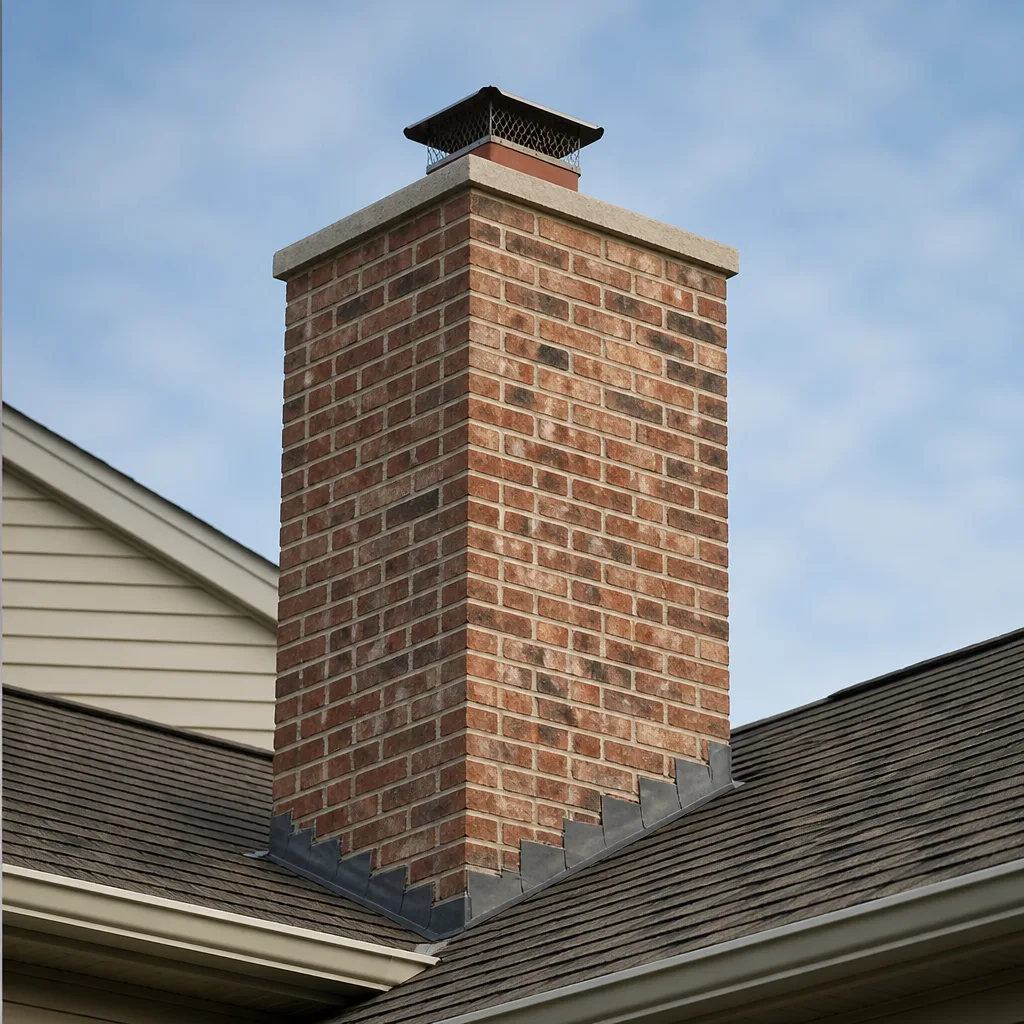 Masonry repair
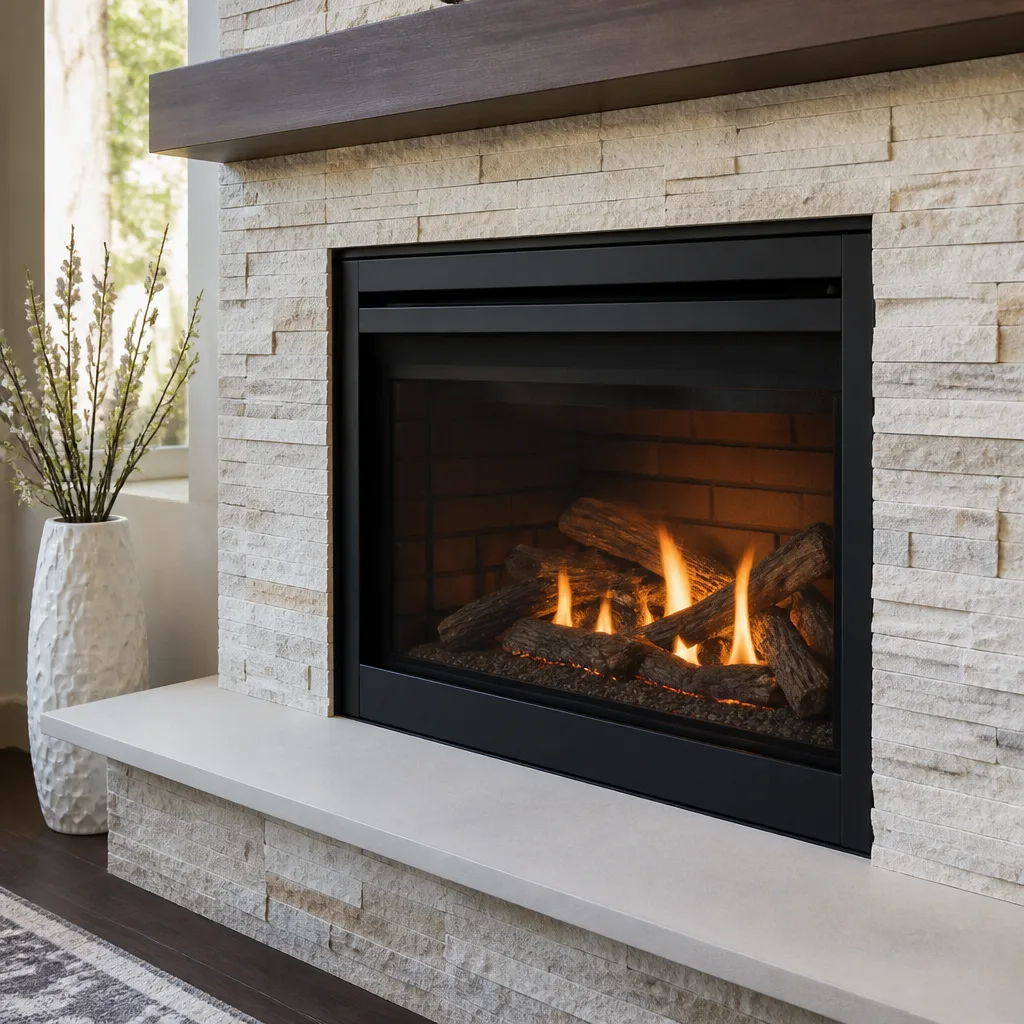 Gas fireplace service
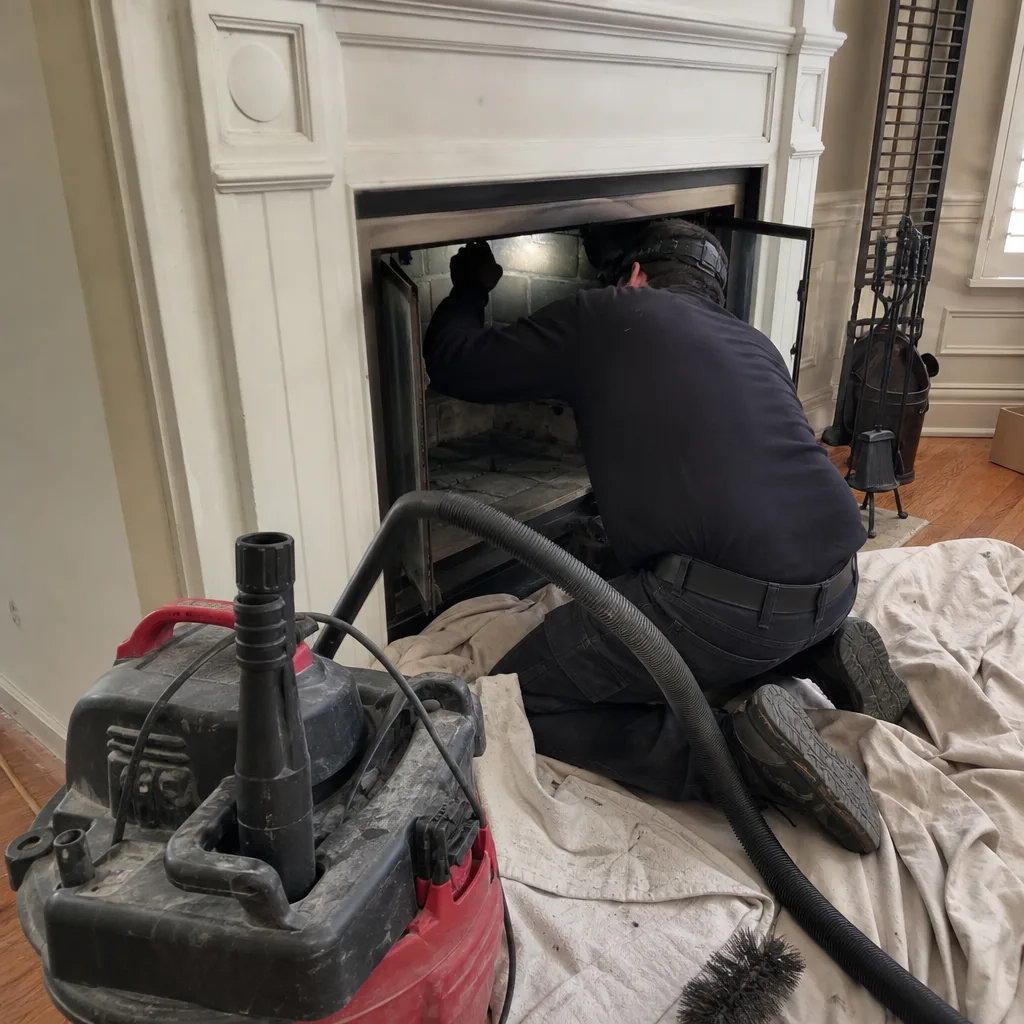
Level 1 sweep and inspection to the NFPA 211 annual standard - flue, crown, cap, and flashing checked and photographed
Chimney sweep logs do not sweep chimneys. They loosen some creosote - which then falls where a brush and vacuum still have to collect it.
Chimney Sweep Maintenance Checklist for Arlington Homeowners
The most common false comfort in chimney maintenance is a homeowner who shines a flashlight up the flue, sees something dark and even, and mentally checks the box. Glossy black creosote at Stage II looks like a clean flue to an untrained eye. It doesn’t flake, it doesn’t smell from the room, and it doesn’t announce itself. A maintenance checklist is only worth keeping if it’s honest about that gap, which means drawing a firm line between what you can legitimately check yourself and what needs professional tools and training. This guide gives Arlington homeowners both columns, plus the cadence and the paperwork that keep a chimney safe and a home record clean.
Quick Answer
A chimney maintenance checklist for Arlington homeowners should separate two categories of work: annual visual checks and housekeeping you can do yourself, and the annual professional sweep and inspection that removes creosote and grades the flue. Wood-burning chimneys need sweeping based on how much you burn, with an annual inspection no matter what. Gas and pellet appliances follow a different cadence. The single most important item on any checklist is the professional inspection, because creosote and liner cracks are not reliably visible from inside the room.
Styles & brands we work with
- Sweep & inspection
- Caps & crowns
- Flue relining
- Masonry repair
- Gas fireplace service
Table of Contents
- The Two-Column Checklist: What You Can Do vs. What Requires a Pro
- The Homeowner Column: Checks You Can Legitimately Perform
- Exterior Masonry Checks for Arlington’s Freeze-Thaw Cycle
- Testing Your Damper: What Draft Feels Like and What It Means
- Annual vs. Every-Use vs. Every-Season: Cadence by Appliance Type
- Logging Maintenance History for Insurance and Resale
- What a Professional Inspection Actually Grades
- When to Stop Checking and Call
The Two-Column Checklist: What You Can Do vs. What Requires a Pro
Most chimney maintenance advice blurs the line between tasks, which is how homeowners end up thinking a yearly flashlight check is the same thing as an inspection. It isn’t. Two columns keep the distinction clear, and both columns matter.
Homeowner column (safe, useful, worth doing):
- Clearing ash from the firebox once the fire is out and the chimney is cold
- Checking that the firebox door, screen, or glass gasket seals properly
- Looking at the damper operation from inside the room
- Confirming the smoke and carbon monoxide alarms work
- Checking that no birds, squirrels, or debris have dropped into the firebox
- Looking at exterior brickwork and the crown from ground level with binoculars
- Keeping a written log of dates and work performed
Professional column (requires tools, training, and liability coverage):
- Sweeping the flue and removing creosote from the smoke chamber and shelf
- Camera inspection of the flue’s full length
- Grading the creosote level (Stage I, II, or III)
- Checking liner integrity, joints, and clearances to combustibles
- Inspecting the crown, cap, and flashing from the roof
- Assessing the firebox and damper for structural problems
- Recommending repair with documented evidence you can review
In our experience, the homeowners who get the most from a chimney maintenance program are the ones who keep the homeowner column going year-round and hand off the professional column without trying to shortcut it. The line matters most in Arlington, where older housing stock means a mix of lined and unlined flues, and where the flue in a 1920s bungalow can behave nothing like the one in a newer build.
The Homeowner Column: Checks You Can Legitimately Perform
You don’t need a certification to notice that something has changed. You do need to know what you’re looking at. These checks fall safely inside what a homeowner can do, provided the chimney is cold and you never put your head or hands inside the flue.
- Clear the firebox. Once the fire is fully out and the chimney is cold, scoop ash into a metal container with a lid. Ash left damp against firebox brick holds moisture, and moisture is the enemy of masonry in this climate.
- Inspect the firebox brick. Look for cracked brick, crumbling mortar joints, or white powdery staining. That staining is often efflorescence, a sign moisture is moving through the masonry.
- Check the door and screen. A warped door or a gasket that no longer seals lets smoke into the room and makes draft unpredictable. Replace worn gaskets; don’t tape them.
- Test the damper from inside the room. Details are in the damper section below.
- Confirm alarms. Test the smoke and carbon monoxide alarms on the same day you do your chimney checks so the routine becomes automatic.
- Scan the exterior from ground level. Binoculars work well here. You’re looking for loose bricks, missing mortar, a cracked crown, or a cap that has shifted.
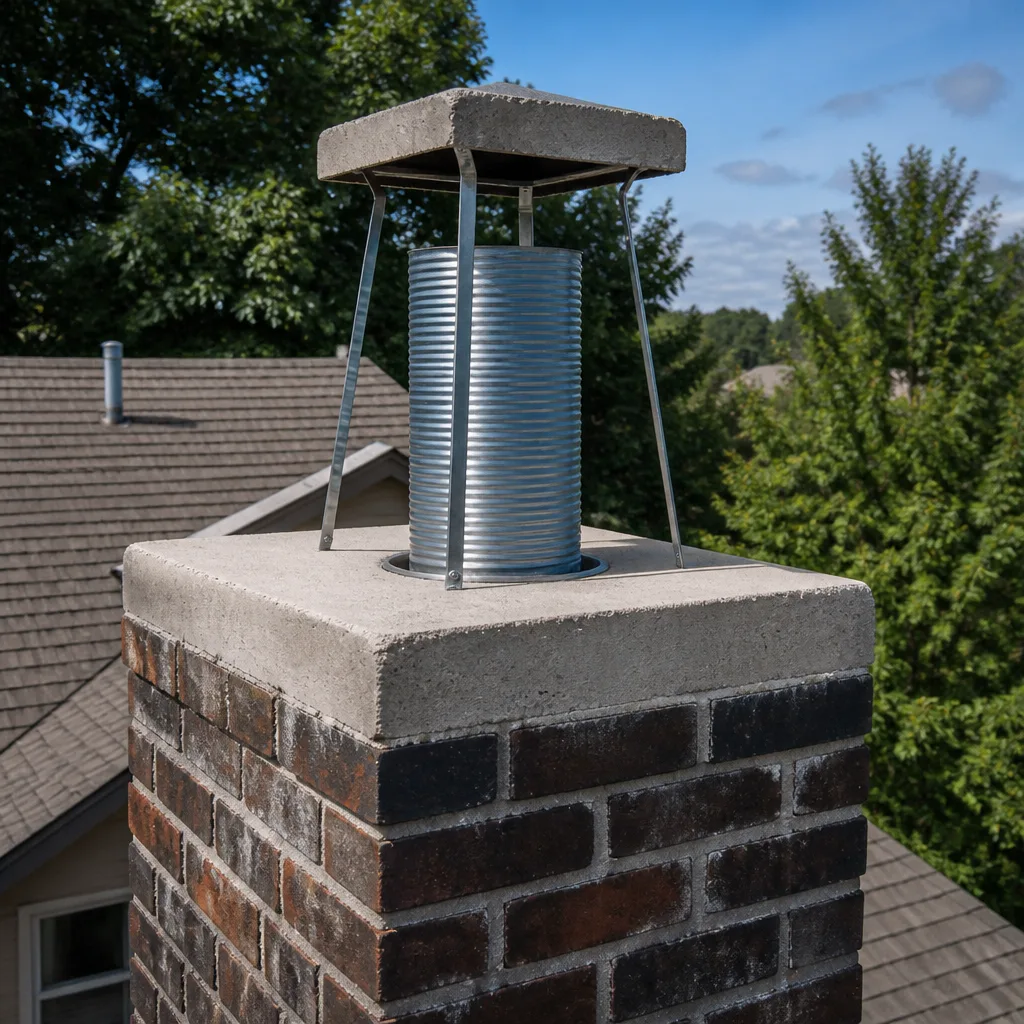
- Check for animal activity. A cap with intact mesh keeps birds and squirrels out. If you find nesting material in the firebox, remove it and have the chimney inspected before you burn again.
Notice what’s missing: no flashlight up the flue. A flashlight beam thrown up a flue from the firebox shows you a small patch of surface. It cannot show you the top of the flue, the smoke chamber, or a hairline crack that opens under heat. That’s the false comfort this checklist is built to correct.
Exterior Masonry Checks for Arlington’s Freeze-Thaw Cycle
Arlington’s winters swing above and below freezing repeatedly rather than staying cold in one long stretch. That cycle is hard on brick and mortar. Water gets into a hairline crack or a porous brick during a mild afternoon, freezes overnight, expands, and widens the crack a little each time. Over several winters, small openings become visible damage.
What to look for, in order of how early it shows:
- Efflorescence. A white, chalky bloom on brick or mortar. It’s the earliest sign that moisture is moving through the masonry. It brushes off, but it will return if the source isn’t addressed.
- Early spalling. The face of a brick begins to pit, flake, or peel away in thin layers. At this stage the brick is still largely intact and repair is straightforward.
- Advanced spalling. Chunks of brick face have dropped, exposing the softer interior. Bricks in this state need replacement, not patching.
- Crumbling mortar joints. Run a finger along a joint (at ground level only). If mortar powders away easily, repointing is due.
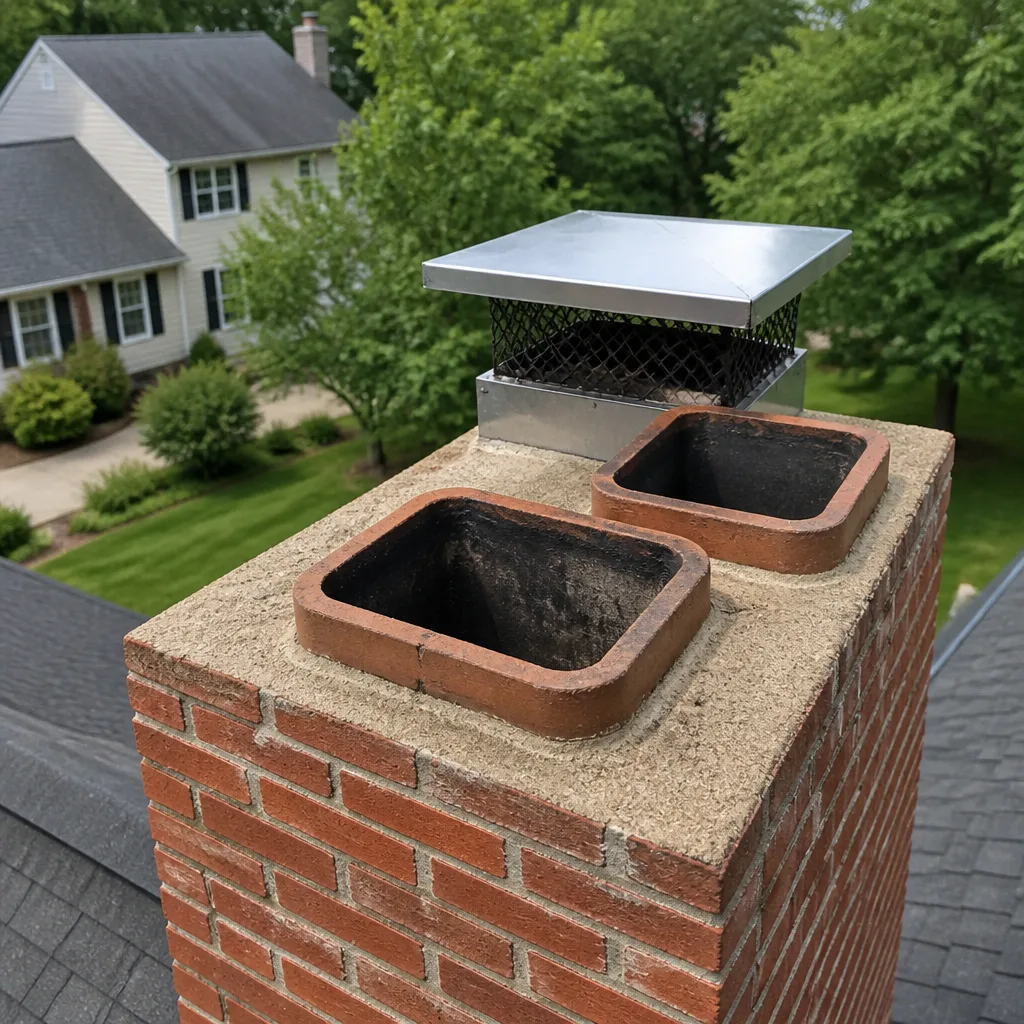
- Crown cracks. The concrete or mortar crown at the top of the chimney should slope away from the flue and be free of cracks. A cracked crown lets water straight into the chimney structure.
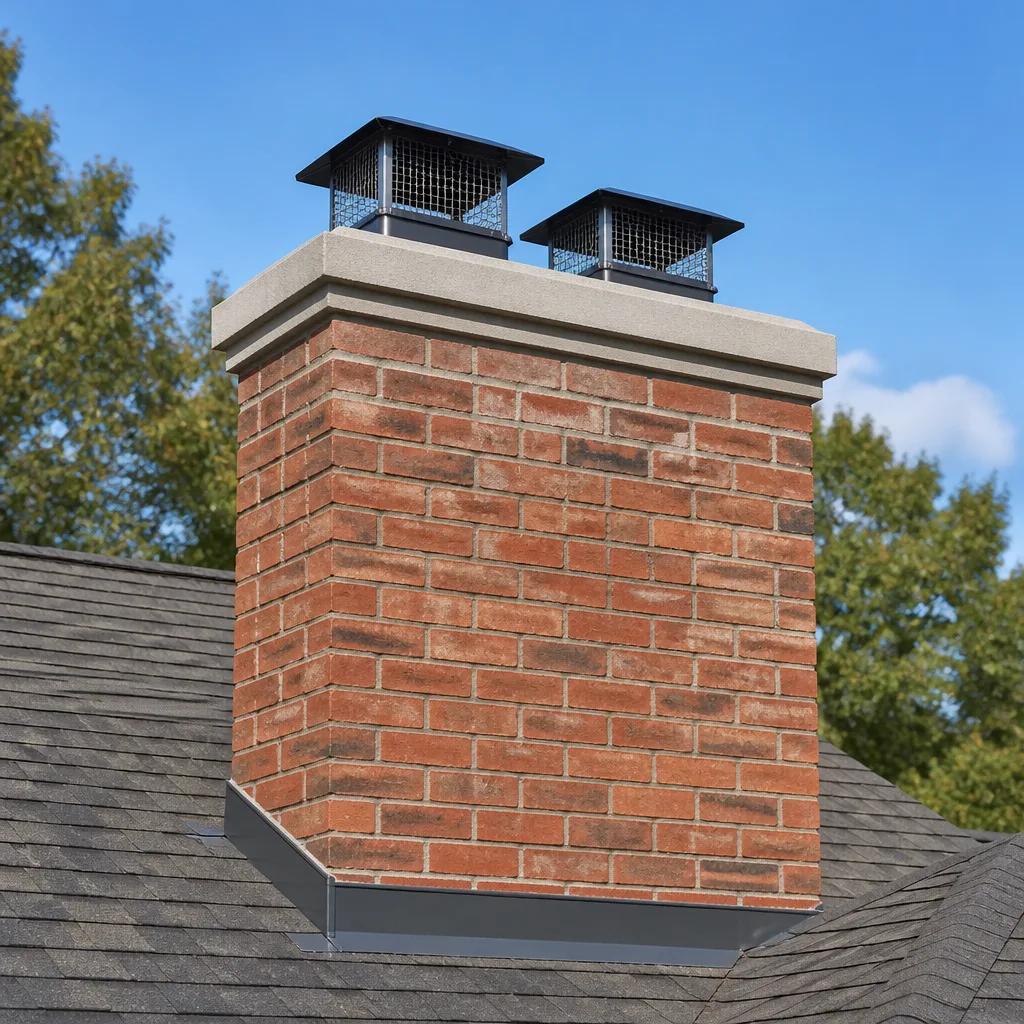
- Flashing gaps. Where the chimney meets the roof, the flashing should be tight and sealed. Gaps there are a common source of interior water stains.
These exterior checks are the ones binoculars handle best. What binoculars won’t reveal is the condition of the flue liner behind the brick, which is why the exterior column and the professional column work together rather than replacing each other. We work with HeatShield resurfacing and DuraFlex liner systems precisely because early masonry and liner problems respond well to restoration when they’re caught before the freeze-thaw cycle has had several seasons to work on them.
Testing Your Damper: What Draft Feels Like and What It Means
The damper is the one chimney component you can test meaningfully from inside the room, and it’s also the one homeowners misread most often. Here’s how to test it, and what the result actually tells you.
- Make sure the fire is out and the chimney is cold. Never test a hot damper.
- Find the damper handle. On a traditional masonry fireplace it’s usually a lever or a small chain-hung plate near the top of the firebox. Look up and back.
- Open it fully. The plate should swing or slide freely and lock in the open position. If it grinds, sticks, or won’t stay open, it’s failing.
- Check for a visible gap. With a flashlight, look for daylight or an open passage above the damper plate.
- Feel for draft. With the damper open, hold a tissue near the top of the firebox opening. It should be pulled gently inward and upward. Some pull is normal; what you want is steady, not flickering.
- Test the closed position. Close the damper and confirm it seats. A damper that won’t close loses heat from the house all winter and lets cold air back down the flue.
If the tissue hangs flat or falls, you have weak or no draft. That points to several possible causes: an obstruction in the flue, a damper that isn’t opening fully, a flue that’s too short for the fireplace opening, or pressure problems inside the house. If the draft is unusually strong and you can smell smoke in the room, that’s a different problem and worth a professional look.
What you can’t feel is what’s going on above the damper. The smoke chamber, the flue liner, and the top of the chimney all affect draft and none of them are reachable from the hearth. That’s the boundary of the homeowner column.
Annual vs. Every-Use vs. Every-Season: Cadence by Appliance Type
One schedule doesn’t fit every chimney, and it doesn’t fit every Arlington home. The right cadence depends on what you burn and how often.
Wood-Burning Fireplaces and Stoves
- Every use: Confirm the damper is open before lighting. Confirm the smoke alarms are working before the first fire of the season. Clear ash between fires as needed.
- Every season: A professional sweep based on how much you’ve burned, plus an annual inspection. Heavy burning means more frequent sweeping. A chimney that’s been used through one full season should be assessed before the next.
- Continuously: Watch for change. A fire that smokes into the room, a smell that wasn’t there last year, or a new crack in the firebox are all reasons to call earlier than the annual visit.
Gas Appliances
- Every use: Nothing to do beyond normal operation. Gas is cleaner-burning and produces little creosote.
- Every season: An annual inspection to check the venting, the appliance connection, and for any obstruction. Birds and debris are a bigger risk here than creosote.
- Continuously: Carbon monoxide alarms tested on schedule. Any change in flame color or a smell near the appliance is a reason to call.
Pellet Stoves
- Every use: Empty the ash pan and clean the burn pot as the manufacturer directs.
- Every season: Sweep the venting and inspect the flue. Pellet fuel produces fly ash that accumulates in the vent and can restrict exhaust flow.
- Continuously: If the exhaust becomes noticeably harder to start or the stove drafts poorly, stop and call.
For any appliance type, the chimney sweep visit is the reminder that resets the clock. Mark it on a calendar, and pair it with the alarm test so both get done.
Logging Maintenance History for Insurance and Resale
A maintenance log does two jobs: it satisfies an insurer that the chimney is being looked after, and it gives a buyer a clean record when you sell. A notebook with dates and scribbles isn’t enough. A usable log answers three questions every time.
- When was the work done? Date of service, and who performed it.
- What was the condition? What the inspection found, including the creosote stage and any noted defects.
- What was done about it? Cleaning, repair, replacement, or a note that nothing was warranted.
Keep it where you can find it in five minutes: a folder with a printed summary, plus a photo of each service report on your phone. For resale, a file that shows a regular inspection history reads as care. A chimney with no documented history reads as unknown, and unknowns become negotiation points at closing.
In our experience, Arlington homeowners get far more value from a proper inspection report than from their own notes, because a formal assessment from a professional is the documentation an insurer and a buyer both respect. If you use one professional consistently, your file builds itself. Sweep, inspect, repair under one company means one folder, not four.
What a Professional Inspection Actually Grades
An inspection is not a sweep with a look-around attached. It’s a documented assessment of the chimney’s condition, and it should produce evidence you can review: a camera inspection and photo report, with anything recommended backed by something you can see.
What a professional looks at:
- The flue’s full length by camera, including the smoke chamber and shelf
- The creosote stage: Stage I (sooty, flaky), Stage II (glossy and hard), Stage III (thick and glazed)
- Liner integrity, joints, and whether the liner is continuous
- Clearances to combustibles in the attic and at the roofline
- The crown, cap, and flashing
- The firebox, damper, and the connection between the appliance and the flue
This is where the checklist earns its keep. A sweep clears the flue. The inspection is what tells you whether the chimney behind the sweep is safe. In our experience, the second question is the one that matters, and it’s the reason we structure our work around a dedicated professional chimney inspection rather than treating inspection as an add-on. If the report shows that repair is needed, the work should be a permanent fix, and we use DuraFlex liners and HeatShield resurfacing on that work rather than patching around the problem. If the report shows the chimney can wait until next season, you should hear that plainly.
When to Stop Checking and Call
A checklist runs into a wall the moment something inside the flue is wrong, and that’s the point at which a homeowner should stop and call. Call if you find Stage II or Stage III creosote, a cracked or glazed liner, a damper that no longer seals, smoke entering the room from a fire, a carbon monoxide alarm that sounds, a smell that wasn’t there before, or a crown or flashing problem you can see from the ground. Report any of these to a trained professional rather than attempting a fix yourself; creosote and liner work is genuinely dangerous without the right tools and training. Sentry Chimney Sweep offers free estimates in Arlington. Call (833) 309-7302. We answer 24/7. Fast dispatch from 7am to 7pm, Sunday through Friday.
See the difference
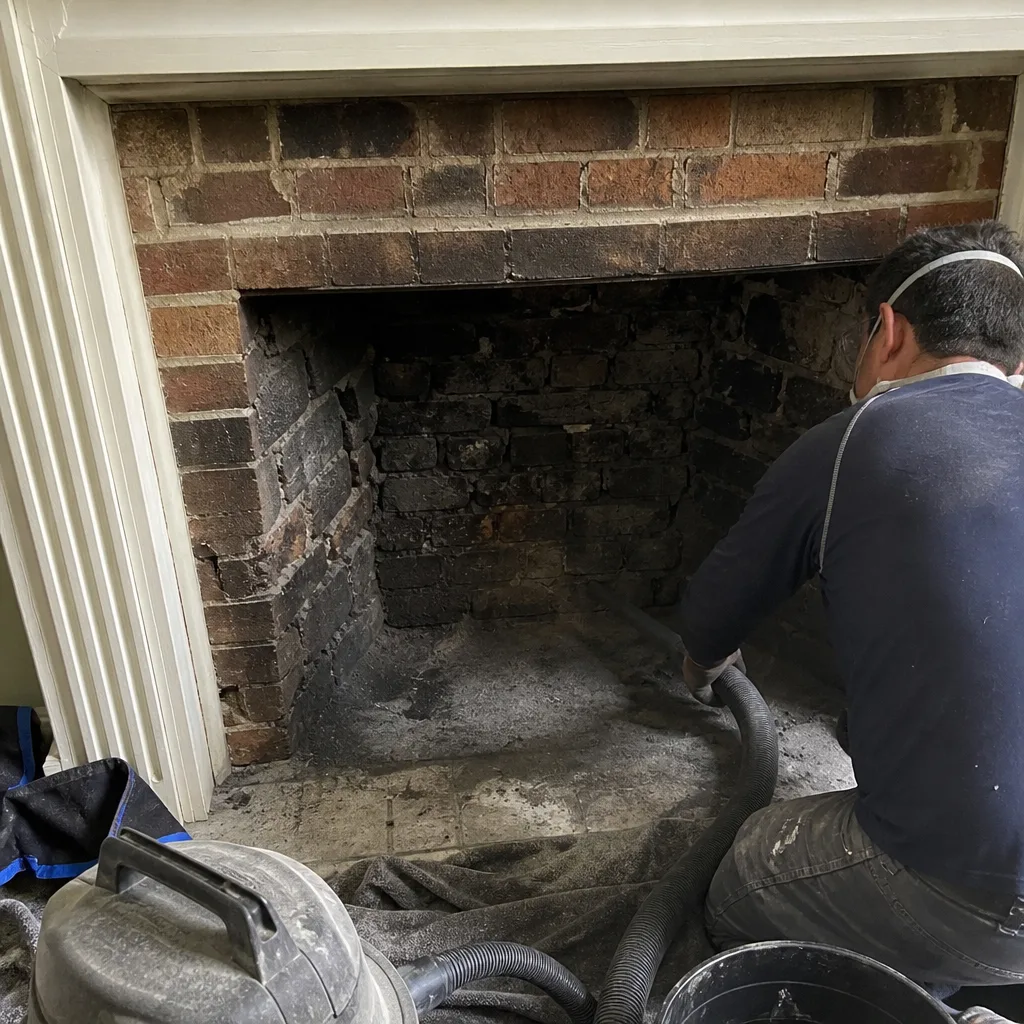 Before
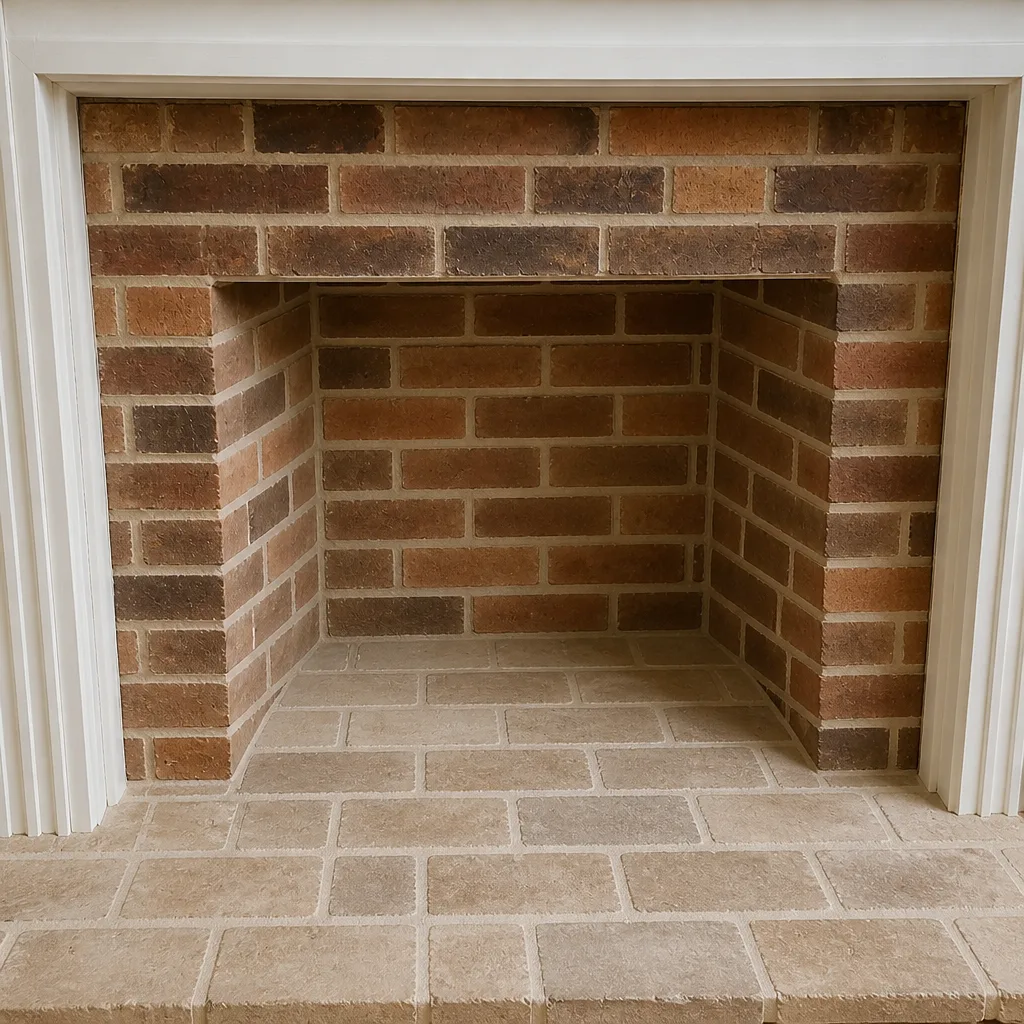 After
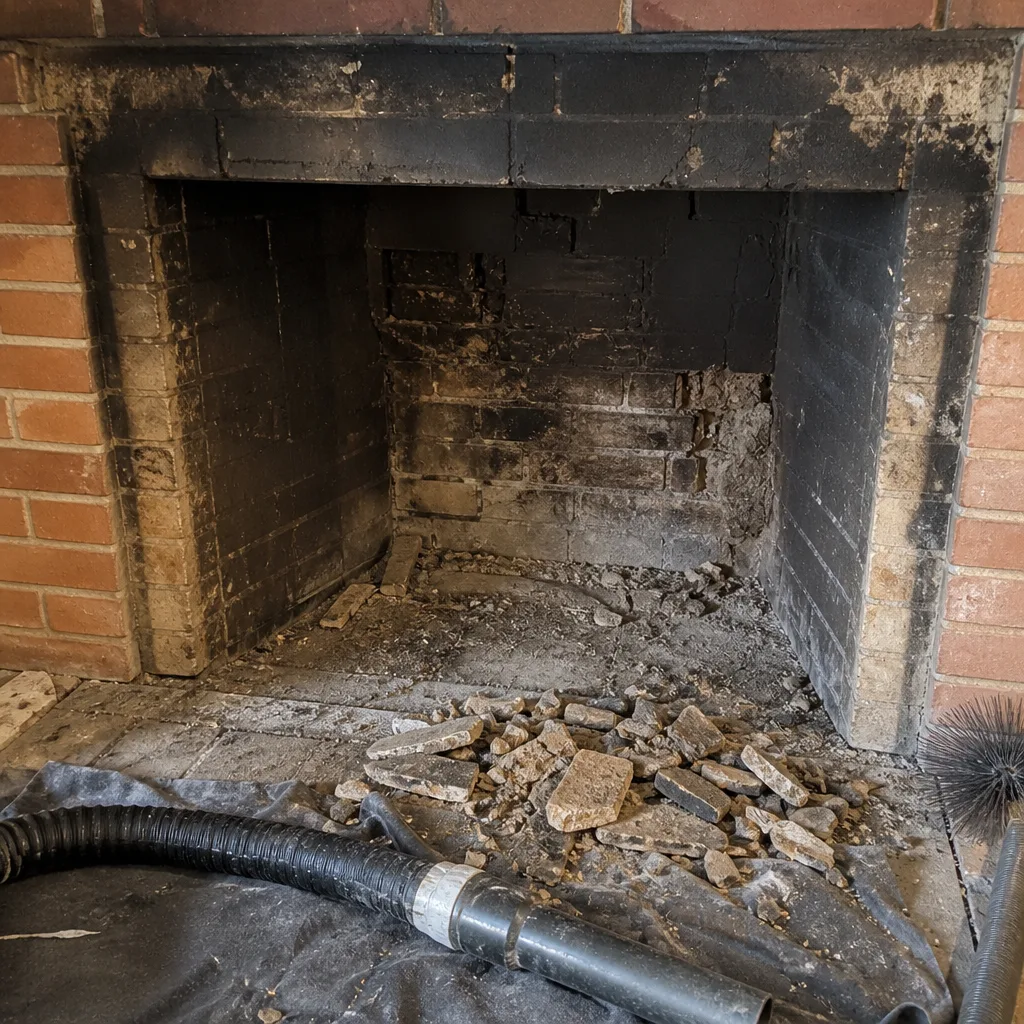 Before
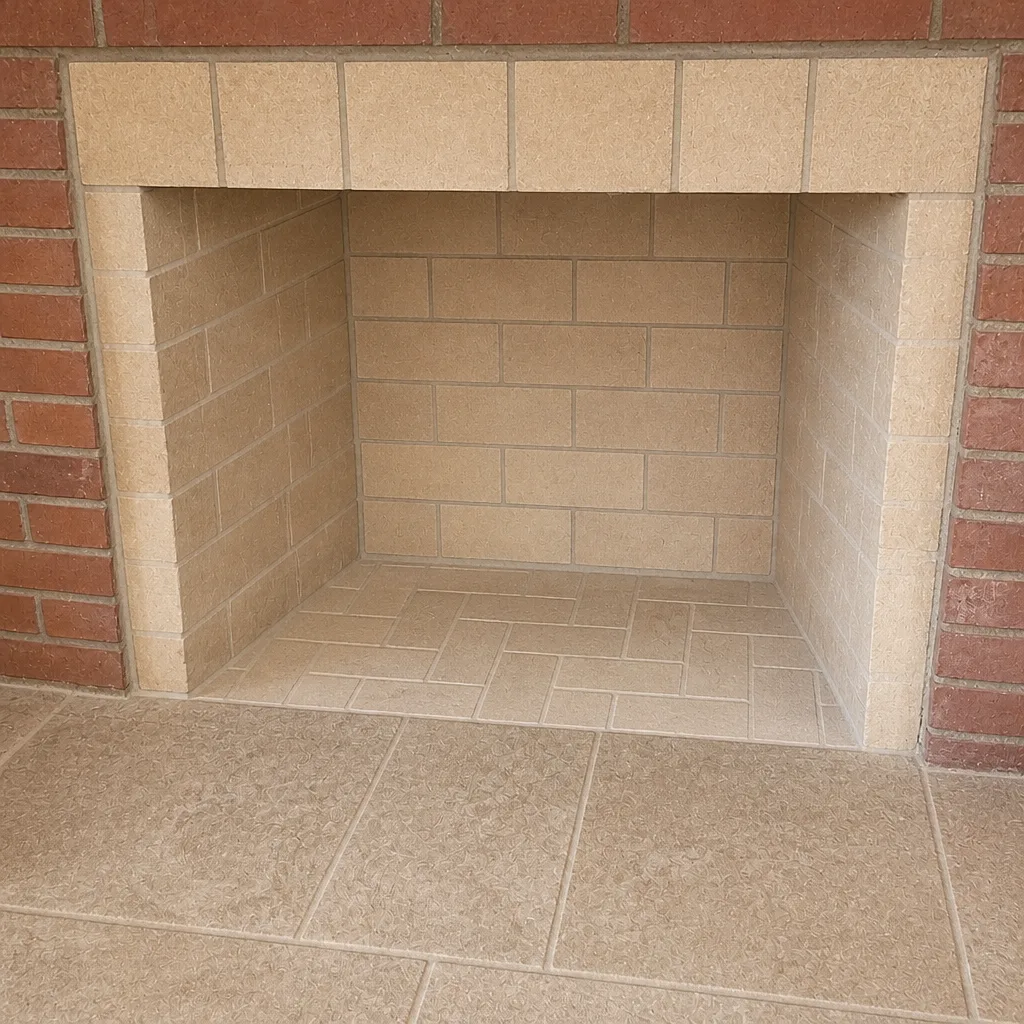 After
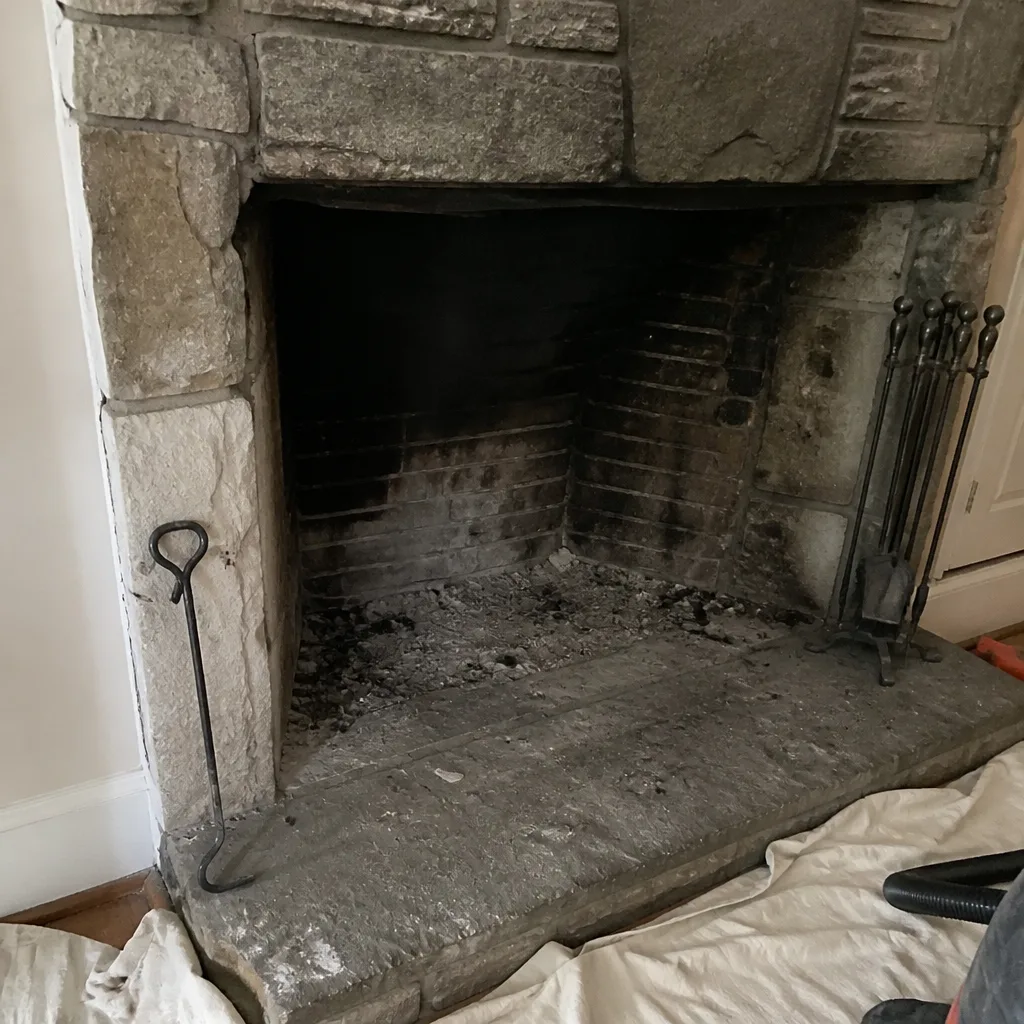 Before
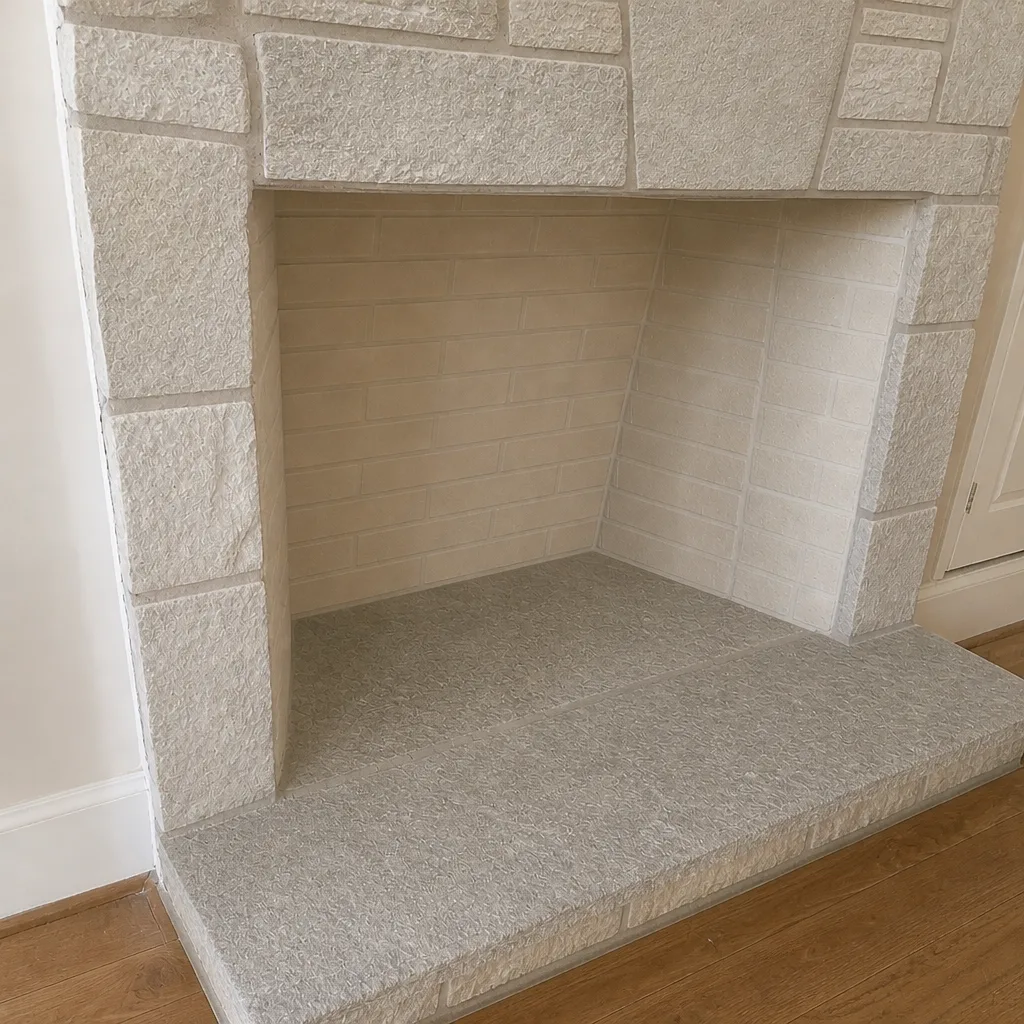 After
Frequently Asked Questions
Chimney sweeping in Arlington is priced per job by a written estimate, and that estimate is free. The cost depends on how much creosote has built up, whether a camera inspection is included, and whether any repair is needed. Call (833) 309-7302 for an exact quote.
Yes, because Stage II creosote and early liner cracks don’t produce a symptom a homeowner can feel or see from the room. Burning without an issue isn’t evidence the flue is clean. Call (833) 309-7302 to book an inspection.
There’s no single schedule that fits every home; it depends on how much wood you burn and how dry the wood is. A chimney used regularly through a full heating season should be swept before the next one, with an annual inspection regardless. Call (833) 309-7302 and we’ll tell you what your chimney actually needs.
The immediate risk is a chimney fire, which creosote at Stage II and above makes far more likely, and the longer-term risk is that liner and masonry damage that would have been a straightforward repair becomes a structural repair. Neither is worth the delay. Call (833) 309-7302 for a sweep and inspection.
That white blooming is efflorescence, a sign that moisture is moving through the masonry, and it’s the earliest visible stage of freeze-thaw damage. It’s often fixable before the brick starts spalling. Call (833) 309-7302 to have it looked at.
No. Gas chimneys produce little creosote and are inspected for venting and obstruction rather than swept on a wood-burning schedule. Pellet stoves accumulate fly ash in the venting and need it cleared. Call (833) 309-7302 and we’ll set the right cadence for your appliance.
A usable log records the date, who did the work, what condition the chimney was in, and what was done, ideally with the inspection photos attached. That’s what an insurer or a buyer will want to see. Call (833) 309-7302 and ask about a documented inspection report.
Common Mistakes to Avoid
- Treating a flashlight check as an inspection. Stage II creosote is glossy and black, and it reads as a clean flue when you look up from the firebox. Without a camera inspection you’re guessing at the top of the flue, the smoke chamber, and the liner.
- Ignoring white staining on the exterior brick. Arlington’s freeze-thaw cycle turns a hairline crack into a failing brick face over several winters, and efflorescence is the warning that arrives first. Catch it at the chalky stage rather than the spalling stage.
- Burning wood that hasn’t dried. Wet wood burns cooler, produces more smoke, and lays down creosote faster. It quietly raises what your sweep has to remove.
- Skipping the inspection because you had a sweep. The sweep clears; the inspection assesses. They answer different questions, and the second one is the one that tells you whether the chimney is safe.
- Not testing the damper after the season ends. A damper that fails to close loses heat all winter and lets cold air down. Test it before the heating season starts, not in the middle of it.
- Forgetting to test the carbon monoxide alarm when you test smoke alarms. Both matter, and pairing the tests is the only way it stays a routine rather than a good intention.
- Keeping maintenance records in your head. A chimney file that lives in memory doesn’t survive a sale or an insurance claim. Write it down and take a photo of each report.
The Bottom Line
The honest split is the useful one: keep the homeowner column going all year, and hand off the professional column without shortcutting it. That means your own checks stay focused on what you can actually see from the room and from ground level, while the inspection covers the flue, the smoke chamber, and the liner behind the brick. For Arlington homeowners, the exterior masonry checks matter most in a climate that repeats freeze-thaw swings every winter. Match your cadence to the appliance, log every visit, and treat the annual inspection as the anchor. If you want a professional look at where your chimney actually stands, call Sentry Chimney Sweep at (833) 309-7302 for a free estimate. See the services we cover in Arlington and let us start your checklist.
Written by the team at Sentry Chimney Sweep.