
Last updated November 15, 2026
 Sweep & inspection
 Caps & crowns
 Flue relining
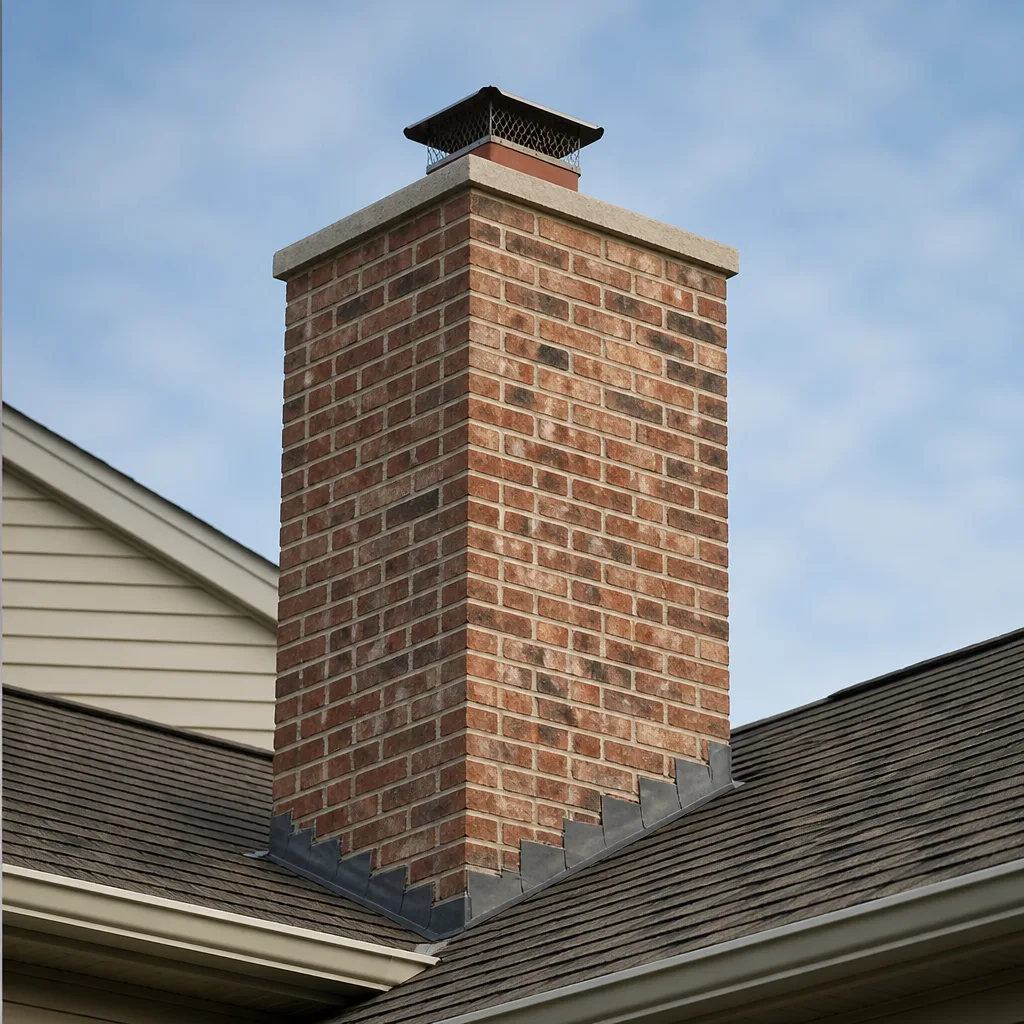 Masonry repair
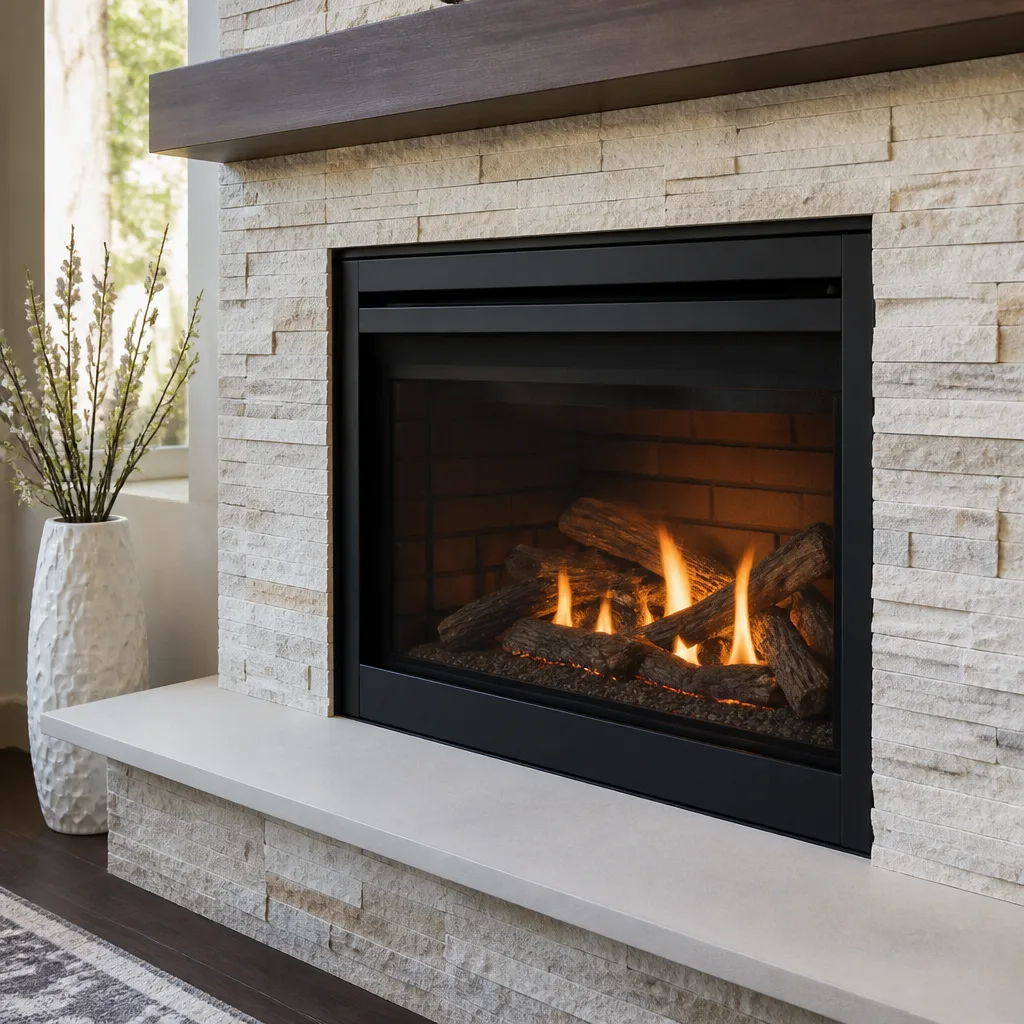 Gas fireplace service
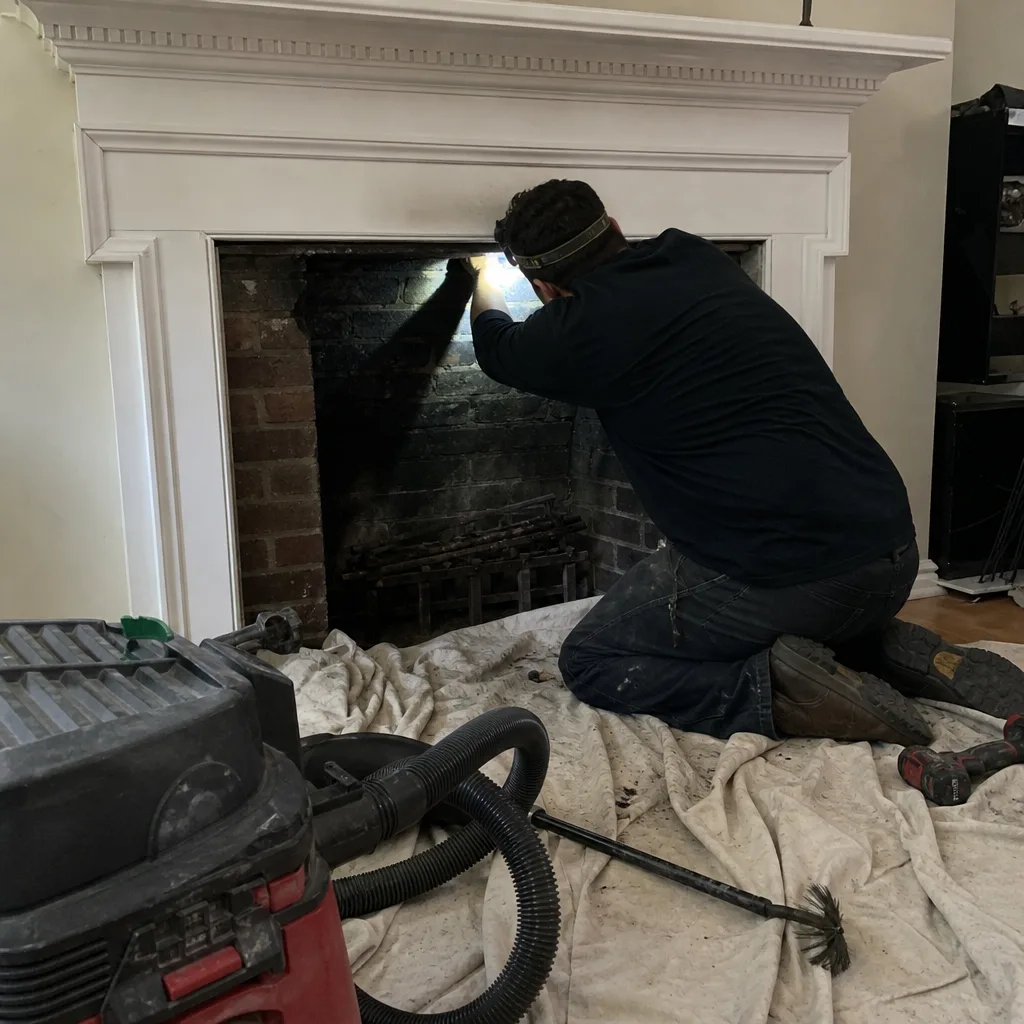
Level 1 sweep and inspection to the NFPA 211 annual standard - flue, crown, cap, and flashing checked and photographed
Chimney sweep logs do not sweep chimneys. They loosen some creosote - which then falls where a brush and vacuum still have to collect it.
Choosing the Right Chimney Cleaning Brand: A Buyer’s Guide for Arlington
Two chimney sweeps clean the same Arlington flue. One applies a standard-grade sealant rated for 150°F. One applies a refractory-grade sealant rated for 2,100°F. The invoice descriptions say the same thing: “sealed and inspected.” The performance difference doesn’t show up until there’s a problem – and by then, the chimney is open, the wall is stained, and the cost is yours. Most homeowners shopping for chimney service compare name recognition, not materials. This guide changes that. You’ll learn how to tell a professional-grade chimney company from a generalist with a brush, which questions expose the difference in two minutes, and how to evaluate a cleaning brand using the framework professionals use on Arlington homes every season.
Quick Answer
The right chimney cleaning brand in Arlington is the one that can tell you, in writing, exactly which liner system, crown coating, and sealant it will use in your chimney – by temperature rating and manufacturer – and that holds current CSIA or NFI credentials. National name recognition tells you almost nothing. Materials specification, written on the estimate, tells you almost everything. Ask for it before you book, and treat any hesitation as your answer.
Styles & brands we work with
- Sweep & inspection
- Caps & crowns
- Flue relining
- Masonry repair
- Gas fireplace service
Table of Contents
- Why the Brand Decision Is Really a Materials Decision
- How to Ask a Chimney Company What Products They Use
- Why Professional Credentials Are the Best Brand Proxy
- What “Industry-Leading Materials” Actually Means in Chimney Work
- Local Specialists vs. National Franchises: The Real Trade-Off
- Why “Specify It in Writing” Is the Single Best Filter
- What Arlington Homeowners Should Weigh Specifically
Why the Brand Decision Is Really a Materials Decision
Chimney cleaning looks identical from the driveway. A technician arrives, sets drop cloths, runs a rod and brush up the flue, vacuums with a HEPA unit, and shows you the soot that came out. The cleaning itself has a fairly narrow range of quality. What varies enormously is what happens after the cleaning – the products applied to your flue, crown, and cap, and the materials used in any repair.
That’s where the “brand” question lives. When you hire a chimney company, you’re not really buying the sweep. You’re buying the material decisions that technician makes on your flue, often in the twenty minutes after the brush comes down. Those decisions are invisible to most homeowners and consequential for the next decade.
Chimney materials are tiered by application and temperature rating, and the tiers look almost identical on paper:
- Standard-grade sealants work in cool applications – crown tops, cap edges, exterior joints. They’re inexpensive and appropriate in the right spot.
- Refractory-grade sealants hold in high-heat zones near the firebox and flue collar, rated for the temperatures those surfaces actually reach.
- Liner systems (stainless flexible liners, cast-in-place resurfacing) are rated by fuel type, appliance efficiency, and flue geometry – not just diameter.
- Crown coatings are rated by flexibility and UV stability; rigid cement crowns crack at the first seasonal movement, flexible coatings move with the masonry.
A generalist handyman has one sealant on the truck. A chimney specialist carries the tiers and knows which one belongs where. That’s the entire difference between a chimney that lasts and a chimney that fails at the first temperature swing. In our experience, the material choices made after the cleaning are what separate a professional-grade company from a name-brand one, and they’re the reason a homeowner should care about the brand at all.
How to Ask a Chimney Company What Products They Use
You can evaluate a chimney company’s materials in one phone call if you ask in the right order. The questions below are designed to surface whether the company actually uses professional-grade products or just says so. Ask them verbatim and listen for specifics, not adjectives.
- “Which liner system do you install for a wood-burning fireplace, and what’s its temperature rating?” A professional answers with a real product name and the rating. A generalist says “we use a high-quality liner.” That’s a warning sign.
- “What sealant do you use around the flue collar, and what’s it rated for?” The correct answer distinguishes refractory-grade (high heat) from standard-grade (cool surfaces). If the company uses one sealant for everything, they’re covering the surfaces with whatever they had.
- “How do you handle a cracked crown – cement patch, flexible coating, or rebuild?” A professional walks through the decision. A generalist says “we patch it.”
- “Are you CSIA-certified, and do you hold NFI credentials for wood appliances?” These are the credential bodies that require material knowledge as part of certification. See the next section.
- “Can you put the specific product names and ratings on the written estimate?” This is the single most reliable test. A company that will commit to product names and ratings in writing is a company using professional-grade materials. One that won’t is telling you something.
You don’t need to know the answers to the first four questions. You need to hear how the company answers them. Specificity is the tell. Vague reassurances are the tell too.
One more point: ask whether the material list stays on the estimate or gets replaced with a generic description before you sign. The written commitment should follow the technician through the job. If the estimate says “HeatShield resurfacing” on the phone and “chimney sealing” on the paperwork, ask why.
Why Professional Credentials Are the Best Brand Proxy
You can’t vet every sealant yourself. You can vet the credential framework the company operates under, and that’s usually a faster route to the same answer. When a chimney company holds current CSIA (Chimney Safety Institute of America) certification, its technicians have been tested on materials application, flue geometry, and appliance compatibility. When it holds NFI (National Fireplace Institute) credentials, those credentials are fuel-type specific – wood, gas, pellet – and require ongoing education to maintain.
What that means for you in practice:
- Consistent material standards. A CSIA-certified company applies the same product tier to every job because the standard doesn’t change per customer. An unlicensed operator applies whatever’s on the truck.
- Accountability in writing. Certified companies are used to documenting materials by name because their certification review requires it.
- A real inspection, not a drive-by. Certification training covers what to look for during inspection – crown cracks, liner gaps, creosote glaze, cap damage – so the inspection is thorough rather than cursory.
Arlington homeowners can verify a company’s certification in a couple of minutes by searching the CSIA and NFI directories directly. If a company’s certification isn’t listed, ask them to update it or ask them to explain. This one check filters out the majority of the market. Franchise networks sometimes have it; local specialists sometimes don’t. What matters is whether the company you’re hiring has it, right now, and can apply it to your chimney.
Credentials aren’t a substitute for a written materials list, but they’re a strong signal that the written list will actually match the job. When we look at a competing estimate for an Arlington home, the credential check and the materials check usually agree.
What “Industry-Leading Materials” Actually Means in Chimney Work
“Industry-leading” is a phrase every chimney company uses and almost none defines. Here’s how we define it, and how you can hold any company to the same standard.
Liner Systems
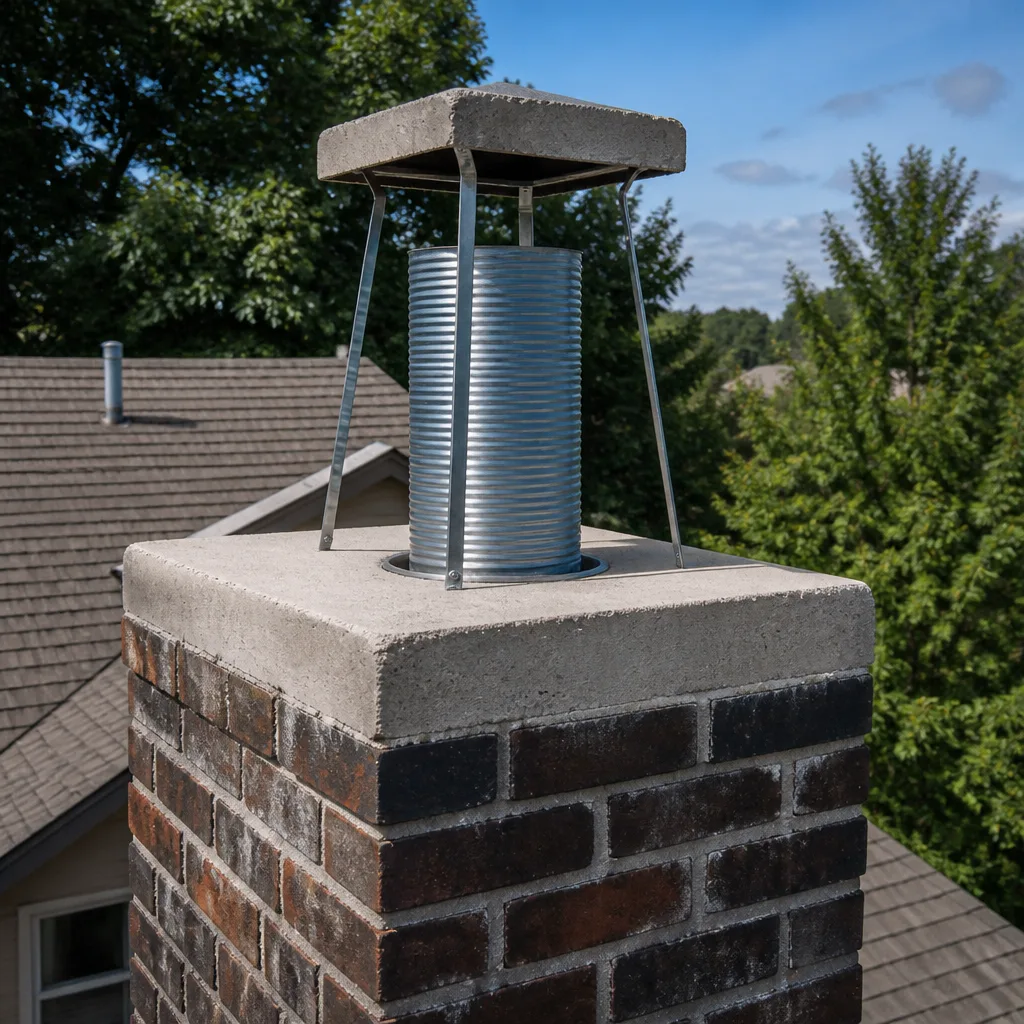
Stainless flexible liners are the workhorse of chimney repair. They’re rated by the fuel type they serve, the temperatures the appliance below produces, and the flue geometry they have to fit. A professional company installs liner systems like DuraFlex, and the name on the box matters because it determines the manufacturer’s warranty and the standards the liner meets. A liner that isn’t specified by manufacturer is a liner you can’t verify.
Cast-in-Place Resurfacing
When the flue interior is cracked or spalling, cast-in-place resurfacing (HeatShield is the product most certified professionals use for this) restores the flue without a full tear-out. The decision to resurface instead of reline depends on the condition of the original masonry, which is why the inspection has to come first. Resurfacing is a durable repair, not a patch, and the specific product matters because the cure, thickness, and heat rating determine how long it lasts.
Crown Coatings and Sealants
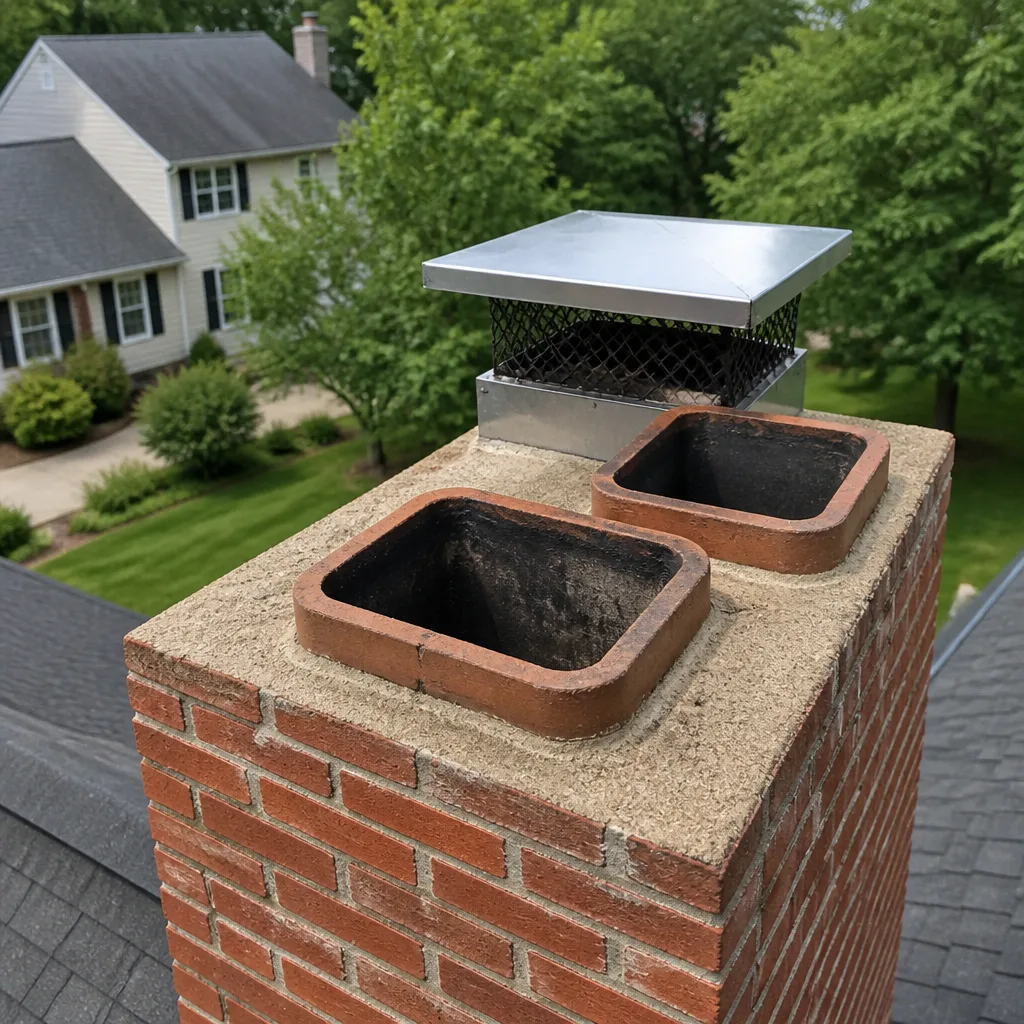
The crown is the concrete cap at the top of the chimney. Rigid cement crowns crack when the masonry below moves with the seasons, which is exactly what happens in Arlington’s freeze-thaw cycles. Flexible crown coatings move with the masonry, which is why a professional carries a coating rated for that kind of movement – not a bag of patch cement. Around the flue collar, a refractory-grade sealant rated for firebox temperatures is different from a standard-grade caulk rated for cool surfaces. Both look identical on an invoice. Only one belongs near the firebox.
Caps and Components
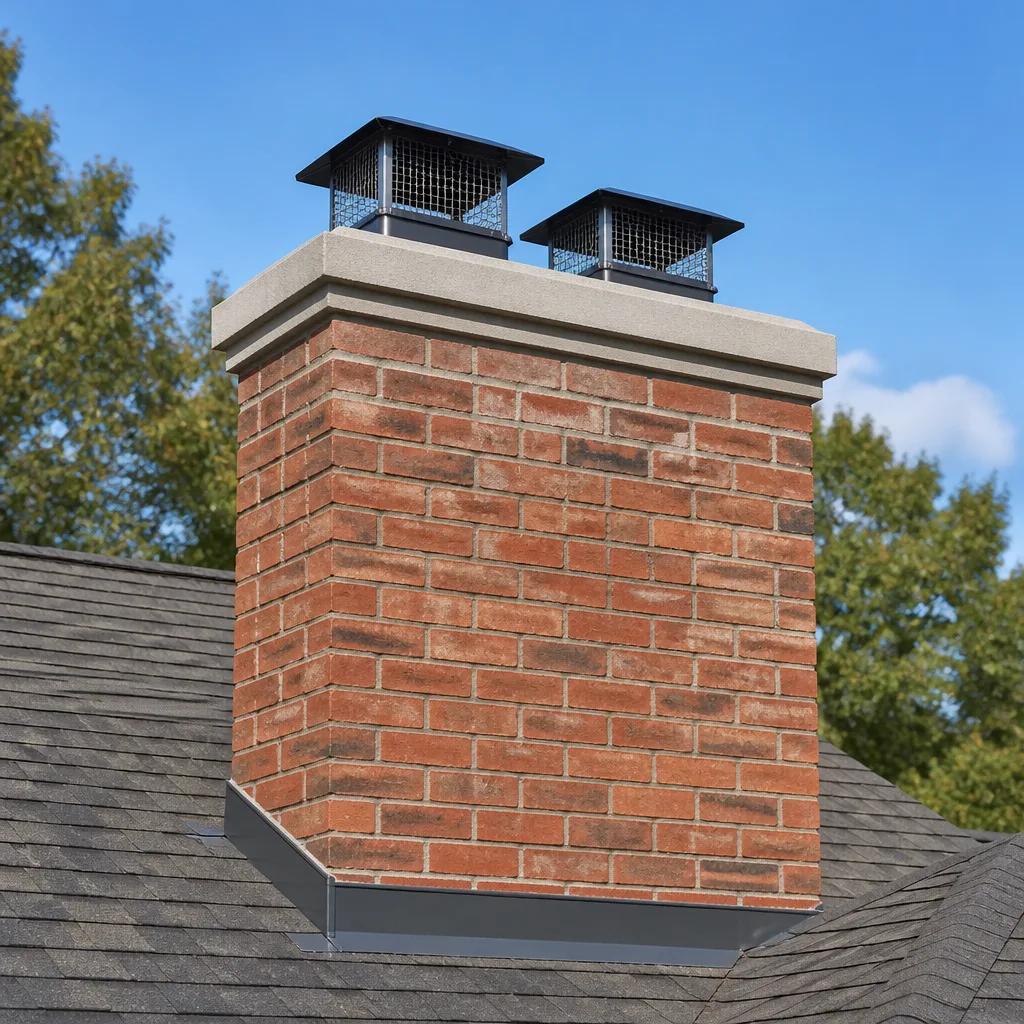
Caps, dampers, and chimney components are also brand-tiered. Copperfield and Famco, for example, make professional-grade components that certified chimney professionals specify by model. The point isn’t the brand name itself. It’s that the company can name the product because they use it, and it’s rated for your application.
Local Specialists vs. National Franchises: The Real Trade-Off
Both have a place, and the right answer depends on your chimney. Here’s the honest split.
What national franchises provide consistently:
- Standardized processes and documentation across locations
- Predictable scheduling and call handling
- Brand recognition and corporate training materials
- A formal complaint and escalation path if a job goes wrong
Where independently operated specialists tend to outperform:
- Material flexibility – a specialist carries more product tiers because they resolve more material problems in a season
- Specific local knowledge of housing stock, climate, and the flue issues that show up in a given neighborhood
- Continuity – the same team that sweeps your chimney also handles a repair, so the inspection and the repair aren’t coordinated across two vans
- Direct conversation with the person making the material decision, not a call center
Arlington sits in a climate band that swings from humid summers to freezing winters, and the housing stock is a mix of older masonry chimneys and mid-century construction. Both of those factors push liner and crown decisions toward the specialist side more than they would in a milder climate, because the material failures are seasonal and specific. When a generalist patches a crown in July, it looks fine until the first hard freeze. A specialist who works Arlington’s freeze-thaw cycle all year builds the material list around it from the start.
None of this means a franchise can’t do good work. It means the deciding factor is still materials and credentials, not the label on the van.
Why “Specify It in Writing” Is the Single Best Filter
If you remember one thing from this guide, make it this: a chimney company’s willingness to name its materials, in writing, on the estimate, is the most reliable filter for professional quality you’ll find. It’s not infallible. But it catches the companies that shouldn’t be near your chimney, and it catches them early.
Here’s what a well-specified estimate looks like for a typical Arlington job:
- The cleaning scope: which flue, how many appliances, what level of inspection is included (and whether it’s Level 1, Level 2, or Level 3).
- Any repair materials, named: “HeatShield resurfacing on flue interior” or “DuraFlex stainless liner, 6-inch, wood-rated.” Not “chimney sealing.”
- Temperature ratings or standards where applicable: refractory-grade for high-heat surfaces, flexible coating for the crown, manufacturer rating for the liner.
- A price per line item, with a total. “Approximately” without a range is a red flag.
- A note on what can safely wait. A professional will tell you when a repair is urgent and when it can be scheduled for the next season. If every estimate comes back with the same urgent recommendation, that’s information.
The customer’s real hesitation with chimney work is being told they need thousands of dollars of liner or masonry repair they can’t verify. The written materials list is the answer to that hesitation, because it lets you check the products, the ratings, and the warranty yourself. A company that is willing to hand you the specification is a company that expects to be checked.
One structural point worth knowing: many chimney inspections are documented with a camera inside the flue, and the photo report should follow the estimate. If the inspection is real, the photos will match the recommendation. If they don’t, ask. That’s a normal question in this trade and a professional will answer it without offense.
If you’re comparing two estimates and one is specified and the other isn’t, the specified one is the one to call. It costs nothing to ask for the specification, and it usually arrives the same conversation.
What Arlington Homeowners Should Weigh Specifically
A buyer’s guide for Arlington has to account for things a national checklist won’t. Here’s what matters in this market.
Freeze-Thaw Cycles and the Crown
Arlington’s winters alternate between freezing nights and thawing days, which is hard on rigid masonry. Water finds a hairline crack in the crown, freezes, expands, and widens the crack. A flexible crown coating rated for movement performs very differently in this climate than a cement patch, and the difference shows up in a single season. Ask specifically how the company handles crowns in a freeze-thaw climate. The answer tells you whether they know Arlington or just know chimneys.
Aging Masonry Chimneys
A meaningful share of Arlington’s older homes have masonry chimneys built before current liner standards, and those chimneys are where the material tier matters most. When the flue interior is cracked or the original liner is compromised, the repair decision is between resurfacing (HeatShield) and relining (DuraFlex), and the correct answer depends on what the inspection finds. A company that installs both, and can explain why one is right for your chimney, is the company that will actually solve the problem.
Code and Permit Questions
Liner replacement and structural repair often involve permits, and the requirements vary by jurisdiction. Most cities require a permit for this kind of work, so ask your city’s building department or your contractor what applies to your job before the work is scheduled. A professional chimney company will know how to route this question and will build the answer into the estimate. A generalist will leave it to you to figure out.
Choosing a Company You Can Actually Check
Arlington has a large, competitive chimney market, and price is not the strongest signal under these conditions. The strongest signal is whether the company can specify materials, show credentials, and put both on paper. Sentry Chimney Sweep works in this market with a materials list built around professional-grade brands – DuraFlex, HeatShield, Gelco, Olympia Chimney, Famco, and Copperfield – and a full-service model covering sweeping, repair, and inspection. We don’t think that’s the only right answer. We think it’s the right framework, and we’d rather you apply it to us than skip it entirely.
Common Mistakes to Avoid
- Hiring on price alone. The cheapest estimate usually reflects the cheapest materials tier, and the difference doesn’t appear until the chimney fails. In Arlington’s market, price comparisons are only meaningful between two specified estimates.
- Believing “industry-leading materials” without asking which ones. Every company uses that phrase. Almost none will name the liner system, the crown coating, or the sealant’s temperature rating unless you ask. Ask.
- Skipping the credential check. CSIA and NFI certification can be verified in the public directories in a couple of minutes. If the company isn’t listed, the material standard on your job is a question mark.
- Accepting a crown patch as a repair. A cement patch on a rigid crown in Arlington’s freeze-thaw climate is a temporary fix. Flexible coating is the repair. If the invoice says “crown patched,” ask what was patched with.
- Letting the estimate stay generic. If the written materials list doesn’t name the product, the temperature rating, and the application, the estimate is a quote for labor, not a commitment to materials.
- Treating the inspection as optional. A cleaning without an inspection is a cleaning without a diagnosis. The inspection is what justifies or rules out a repair, and it’s what makes the written estimate honest.
- Not asking when a repair can wait. A professional will tell you when a repair is urgent and when it can be scheduled for the next season. If every estimate recommends the urgent version, get a second opinion.
See the difference
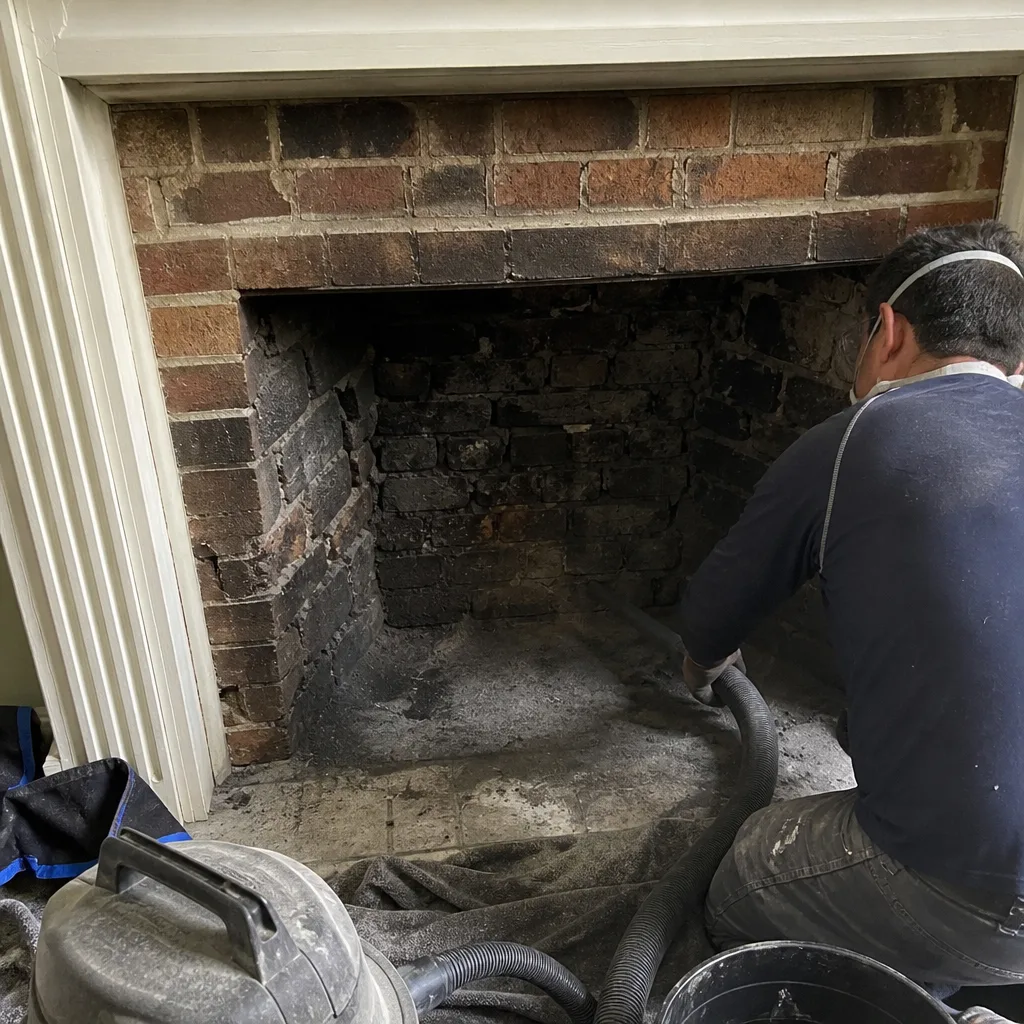 Before
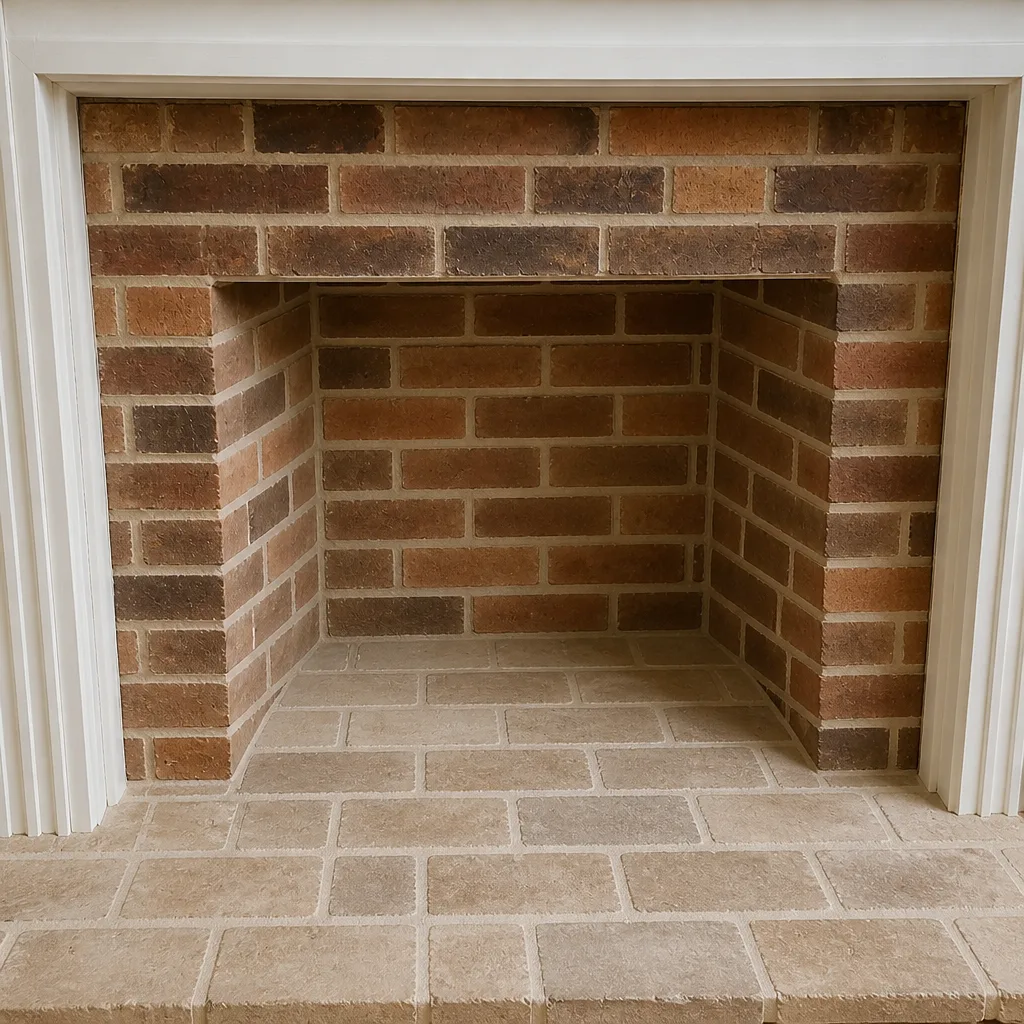 After
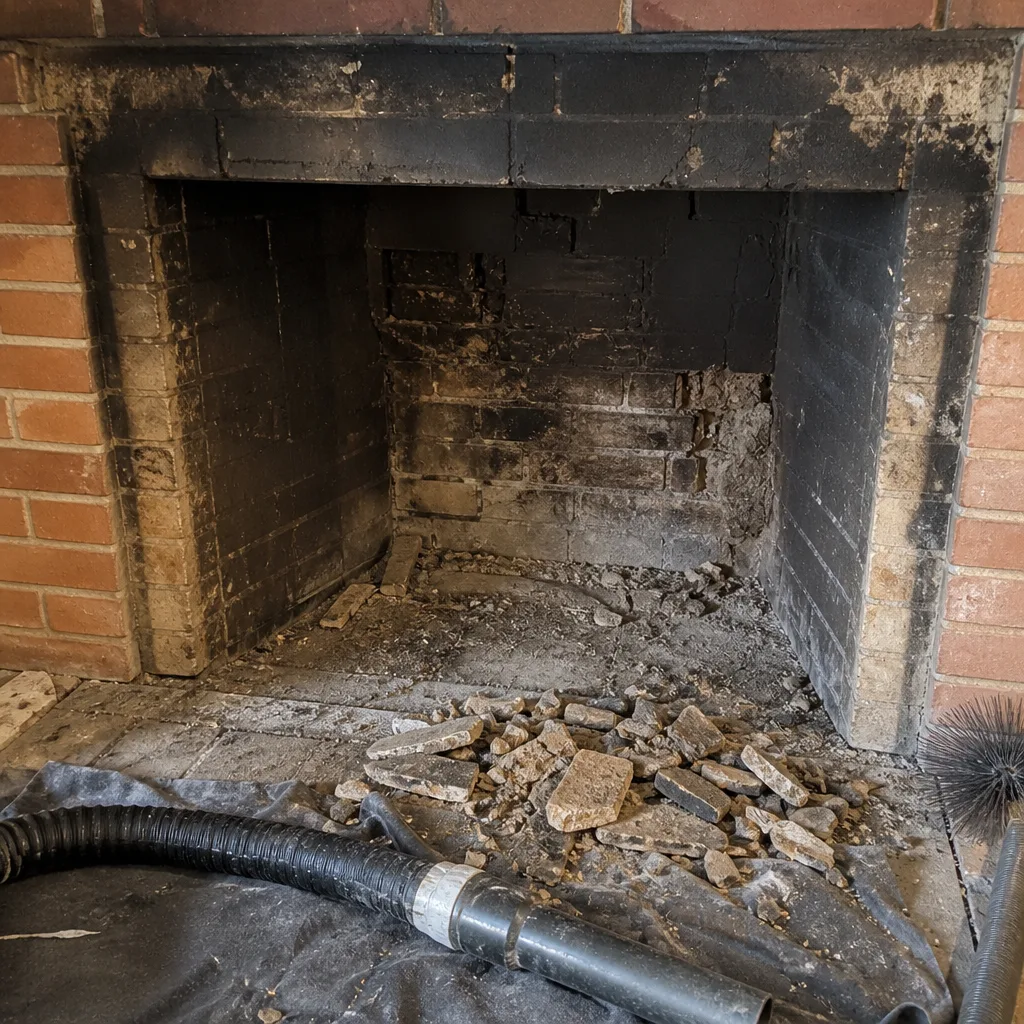 Before
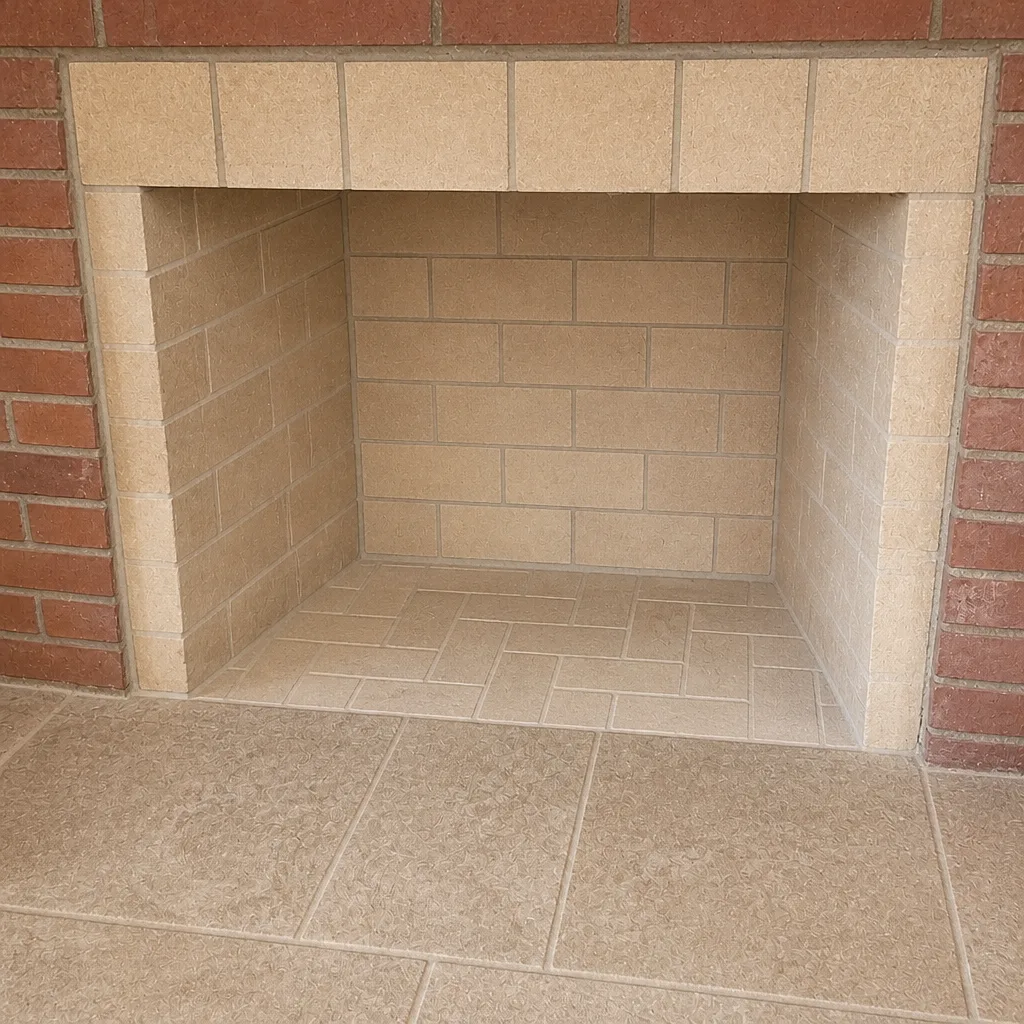 After
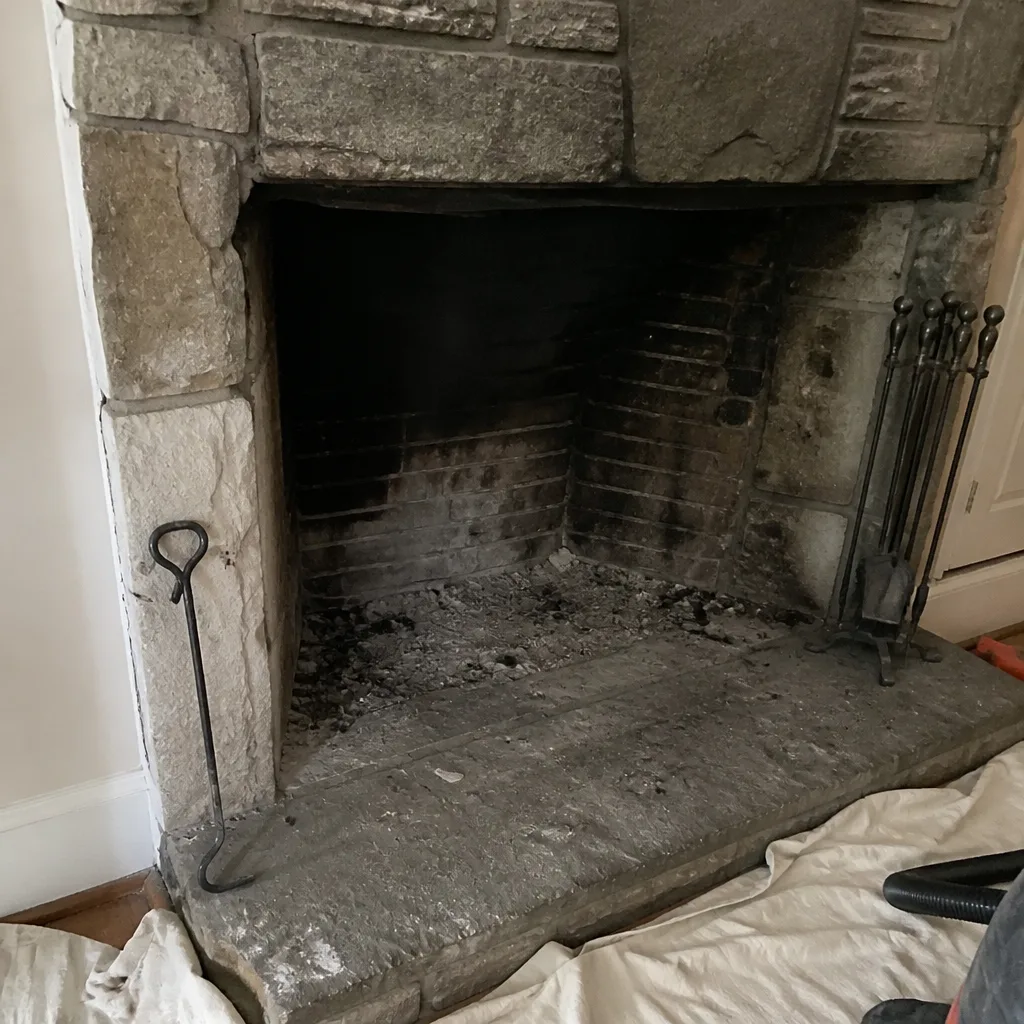 Before
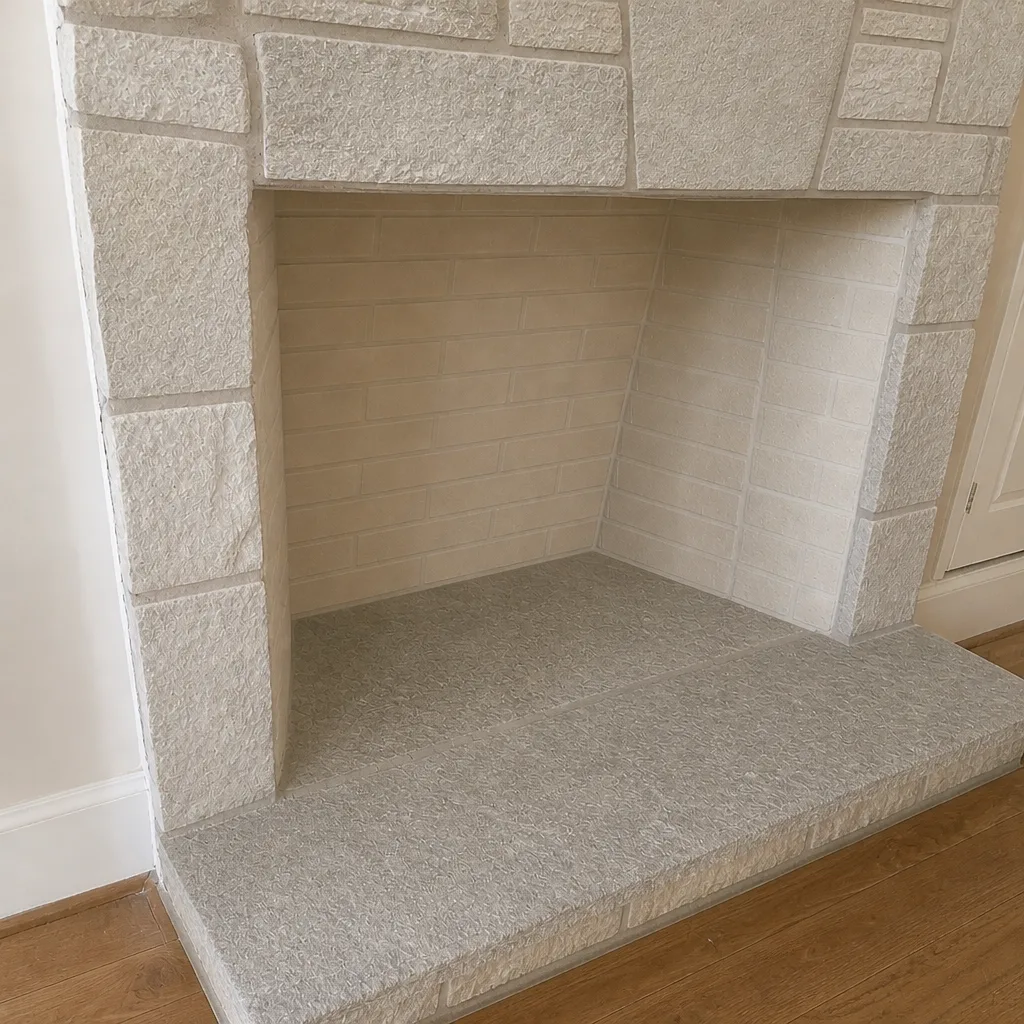 After
When to Call a Professional
You should call a professional chimney company when any of the following is true. First, when you’re using the fireplace for the first time in a season and you don’t have documentation of a recent inspection. Second, when you smell smoke inside the room on a fire, which suggests the flue is obstructed or undersized. Third, when creosote is visible at the flue collar – glazed creosote is a fire hazard and needs a trained professional. Fourth, when there’s water staining on the ceiling near the chimney, which usually means a failed crown, flashing, or cap. Fifth, when you’re buying or selling an Arlington home and need a documented inspection. For any of these, Sentry Chimney Sweep offers free estimates in Arlington – call (833) 309-7302. We answer 24/7. Fast dispatch from 7am to 7pm, Sunday through Friday.
Safety note: chimney work involves height, firebox temperatures, and the flue interior. Never enter a flue or attempt to clean a chimney with a compromised liner, and treat high-tension garage-door-style spring mechanisms in other equipment with the same caution. A chimney professional has the tools, the fall protection, and the certification to do this work safely.
Frequently Asked Questions
A standard chimney cleaning in Arlington is typically in the $150 to $300 range, and pricing is set per job by the written estimate, not by the hour. The estimate should itemize the cleaning, the inspection, and any repair materials separately, so you can see what each part costs. Call (833) 309-7302 for an exact quote – estimates are free.
Look for current CSIA certification and, for wood-burning appliances, NFI credentials specific to that fuel type. Both can be verified directly in the public certification directories in about two minutes. The credential matters because it’s the framework that keeps material standards consistent across every job, not because it’s a badge.
They’re products with published temperature ratings and manufacturer warranties, specified by application – refractory-grade sealants for high-heat surfaces, flexible crown coatings for masonry that moves, stainless liner systems rated for the fuel and appliance below, and cast-in-place resurfacing like HeatShield for cracked flue interiors. The correct product in the wrong application is not a professional-grade job, which is why the specification matters more than the catalog.
You need a new liner if the inspection shows the current liner is cracked, disconnected, improperly sized, or compromised – not because a company recommends it without evidence. Ask for the camera inspection photos and the written materials specification before you schedule. If the liner is intact and correctly sized, relining is not necessary. Call (833) 309-7302 for an exact quote – estimates are free.
For a wood-burning fireplace used regularly, an annual inspection and cleaning as needed is the standard recommendation. The annual inspection is what tells you whether the year’s use created enough creosote or damage to require cleaning or repair. Skipping the inspection is the risk – a cleaning without an inspection misses the actual problems.
An honest estimate is specific: it names the products, the temperature ratings, the scope of work, and a per-line price, and it tells you what can safely wait. It also includes a camera inspection report you can see for yourself. If the estimate is generic or every line item is urgent, ask questions and get a second opinion.
The Bottom Line
Choosing a chimney cleaning brand in Arlington comes down to a tighter set of questions than most homeowners expect. National name recognition tells you very little. What tells you a lot is whether the company can specify its liner system, its crown coating, and its sealant by product and rating, and put all of that in writing on the estimate. Credentials back that up. A camera inspection lets you check it. And a willingness to say what can wait separates a professional from a sales call. Apply those filters and the right company for your chimney usually becomes obvious in one phone conversation.
If you’d like a free estimate from a chimney specialist that works this framework, call Sentry Chimney Sweep at (833) 309-7302. We answer 24/7. Fast dispatch from 7am to 7pm, Sunday through Friday.
Written by the team at Sentry Chimney Sweep.