
Last updated November 15, 2026
 Sweep & inspection
 Caps & crowns
 Flue relining
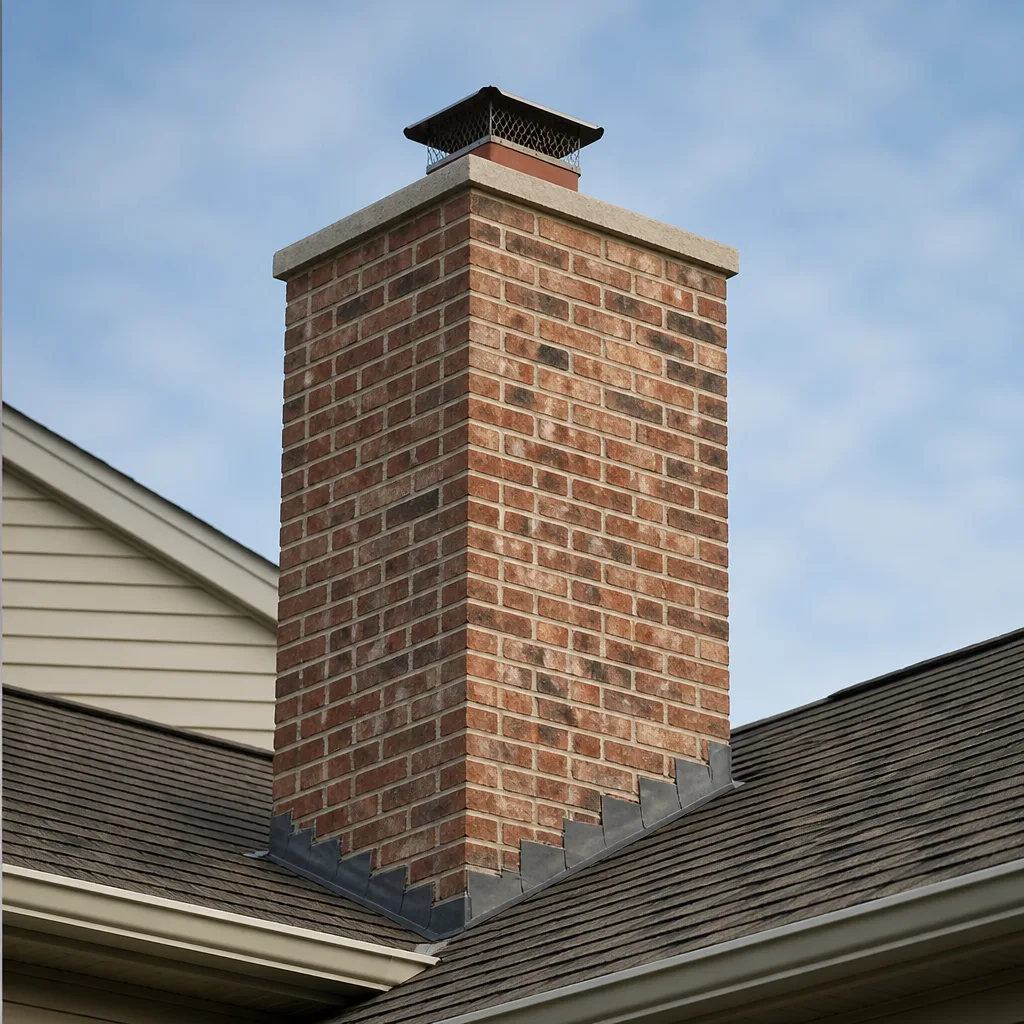 Masonry repair
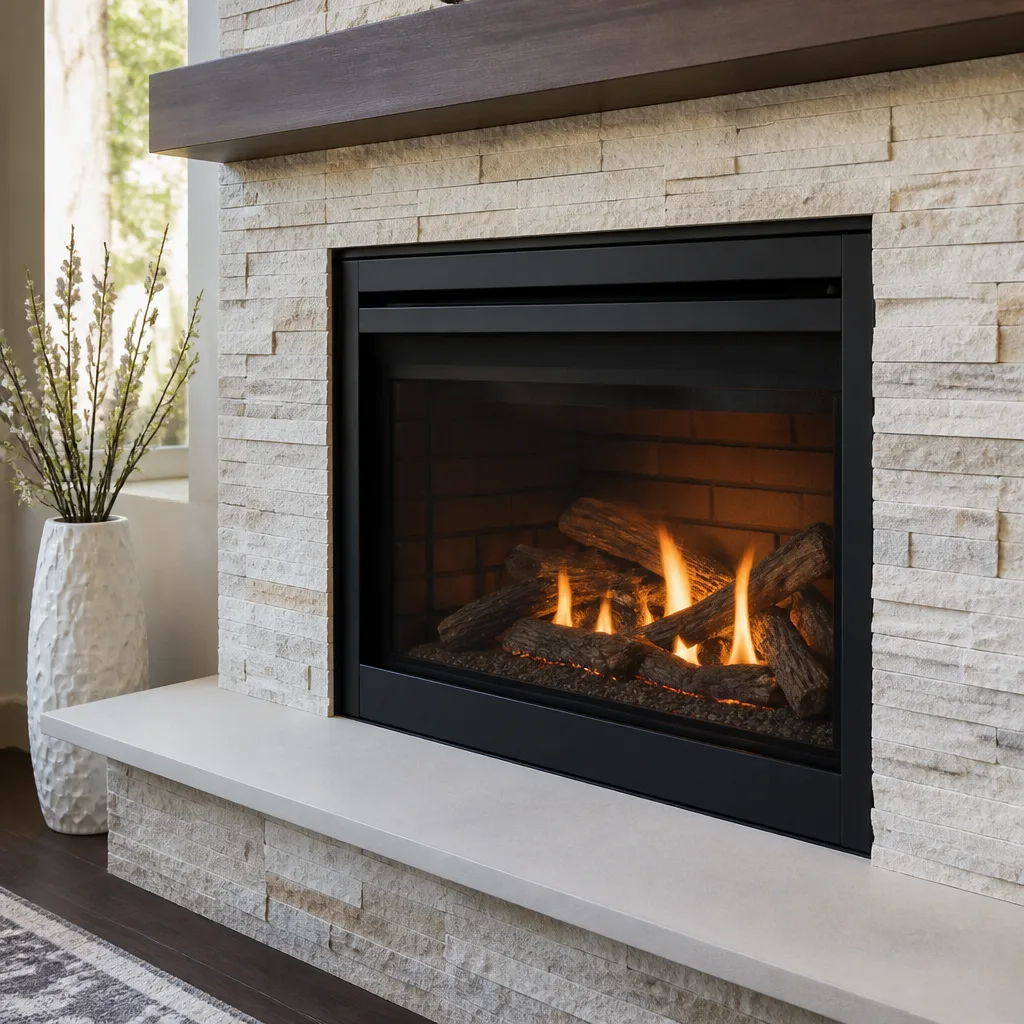 Gas fireplace service
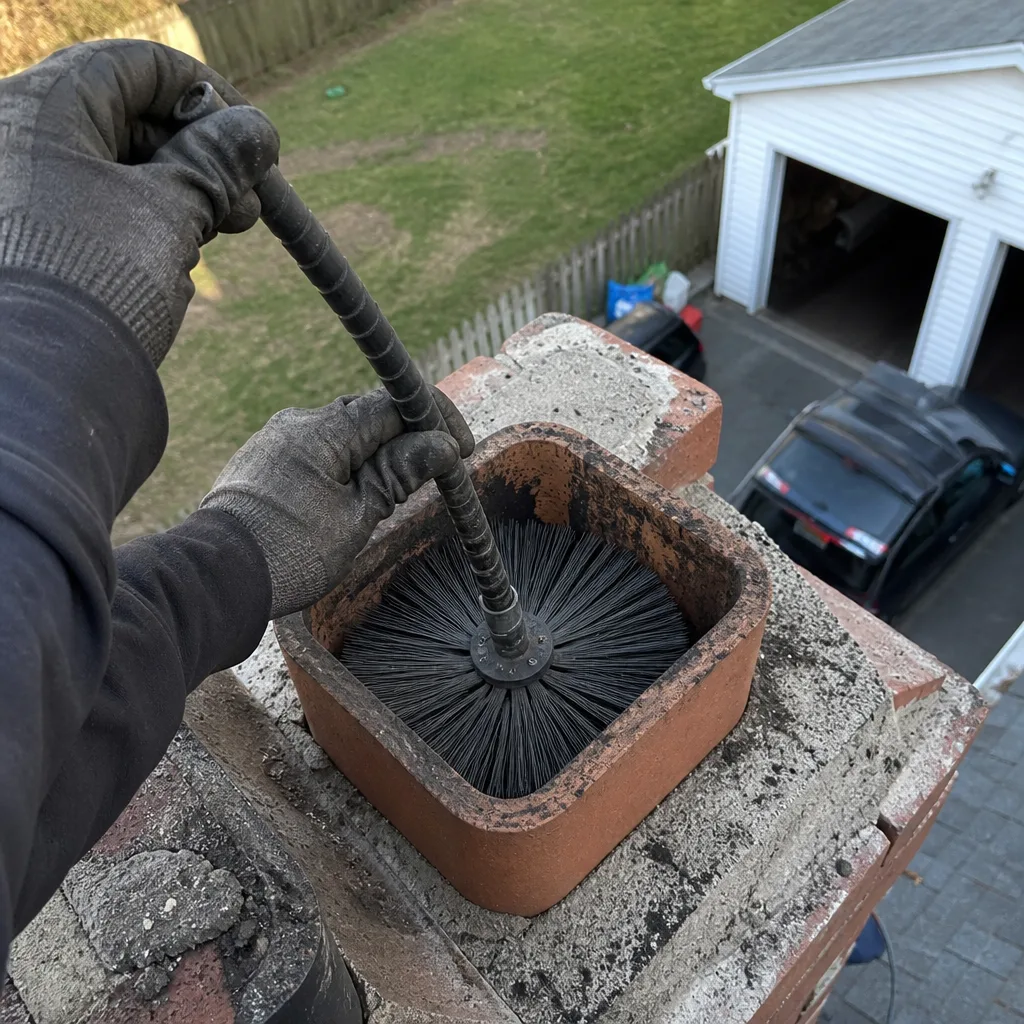
Level 1 sweep and inspection to the NFPA 211 annual standard - flue, crown, cap, and flashing checked and photographed
Chimney sweep logs do not sweep chimneys. They loosen some creosote - which then falls where a brush and vacuum still have to collect it.
Chimney Sweep Troubleshooting in Arlington: Common Problems and How to Fix Them
A smoky fireplace and a white-stained exterior brick might look like two separate problems. In most Arlington rowhouses and colonials, they’re the same water-intrusion issue wearing two different masks. The homeowner chases the smoke with a different firewood, then scrubs the brick, and neither fix holds because the root cause was never in either place. A lot of the repair bills we see start with a symptom treated in isolation instead of a system read in sequence. This guide teaches you to read your chimney’s distress signals in the order they usually appear, so you can tell which problems you can monitor and which ones need a certified sweep before the next fire gets lit.
Quick Answer
Chimney problems in Arlington usually trace back to one of five root causes: water intrusion, negative air pressure inside a tight house, a blocked or damaged flue, cracked masonry from settling soil, or heavy creosote. Reading stains, smoke behavior, and season patterns in sequence tells you which one you’re dealing with. Anything involving the flue interior, cracked firebox masonry, or a heavy creosote load requires a certified sweep and inspection before you burn again.
Styles & brands we work with
- Sweep & inspection
- Caps & crowns
- Flue relining
- Masonry repair
- Gas fireplace service
Table of Contents
- Reading Your Chimney’s Distress Signals in Sequence
- What the Stain Colors on Your Firebox Walls Actually Mean
- Draft Problem or Blocked Flue? How to Tell the Difference
- Why Smoke Backdrafts Differently in Winter and Summer
- How Arlington’s Clay Soil Cracks Fireboxes From Below
- The Decision Tree: Monitor It or Call a Sweep?
- Creosote Stages and Why the Third Stage Changes Everything
- Exterior Clues: Crown, Flashing, and Brick Spalling
Reading Your Chimney’s Distress Signals in Sequence
Most homeowners troubleshoot a chimney one symptom at a time. The smoke is bad, so they open a window. The brick is white, so they clean it. The damper sticks, so they leave it partly open. Each fix seems to work for a while. Then a second symptom shows up somewhere else, and the pattern repeats. In our experience, that’s the tell: when symptoms keep multiplying across different parts of the chimney, they’re not separate problems. They’re reports from a single failure sending up signals in more than one place.
Reading a chimney in sequence means starting where the trouble usually starts and working forward. The order below is the one that resolves the most cases in Arlington homes:
- Water. Look for staining, rust, efflorescence, or a musty smell in the firebox. Water is the most common original cause of masonry failure in this region and it produces knock-on symptoms everywhere else.
- Air pressure. Check whether the smoke problem changes when you crack a window near the fireplace. If it does, the house is likely running negative pressure rather than a flue problem.
- Flue blockage. Listen for animal noise, look for debris at the damper, and check whether smoke rolls back when the fire is hot and the window is closed.
- Masonry cracks. Inspect the firebox walls and the smoke chamber for cracks, especially near the base. Cracks that widen season over season often signal movement from below.
- Creosote load. Glazed or tar-like deposits in the flue mean the chimney is due for a professional cleaning before another fire.
The reason the sequence matters is that fixing symptom three while cause one is still active wastes money. Sealing a flue cap without addressing a failing crown just traps moisture longer. Rebuilding a firebox without checking for settling below means the crack returns. If you’re ready to have a professional read the whole system in one visit, our chimney sweep service covers cleaning and a visual assessment of every signal on this list.
What the Stain Colors on Your Firebox Walls Actually Mean
The inside of your firebox is a diagnostic panel. The color and texture of the staining on the firebrick and the surrounding masonry narrows the cause before anyone picks up a tool. Homeowners often assume all stains mean the same thing, which is why the wrong fix gets applied first. Here’s what the three main stain colors usually diagnose.
Brown Stains
Brown staining is the most common and usually the least serious. It typically points to a draft issue drawing combustion byproducts back through the firebox before they clear the flue. In Arlington homes, this is often tied to the way the fire is being operated: green or unseasoned wood, a damper opened too late, or a flue that’s slightly undersized for the fireplace opening. Brown stains that appear slowly and stay light usually respond to better fuel and a damper habit change, plus a proper cleaning to reset the baseline. Dark brown that creeps up onto the lintel is worth a professional look.
White Stains (Efflorescence)
White, powdery staining is efflorescence, and it’s a water signal. Water moves through the masonry, dissolves salts from the brick and mortar, and deposits them on the surface as it dries. Seeing it inside the firebox means moisture is actively moving through from the exterior side of the chimney. Left alone, this process slowly breaks down the mortar joints and eventually the brick itself. White staining on the exterior brick of an Arlington rowhouse is the same signal showing up on the other face. If you’re seeing staining on the exterior too, our chimney repair assessment starts with moisture source identification before any resurfacing.
Black Stains
Black staining means combustion deposits, and heavy black buildup points to a restricted flue, incomplete combustion, or both. A thin sheen of black on the firebox walls is normal. Thick, glossy, tar-like black that reaches up into the smoke chamber is a creosote signal and calls for professional cleaning before the next fire. Black stains combined with a smoky smell any time of year are a strong indicator the flue is not venting properly and should be evaluated right away.
If you’re not sure which color category you’re looking at, photograph the firebox walls under natural light and describe what you see when you call. A certified sweep can usually narrow the likely cause from that description before arriving.
Draft Problem or Blocked Flue? How to Tell the Difference
Both problems look the same from the couch: smoke won’t go up. But the fix is completely different, and treating one as the other wastes money and can leave a genuine safety issue unaddressed. Here’s how to separate a draft caused by negative air pressure from a draft caused by a blocked or damaged flue.
Negative Air Pressure in Energy-Efficient Arlington Homes
Arlington has a large number of tightly built and well-renovated homes, and tight construction changes how a fireplace behaves. Bathroom fans, kitchen exhausts, dryer vents, and modern windows all pull air out of the house. If the house is sealed well and the fireplace is the only path for replacement air, smoke gets pulled into the room rather than up the flue. The house is doing what it’s designed to do; the fireplace is on the losing side of a pressure fight.
The classic test costs nothing: with a small fire going and smoke starting to roll into the room, crack a nearby window about an inch. If the smoke reverses and starts drafting up the chimney within a minute or so, negative pressure is your cause. If the smoke keeps rolling regardless, you’re likely looking at a blockage.
Blocked or Damaged Flue
A blocked flue behaves differently. Smoke backs up no matter how the windows are set, and the fire may burn weakly. Common causes include:
- Nests, leaves, or debris from a missing or damaged cap
- A broken flue tile that’s shifted and narrowed the passage
- A chimney that’s too short for its surroundings or that’s lost effective height
- A heavy creosote buildup narrowing the flue to a fraction of its designed size
Negative pressure can be managed with makeup air, damper habits, and sometimes a properly sized flue liner or cap change. A blocked or damaged flue requires cleaning and repair before use. The two are not interchangeable, and that’s exactly why a certified inspection matters. A visual assessment from the firebox alone won’t confirm what’s happening in the upper flue; that requires a proper look from the top and a camera inspection. If you’re not sure which scenario you have, our team can walk you through it over the phone, and a Sentry Chimney Sweep inspection will confirm it on site.
Why Smoke Backdrafts Differently in Winter and Summer
The season in which backdrafting happens is one of the most useful diagnostic clues a homeowner can hand a sweep, and it’s one most troubleshooting guides skip entirely. Smoke that rolls into the room in January points to a different cause than smoke that rolls in July. Here’s why.
Winter Backdrafting: Temperature Differential
In cold weather, the chimney warms up more slowly than the room does. A cold flue has cold air sitting in it, and cold air is denser than room air. When you light a fire in a cold flue, the first smoke has nowhere to rise until the flue warms enough to reverse the flow. This is why a small, warm-up fire is the right way to start a winter fire: it gives the flue time to establish an upward draw. Winter backdrafting that persists beyond the first few minutes, though, is usually a sign the flue isn’t warming properly. That can mean an oversized flue for the fire size, a flue with significant deposits insulating the walls, or a house that’s running pressure that overrides the natural draw.
Summer Backdrafting: Structural Blockage and Stack Effect Reversal
In summer, the temperature problem reverses. Outside air is often warmer than inside air, so the chimney stack effect can stall or reverse. A chimney that drafts perfectly in winter but puffs smoke on a cool summer morning is often dealing with a stack that can’t find the upward pressure it needs. Summer backdrafting is also more likely to expose a physical blockage, because the weaker seasonal draw doesn’t have enough force to push past debris or a damaged flue tile. When summer smoke problems show up suddenly on a chimney that was fine the previous year, treat it as a blockage signal and have the flue checked before fall.
The practical takeaway: write down when the problem happens and whether temperature matters. That single note tells a sweep more than a stack of guesses. If backdrafting happens in both seasons, the cause is almost always structural rather than seasonal, and an inspection should come before the next fire.
How Arlington’s Clay Soil Cracks Fireboxes From Below
Arlington sits on heavy clay soil, and that geology is one of the most overlooked causes of chimney failure in the area. Clay expands when wet and contracts when dry, and that cycle repeats every season. When a chimney foundation sits on clay that’s moving, the movement transmits up through the masonry. The first place it usually shows is the firebox: hairline cracks in the firebrick, mortar joints opening, or a firebox floor that looks uneven.
Most troubleshooting guides skip this because it happens below eye level and below the visible chimney. Homeowners clean the firebox, re-mortar the joints, and the crack returns the next winter. Here’s what to watch for if you suspect settling is involved:
- Cracks that reappear after repair. A crack that comes back in the same place season after season is a signal from below, not a surface problem.
- Door frames or floor lines in nearby rooms that have shifted. Chimney settling rarely happens in isolation. Look for other movement in the house.
- Separation between the chimney and the house exterior. A visible gap where the chimney meets siding or brick is worth measuring once a year.
- Water pooling or poor drainage near the chimney base. Clay soil doesn’t drain well, and standing water at the base accelerates the movement cycle.
When settling is the cause, surface repair is only half the job. Repairs need to accommodate small movement rather than fight it, which is why we use professional-grade materials like HeatShield for firebox resurfacing: it bonds to the existing masonry and accommodates minor movement better than a thin patch. Correcting drainage and managing water at the chimney base is the other half. If your firebox cracks keep returning, that’s the moment to call for an inspection rather than re-patch a third time. Sentry Chimney Sweep works across Arlington and knows this soil pattern well.
The Decision Tree: Monitor It or Call a Sweep?
Not every chimney symptom needs a professional visit tomorrow. Some warrant monitoring, some warrant a sweep before the next fire, and a few warrant stopping use entirely. This decision tree walks through the call you need to make, and it’s the piece of troubleshooting most homeowners wish they’d had sooner.
Monitor
- Light brown staining that appears slowly and is contained to the firebox walls
- Occasional smoke puffing on the first fire of the season that clears once the flue warms
- A damper that’s slightly stiff but operates fully
- Minor soot at the top of the firebox opening
With any of these, log what you see, how often it happens, and whether it’s getting worse. Bring the log when you schedule a routine sweep. None of these alone is an emergency.
Call for a Sweep Before the Next Fire
- Glossy, tar-like black deposits in the firebox or visible from the damper
- White efflorescence appearing indoors or on exterior brick
- Firebox cracks that reappear after a previous repair
- Backdrafting that continues even with a window cracked
- Any animal noise or debris at the damper
- It’s been more than a year since the last sweep and you burn regularly
These all point to a cause that needs to be confirmed by a certified professional before another fire. Book a sweep, not just a cleaning.
Stop Use and Call Now
- A cracked or missing flue tile visible from the top
- Heavy creosote that’s accumulated far beyond the usual cleaning interval
- Smoke that fills the room every time, regardless of conditions
- A firebox wall that’s crumbling or has a visible hole
- Any carbon monoxide alarm event in the home
These are genuine safety conditions. Don’t light another fire until a sweep has inspected and cleared the chimney. That’s the whole reason a Sentry inspection exists: to confirm, in writing, that the system is safe before you rely on it. Call (833) 309-7302 and we’ll book the right visit.
Creosote Stages and Why the Third Stage Changes Everything
Creosote is the fuel of a chimney fire, and it builds in three distinct stages. Recognizing which stage you’re at is one of the few self-assessments a homeowner can do safely, and it drives the timing of the next sweep more than any other factor. The stages below run from routine to urgent.
- Stage one: soot and light flaky deposits. This is what a normal annual cleaning removes. If you see gray or light brown soot on the firebox and damper area, your chimney is due for routine service but nothing is unusual.
- Stage two: hard, black, crusty deposits. Removal takes more effort and the deposits are beginning to bond to the flue walls. Stage two means a sweep is overdue. Cleaning it now is straightforward; wait longer and it keeps building.
- Stage three: glazed, tar-like creosote. This is the stage that concentrates heat and is the most common precursor to a chimney fire. Glazed creosote doesn’t come off with a standard brush. It needs a professional with the right tools, and the flue should be evaluated for damage before any fire is lit again.
How fast you reach stage three depends on what you burn. Green or unseasoned wood, damp wood, and slow, smoldering fires all accelerate the buildup. Hotter, cleaner-burning fires with dry seasoned wood produce less. Even with perfect burning habits, creosote accumulates, which is why the annual sweep interval matters. If you haven’t had your flue cleaned in a while and you burn regularly, assume stage two and book a cleaning. Our team uses professional-grade sweeping equipment and will show you the deposits removed.
Exterior Clues: Crown, Flashing, and Brick Spalling
Half of chimney troubleshooting happens outside the house. The crown, the flashing, and the brick itself are all reading surfaces, and they tend to fail in the sequence that moisture travels. Walking around the chimney once a season tells you a lot.
The Crown
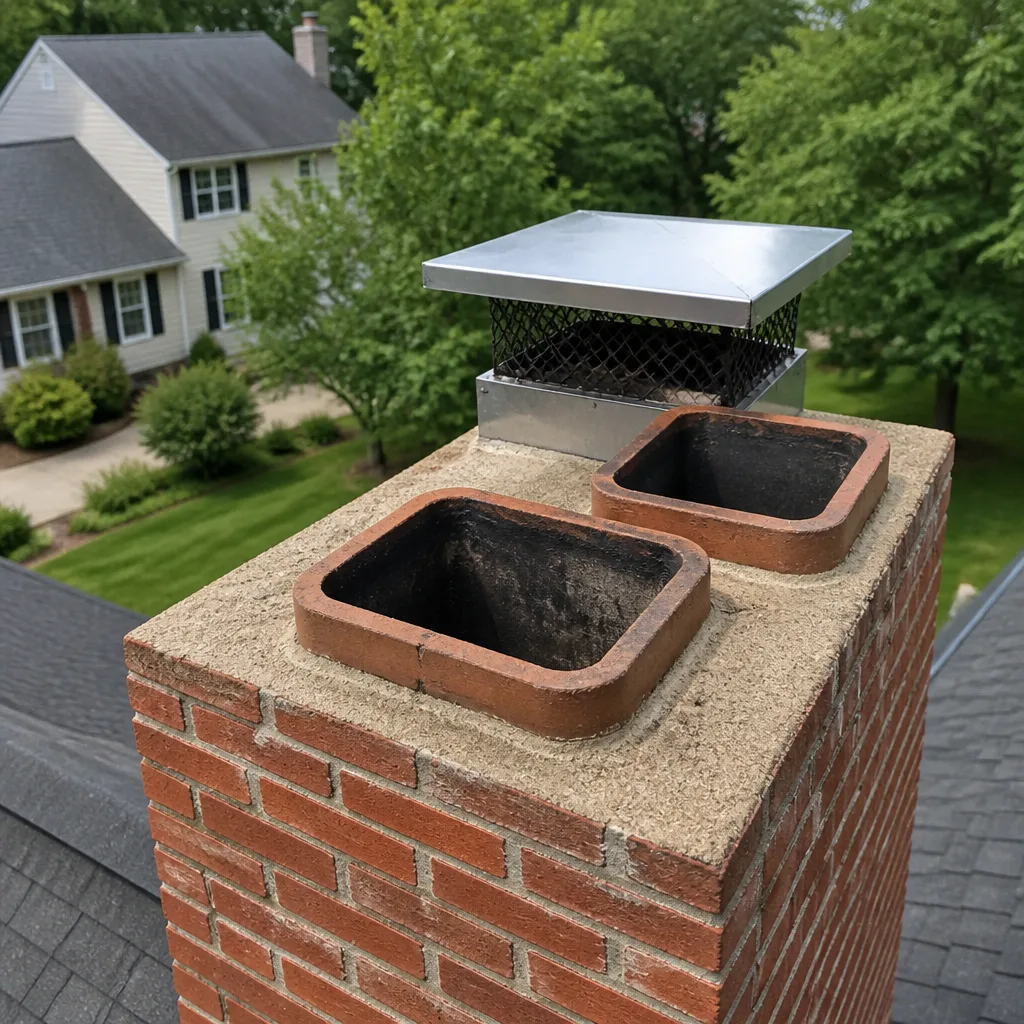
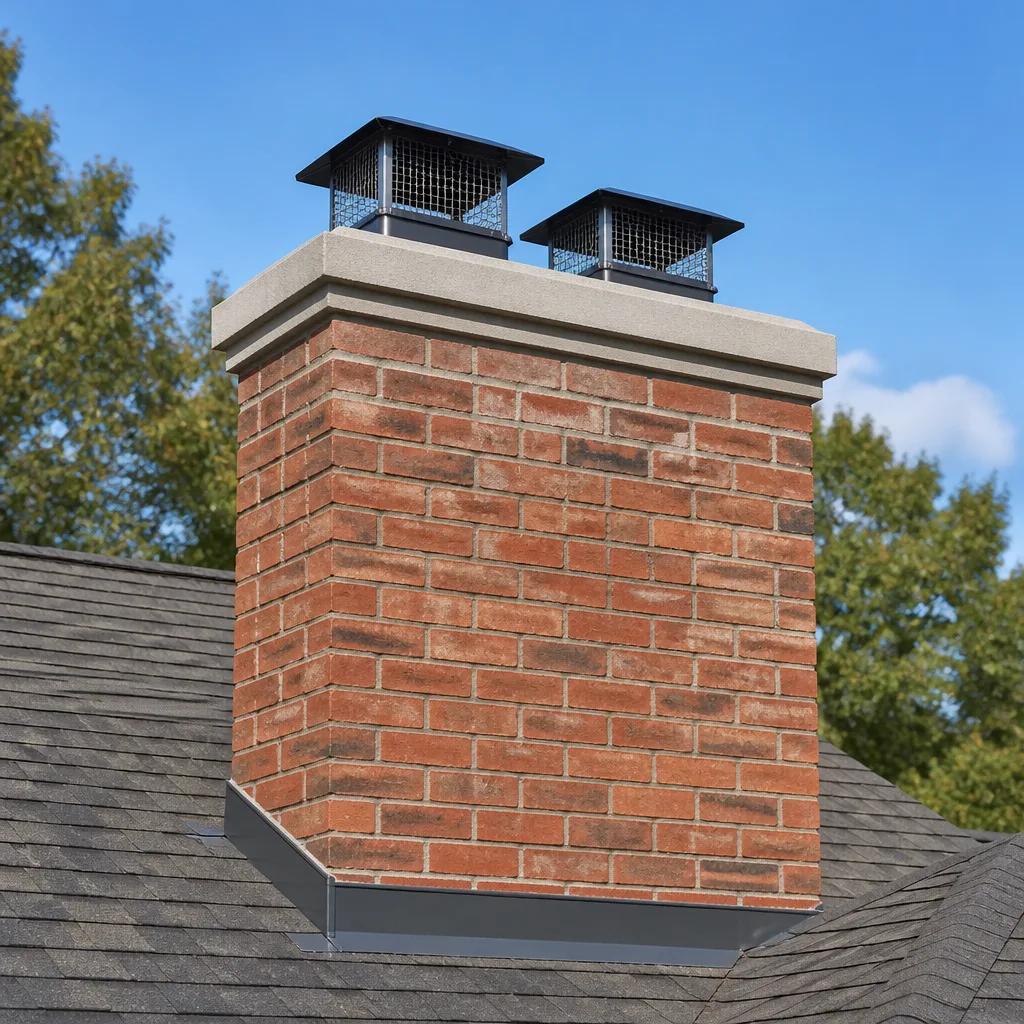
The crown is the concrete cap at the very top of the chimney. Its job is to shed water away from the flue. A crown with a visible crack, a gap at the flue edge, or missing chunks is actively letting water into the chimney structure. Crown cracking is common in this climate and is the most common entry point for the moisture that eventually produces interior efflorescence and masonry failure. Crown repair belongs with a chimney specialist, and professional-grade repair materials make the fix last far longer than a bag of mortar and a hopeful weekend.
Flashing
Flashing is the metal seal where the chimney meets the roof. When it pulls away or the sealant dries out, water runs down the chimney’s exterior and into the house. Look for rusted flashing, missing sealant at the top edge, or dark staining on the roof next to the chimney. If there’s staining there, water is actively getting in.
Brick Spalling
Spalling is brick face flaking off in sheets. It’s a moisture signal, and it’s usually the last exterior symptom to appear before the masonry itself starts to fail structurally. White staining on brick is an earlier signal and worth acting on before spalling starts.
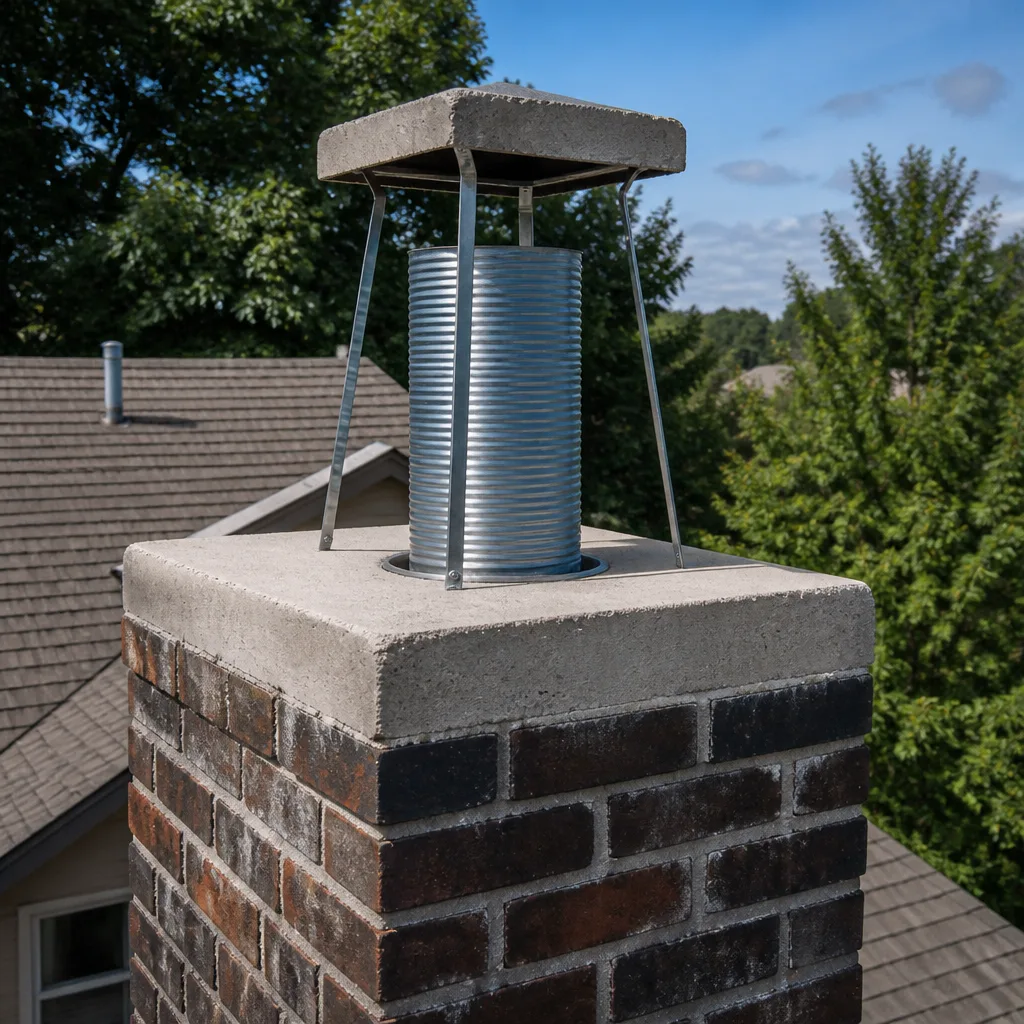
Exterior inspection is also how you catch cap damage before an animal gets in. A rusted-through cap means a flue that’s open to the weather and to wildlife. When we perform a chimney inspection, all of these exterior points get documented alongside the interior assessment, so you have a clear picture rather than a single fix and a guess.
Whether the cause is a crown crack or a flashing issue, our chimney repair visit starts with identifying the actual water source. That’s the difference between a fix and a temporary patch, and it’s why we work with products like DuraFlex liners for interior protection and HeatShield for firebox resurfacing on jobs that call for them. Materials from brands such as Olympia Chimney and Famco show up on our trucks because they’re the same professional-grade products other certified sweeps specify across the country.
Common Mistakes to Avoid
- Treating each symptom separately. Fixing the smoke today and the white brick next month means missing that water intrusion is causing both. Read the signals together before acting on any of them.
- Sealing the top of the chimney before fixing the source of moisture. A cap or crown patch over active water intrusion traps moisture inside and accelerates masonry failure. Stop the water first.
- Assuming all smoke problems are blockages. In tightly built Arlington homes, negative pressure accounts for more backdrafting than homeowners expect. Test with a window cracked before booking a costly diagnostic.
- Burning green wood to “save money.” Unseasoned wood produces far more creosote per cord and gets you to stage three faster. Dry seasoned wood is a maintenance decision, not a fuel preference.
- Re-mortaring a firebox crack that keeps returning. On Arlington’s clay soil, a returning crack is often a settling signal from below. Surface patches won’t hold until the movement is managed.
- Skipping the annual sweep because the chimney “looks fine.” Creosote accumulates where you can’t see it. The flue interior is the one part of a chimney a homeowner can’t reliably assess.
- Using a generic handyman for flue or firebox work. Chimney repairs need specialized tools and materials. A surface-level patch by someone outside the trade often fails within a season and costs more to fix later.
See the difference
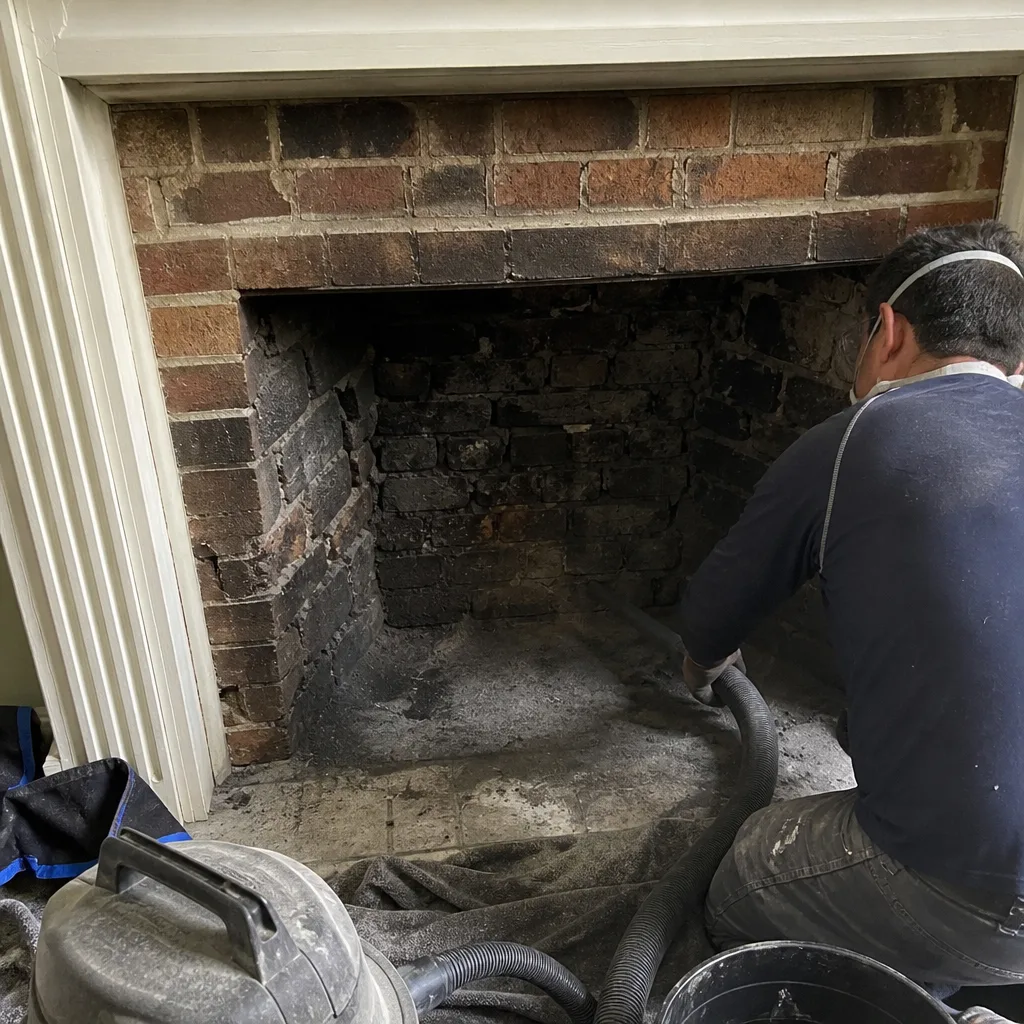 Before
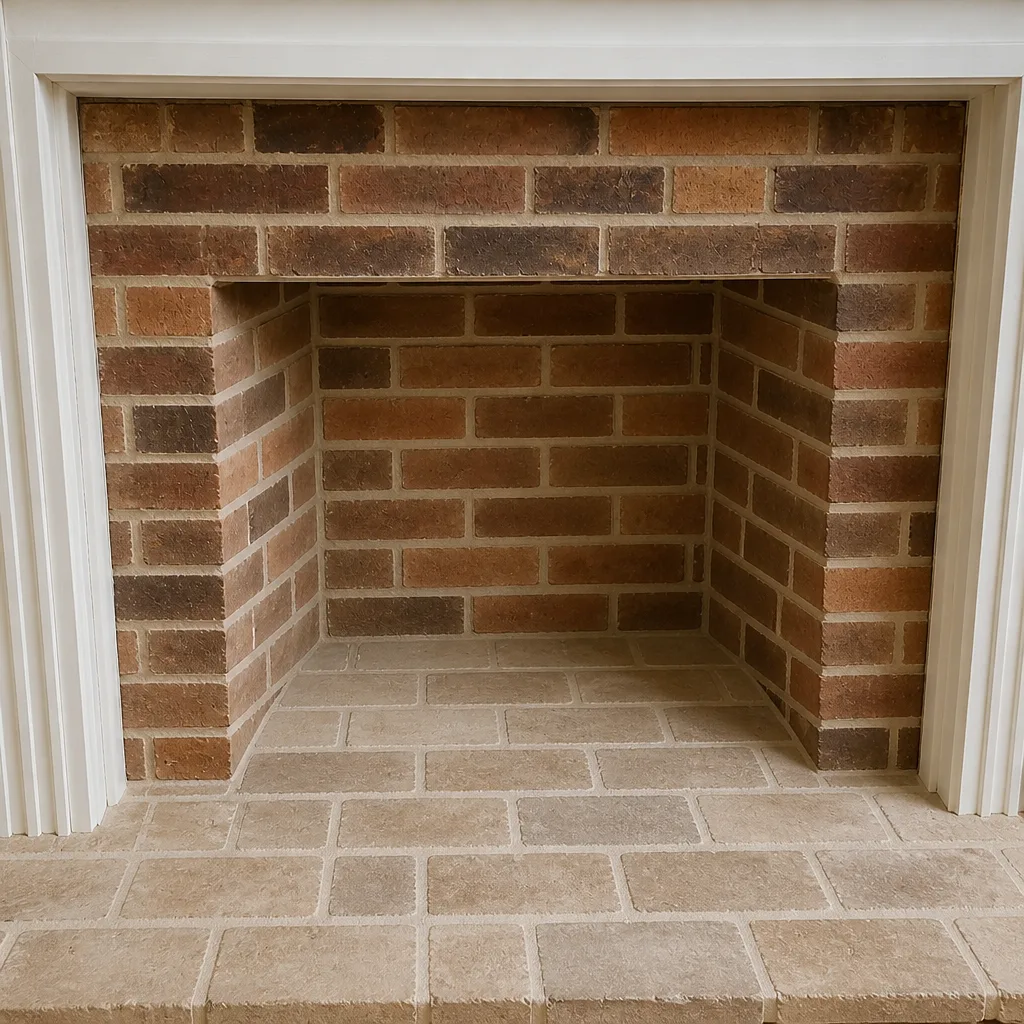 After
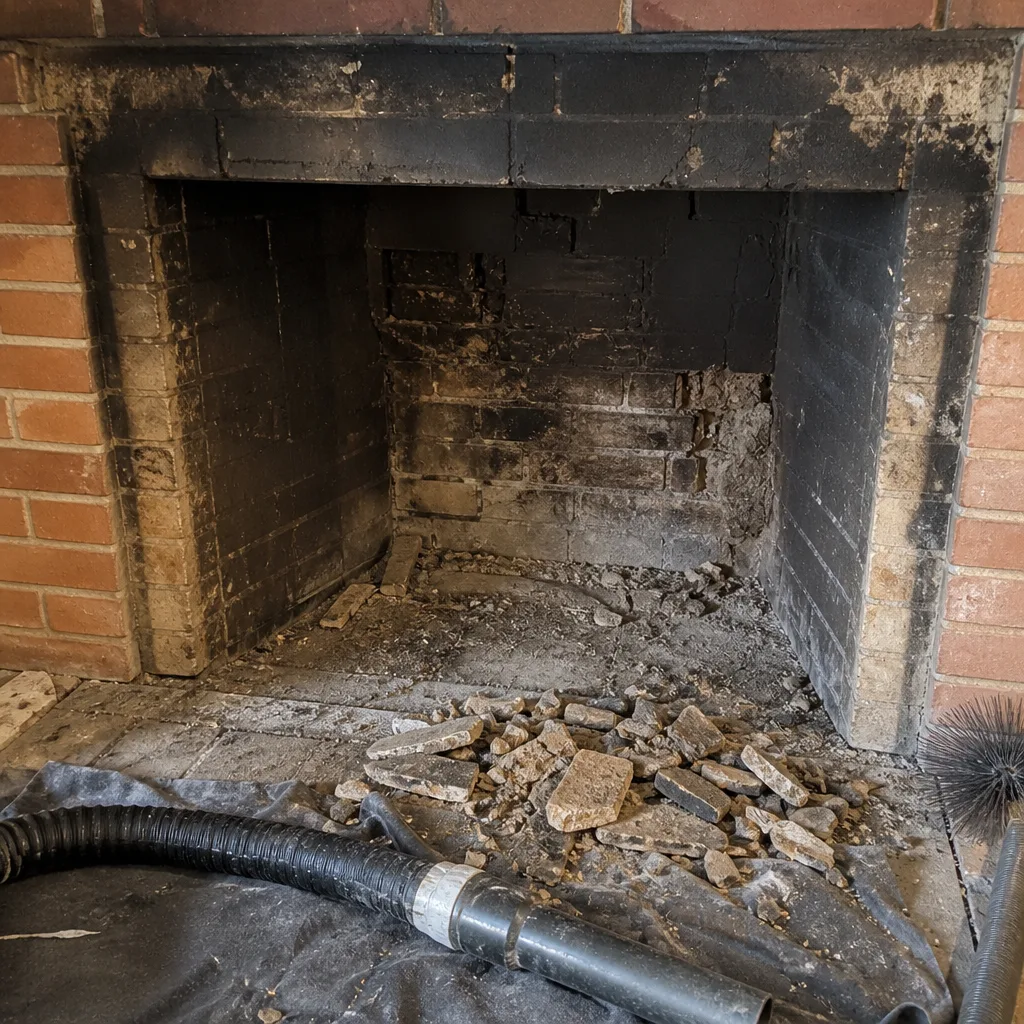 Before
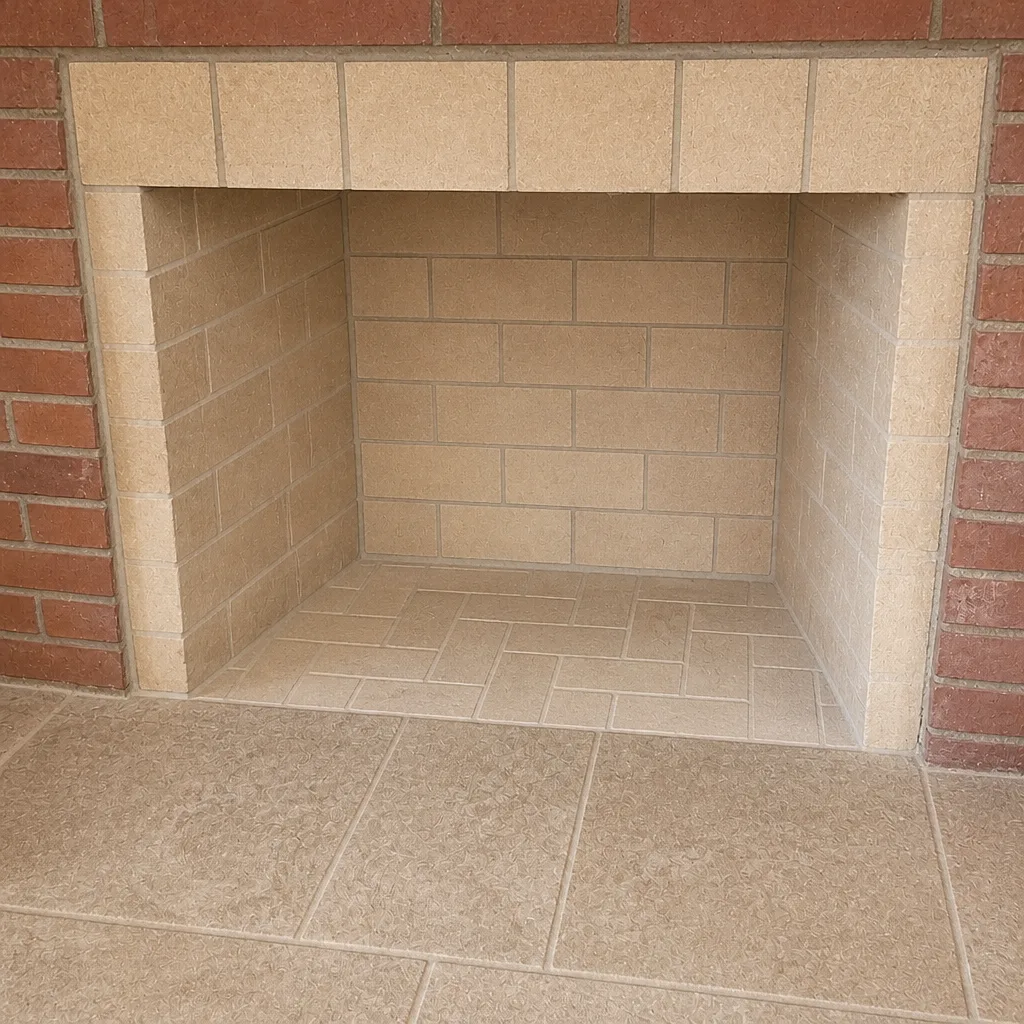 After
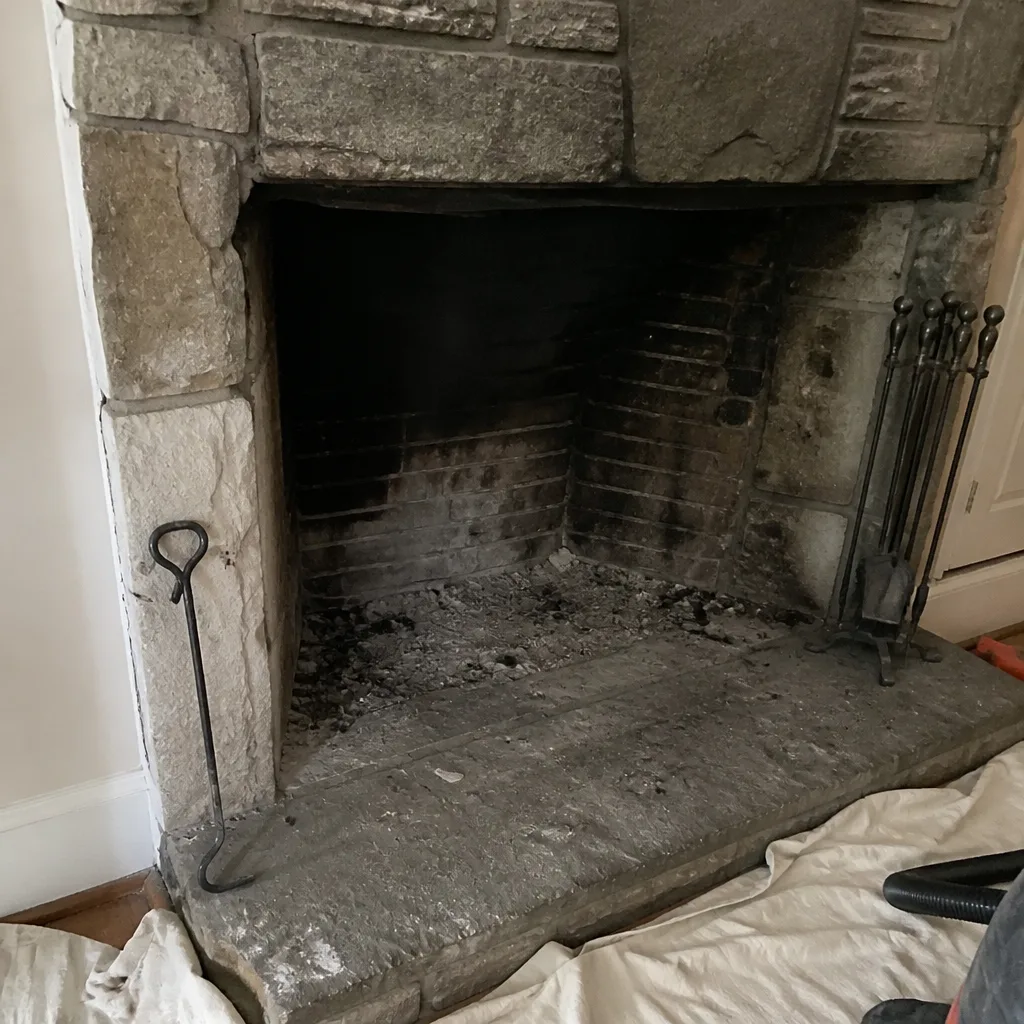 Before
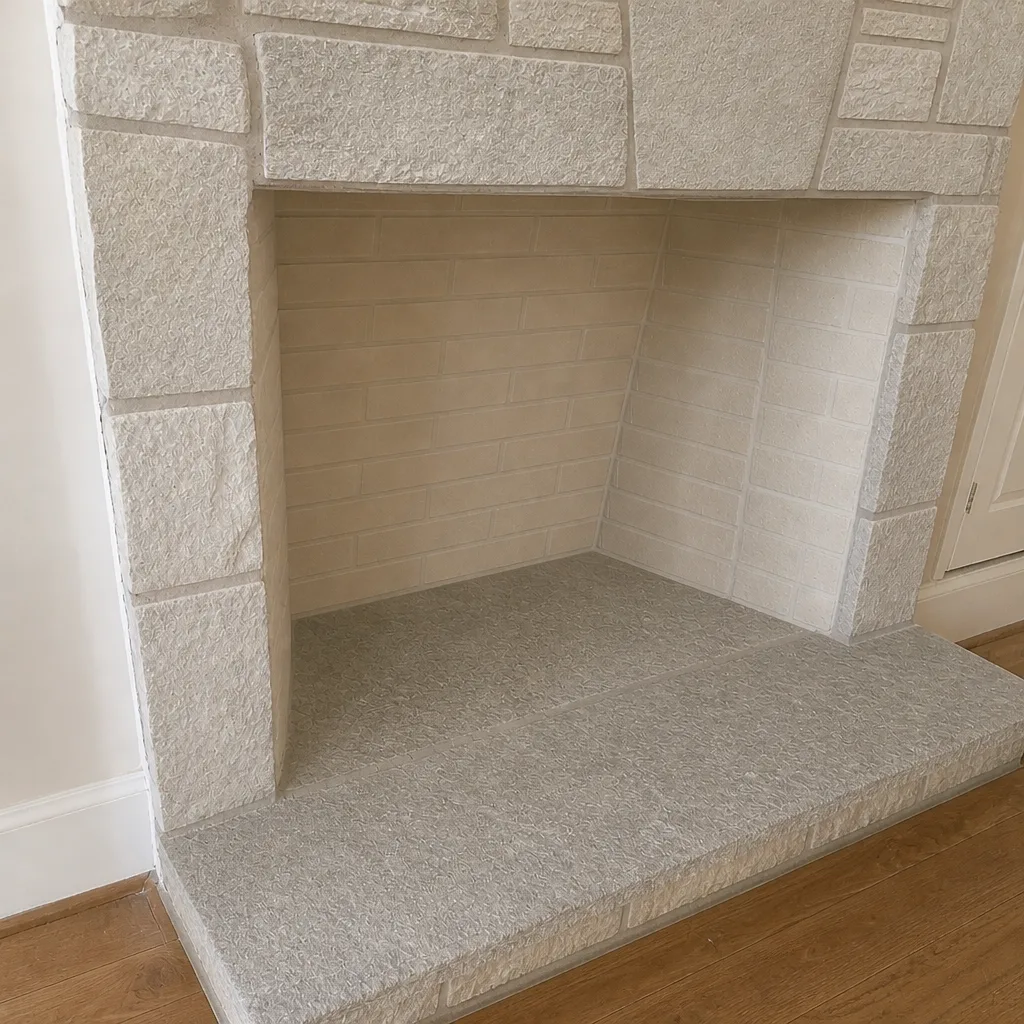 After
When to Call a Professional
Some problems genuinely require a certified sweep, and the sooner you call, the cheaper the fix usually is. Call us if you’re seeing glazed creosote, if firebox cracks are returning after a repair, if smoke fills the room regardless of window position, if you’ve found debris or animal signs at the damper, or if it’s been more than a year since your last sweep and you burn regularly. Any carbon monoxide alarm event in the home means stopping use entirely and having the system inspected before another fire. The same goes for a visible crack in the flue tile from the top, or a sudden change in how the chimney drafts. Sentry Chimney Sweep offers free estimates in Arlington. Call (833) 309-7302 and we’ll book the right visit for your situation. We answer 24/7, with fast dispatch from 7am to 7pm, Sunday through Friday.
Frequently Asked Questions
The most common chimney problems in Arlington are water intrusion, negative air pressure inside tightly built homes, blocked or damaged flues, firebox cracks from clay soil settling, and heavy creosote buildup. Water intrusion is the most frequent root cause, because it produces knock-on symptoms that homeowners mistake for separate issues. A certified inspection resolves the sequence in one visit.
Crack a window near the fireplace while a fire is burning and smoke is backing up. If the smoke reverses and drafts up the flue within a minute or so, you’re dealing with negative air pressure. If it keeps rolling into the room, you likely have a blockage. A blocked flue needs a professional sweep before the next fire.
White, powdery stains on brick are efflorescence, and they mean water is actively moving through the masonry. The water dissolves salts from the brick and mortar and deposits them on the surface as it dries. Left unaddressed, this breaks down mortar joints and eventually the brick. The fix starts with finding the water source, usually a failing crown, flashing, or cap.
An Arlington chimney should be swept at least once a year if you burn regularly, and more often if you burn green or unseasoned wood. The annual sweep also catches creosote before it reaches stage three, which is the glazed stage that concentrates heat and is the most common precursor to a chimney fire. You can’t judge creosote buildup from the firebox alone.
No. A cracked firebox is one of the repairs that needs a certified sweep, especially if the crack has returned after a previous repair. On Arlington’s clay soil, returning firebox cracks often signal settling from below rather than a surface flaw, so patching the crack without addressing the cause just delays the next failure. HeatShield firebox resurfacing is the professional-grade fix for those cases.
Summer backdrafting is usually a structural signal, while winter backdrafting is more often a temperature differential. In summer, the stack effect can stall or reverse because outside air is warmer than inside air. A chimney that was fine last winter but puffs smoke in summer should be checked for a physical blockage or a damaged flue tile before fall.
The Bottom Line
Chimney problems in Arlington trace back to a short list of root causes: water, negative pressure, blocked flues, settling masonry, and creosote. Chasing symptoms one at a time is what turns a routine cleaning into a structural repair. Read the signals in sequence, use the stain colors and the smoking pattern as your diagnostic tools, and know when to monitor versus when to call. Professional-grade materials from brands like Gelco and Copperfield belong on the repair list when a real problem shows up; a surface patch doesn’t. If anything on this guide’s “stop use” list applies to your chimney, get it inspected before you light another fire. Call (833) 309-7302 for a free estimate. We answer 24/7, with fast dispatch from 7am to 7pm, Sunday through Friday.
Written by the team at Sentry Chimney Sweep.