
Last updated November 15, 2026
 Sweep & inspection
 Caps & crowns
 Flue relining
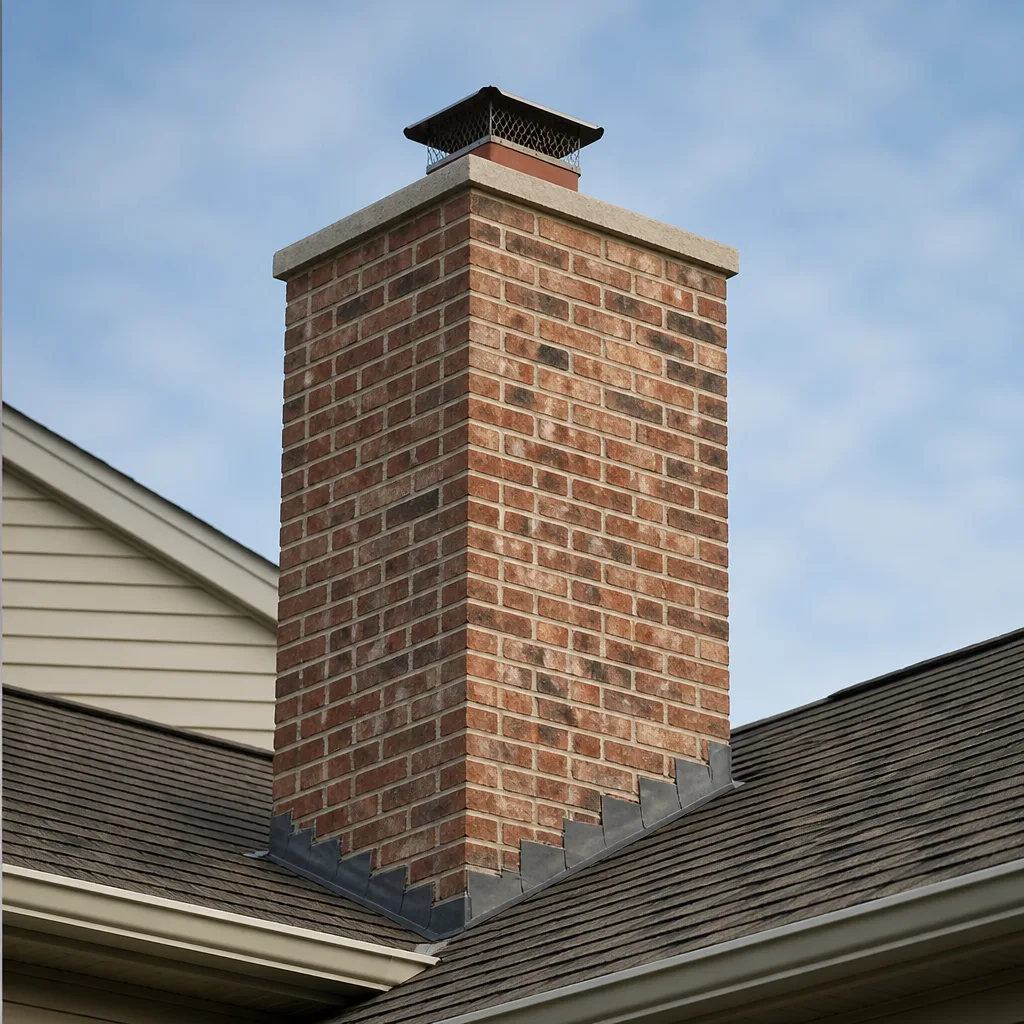 Masonry repair
 Gas fireplace service
Level 1 sweep and inspection to the NFPA 211 annual standard - flue, crown, cap, and flashing checked and photographed
Chimney sweep logs do not sweep chimneys. They loosen some creosote - which then falls where a brush and vacuum still have to collect it.
Chimney Cleaning Emergency Preparedness Guide for Arlington Homes
A chimney fire doesn’t always sound like an inferno. Some burn slow and low inside the flue for hours – no roaring, no visible flame – while temperatures climb past 2,000°F and crack the very liner that was keeping combustion gases out of your living room. That’s the part most homeowners never hear about. The real work of emergency preparedness happens months before anything goes wrong, in the quiet habits that catch a problem while it’s still small. This guide walks through what a chimney emergency actually looks like in Arlington homes, the 90-second response if one starts, and the maintenance routine that makes the whole scenario unlikely.
Quick Answer
Chimney emergencies – fires, carbon monoxide events, structural failures – almost always have a detectable precursor that gets missed or ignored. Preparedness means recognizing a hidden flue fire by its sounds, smells, and draft behavior, knowing the 90-second action sequence if you suspect one, keeping carbon monoxide alarms where they’ll actually catch a blocked flue, and never using the fireplace after a fire until a Level II inspection clears it. The maintenance steps that come before all of that are what make a genuine emergency rare.
Styles & brands we work with
- Sweep & inspection
- Caps & crowns
- Flue relining
- Masonry repair
- Gas fireplace service
Table of Contents
- How to Recognize a Chimney Fire That Isn’t Obvious
- The 90-Second Action Sequence If You Suspect a Chimney Fire
- Carbon Monoxide and Chimney Systems: The Connection and Sensor Placement
- Structural Warning Signs Before They Become Failures
- Post-Emergency Protocol: Why You Can’t Use the Fireplace Yet
- The Emergency Preparedness Checklist That Works Backward
- Arlington’s Burning Season and Creosote Buildup
How to Recognize a Chimney Fire That Isn’t Obvious
Most people picture a chimney fire as flames shooting from the top of the house with a sound like a freight train. That does happen, but it’s the dramatic minority. A slow-burning flue fire can smolder for hours with almost nothing visible from the hearth. What makes it dangerous is the temperature inside the flue, not the flame you can see. Here’s what to watch and listen for.
Sounds
- A low rumble or tapping that seems to come from inside the wall near the chimney, not the firebox
- Popping or crackling that continues after the fire has burned down
- A roar that sounds like wind being pulled through the flue, especially if it starts suddenly
- Whistling or a sucking noise at the damper
Smells
- A sharp, hot, almost metallic smell in the room
- Creosote odor that gets stronger instead of fading as the fire dies
- Smoke smell in rooms that have no fireplace in them
Draft Behavior
- Smoke rolling back into the room instead of going up the flue
- The fire suddenly burning hotter or being pulled harder than usual
- Drafts from other fireplaces or flues in the house that change without explanation
Any one of these is reason enough to stop using the fireplace and get the flue inspected. The flue liner is what stands between combustion products and the framing of your Arlington home, and it’s often the first thing a hidden fire damages. Cracked tile or a warped liner won’t announce itself. You find it with a camera and a trained eye.
The 90-Second Action Sequence If You Suspect a Chimney Fire
If you think there’s a fire inside the flue, the order of what you do matters as much as the doing. These steps are written to be safe and fast, in sequence, without heroics.
- Get everyone out of the house first. Not the fire extinguisher, not the hose, not the valuables. People out, then call 911 from outside or from a neighbor’s phone. Chimney fires inside a wall cavity are not a homeowner problem.
- Close the firebox doors and the damper. Cutting off oxygen slows the burn. If the fire is actively drawing, the damper may resist closing. Don’t force it if doing so puts you near open flame.
- If smoke is filling the room, get low and leave. Stay near the floor and move to the nearest exit. Don’t stop to open windows – the goal is to get out, not to ventilate.
- Call 911 and tell them you have a chimney fire. Give your street address in Arlington clearly. If you see flames or thick smoke from the chimney top, say so.
- Wait outside. Don’t re-enter until the fire department clears the house. Don’t climb onto the roof to look down the flue. Height work around a compromised chimney is a separate hazard.
That’s the whole sequence. Notice what’s not on it: trying to put the fire out yourself, spraying water down the flue, or moving anything you’ll want later. None of that belongs in the first 90 seconds. And once the fire department leaves, the emergency is not over – see the post-emergency section below.
Carbon Monoxide and Chimney Systems: The Connection and Sensor Placement
A chimney does two jobs. It carries smoke up and out, and it carries carbon monoxide out with it. When the flue is blocked – by a bird’s nest, a collapsed liner, heavy creosote, or soot dislodged during a fire – combustion gases have nowhere to go but back into the house. That’s how a chimney problem becomes a CO event. You don’t need an active fire for this to happen. A blocked flue with a gas water heater venting into the same chimney can create CO buildup in a house that never lights a fire.
Carbon monoxide is odorless. You won’t smell it coming. That’s why placement of your alarms matters more than the brand you buy.
- Put a CO alarm on every level of the home, including the basement, and outside each sleeping area
- Place one within 10 feet of the chimney or furnace area, but not directly above the firebox where normal nuisance trips can happen
- Don’t put a CO alarm near a humid bathroom or directly in the garage; moisture and exhaust give false readings
- Test each alarm monthly and note the expiration date on the back of the unit
- If an alarm ever sounds and the reading is real, leave the house and call 911 – then call for a chimney inspection before using any fuel-burning appliance tied to that flue
Arlington homes with older chimneys or converted oil-to-gas setups are especially worth a CO alarm check. The Arlington housing stock includes a lot of mid-century houses where the chimney served a furnace or water heater long before it served a fireplace. When two appliances share a flue, an unseen obstruction can affect both at once.
Structural Warning Signs Before They Become Failures
Chimney failures rarely happen without warning. The masonry tells you something’s wrong weeks or seasons before a crown crumbles or a section of flue tile drops down inside the chimney. The question is whether anyone is looking.
Exterior Signs
- Crumbling or missing mortar between bricks, especially in the upper third
- White staining on the brick (efflorescence), which suggests moisture moving through the masonry
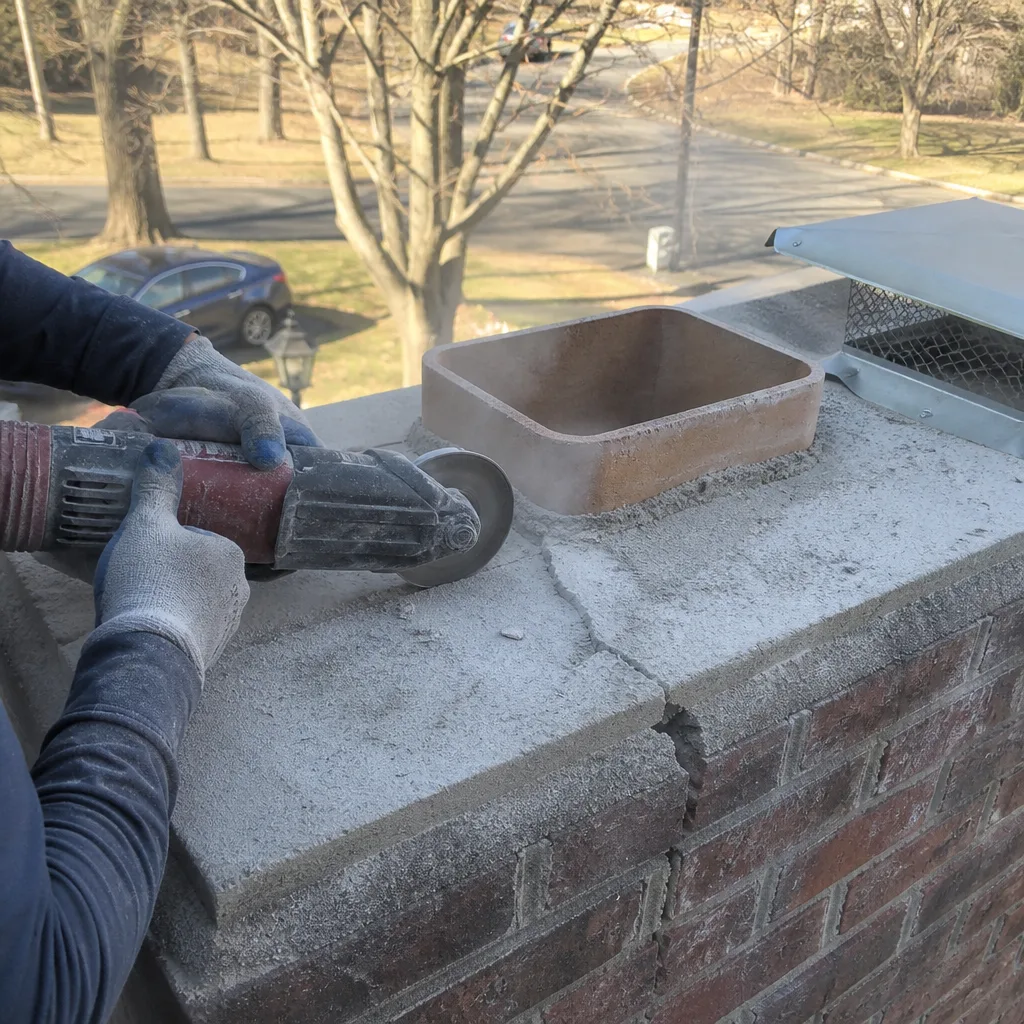
- A crack in the crown – the concrete cap at the top – that lets water in
- Tilting or a visible lean in the chimney stack
- Rusted or loose flashing where the chimney meets the roof
Interior Signs
- A firebox with cracked or loose firebrick
- Damper that won’t open smoothly or close tight
- White or gray deposits on the firebox walls
- Water stains on the ceiling near the chimney or on the chimney breast
- A persistent smoky smell even when the fireplace is unused
Each of these is a monitoring signal, not an emergency. But stacked together or ignored, they turn into one. The crown repair, the flashing repair, or a liner restoration that follows those signs is what we call chimney repair, and it’s the reason a chimney can serve a house for generations instead of decades. That repair capability is why Sentry Chimney Sweep stocks professional-grade HeatShield resurfacing materials and DuraFlex liner systems – so the fix matches the standard the flue was built to.
Post-Emergency Protocol: Why You Can’t Use the Fireplace Yet
After a chimney fire, the house might look fine. The soot cleans up, the smoke clears, and the instinct is to light a fire to prove everything works. Don’t. A chimney fire damages the flue in ways you can’t see from the living room, and the damage is exactly what makes a second fire more dangerous.
Here’s what actually happens after a flue fire burns:
- The tile liner cracks or spalls from thermal shock, opening gaps where combustion gases can reach the framing
- Mortar joints between tiles soften or fail
- Creosote that survived the fire can re-glaze into a harder, more flammable layer
- The crown and flashing can crack from the heat and pressure, letting water in
- A metal liner can warp, buckle, or pull loose at the seams
The next step after a suspected chimney fire is a Level II inspection. That’s a formal assessment that includes a camera scan of the flue from top to bottom, checking the exact interior the fire passed through. A camera inspection tells you with certainty whether the liner is intact, whether creosote deposits remain, and whether the chimney is structurally sound. Nothing in that inspection is guesswork, and nothing should be recommended without it. If the flue needs a HeatShield resurfacing or a DuraFlex relining, those are decisions you can make because you saw the video, not because someone told you the problem was serious.
Skip the inspection and you’re betting the safety of the whole house on a liner you haven’t looked at. There’s no good reason to do that.
The Emergency Preparedness Checklist That Works Backward
Here’s the core of our approach to chimney preparedness: we don’t start with “what to do in a fire.” We start with the routine that makes it so the fire doesn’t happen. Work this list backward from the emergency you’re trying to prevent.
- Book an annual sweep. Creosote is a natural byproduct of burning wood, and it builds up every season. A trained sweep removes it before it reaches a hazardous level. This is the single most effective habit in chimney safety, and it’s why the annual chimney sweep is the foundation of everything else.
- Book a Level II inspection at every meaningful change. New to the house, new appliance on the flue, after a chimney fire, or after a major storm – each of those triggers an inspection. Routine yearly checks catch the rest.
- Burn seasoned wood. Dry wood burns cleaner and leaves less creosote. Green or damp wood produces more smoke and heavier deposits. Store firewood off the ground and under cover.
- Keep the flue cap in place. A cap keeps birds, rain, and squirrels out of the flue. A missing cap is a common cause of blocked flues in Arlington, and a blocked flue is a CO hazard.
- Verify your CO alarms. Every level, outside sleeping areas, tested monthly. Replace units per their expiration.
- Watch for structural warning signs. Walk outside and look at the chimney once a season. Check the crown, mortar, and flashing. Photos taken each year give you a baseline.
- Keep a chimney-fire plan. Everyone in the house knows the “get out and call 911” sequence. No one tries to fight a flue fire with a hose.
That’s the whole checklist. Do these seven things and the emergency scenarios this guide covers stay theoretical. Miss them for a few seasons and the odds begin to stack against you – quietly, in the flue, out of sight.
Arlington’s Burning Season and Creosote Buildup
Arlington’s climate has a real fire season. Late fall and winter bring a steady run of cold nights when the fireplace is lit most evenings, and spring and summer leave the chimney idle. That cycle is exactly the kind that builds creosote in layers – one season’s deposit, then months of rest, then another deposit on top. By the end of a typical winter, a fireplace used regularly can carry enough creosote that a hot fire or a stray spark is all it takes to ignite.
Arlington homes range from older brick houses in neighborhoods along the Rosslyn-Ballston corridor to mid-century builds further out, and the chimney condition varies with them. Older chimneys may have clay tile liners at the end of their service life. Newer homes may have metal liners that need periodic camera verification. Neither is a problem until it is, and the only way to know is to look. Local climate doesn’t do the inspection for you. The summer humidity, the freeze-thaw cycles in January, and the moisture that works its way into masonry joints all contribute to slow wear, but they don’t announce themselves.
If you’ve never had your Arlington chimney inspected, or if it’s been more than a year since a sweep, that’s the single best thing you can do this week to prepare your home for the season ahead. The cost is modest, the benefit is an actual camera look at the flue you depend on, and the alternative is guessing.
Common Mistakes to Avoid
- Burning unseasoned wood to “save” on firewood. Green wood leaves twice the creosote of seasoned wood and creates the exact conditions a chimney fire needs. The savings disappear the first time you need a repair.
- Treating an annual sweep as optional. In Arlington’s burn season, one skipped year can build a deposit layer heavy enough to matter. Sweeping is maintenance, not a luxury.
- Assuming a small fire is safe because it’s small. A low, hot fire in a clean flue is fine. A low, hot fire in a flue with a creosote layer is how a slow chimney fire starts without anyone noticing.
- Using the fireplace after a chimney fire because “it looks fine.” A damaged liner can look intact from below. It cannot be verified from the living room. Only a Level II camera inspection tells you the truth.
- Ignoring water damage signs. White staining on the brick or water stains inside the house usually mean the crown or flashing has failed. Left alone, that moisture slowly degrades the whole chimney.
- Relocating a CO alarm to stop a nuisance beep. If a CO alarm is chirping or alarming, that’s information, not an annoyance. Test it, replace the battery, and if the reading persists, call for a professional evaluation.
- Hiring a handyman for chimney work. Chimney inspection and repair need chimney-specific tools, chimney-specific knowledge, and chimney-specific materials. The Sentry Chimney Sweep approach is built entirely around that specialization – sweep, inspect, and repair by one specialist team.
See the difference
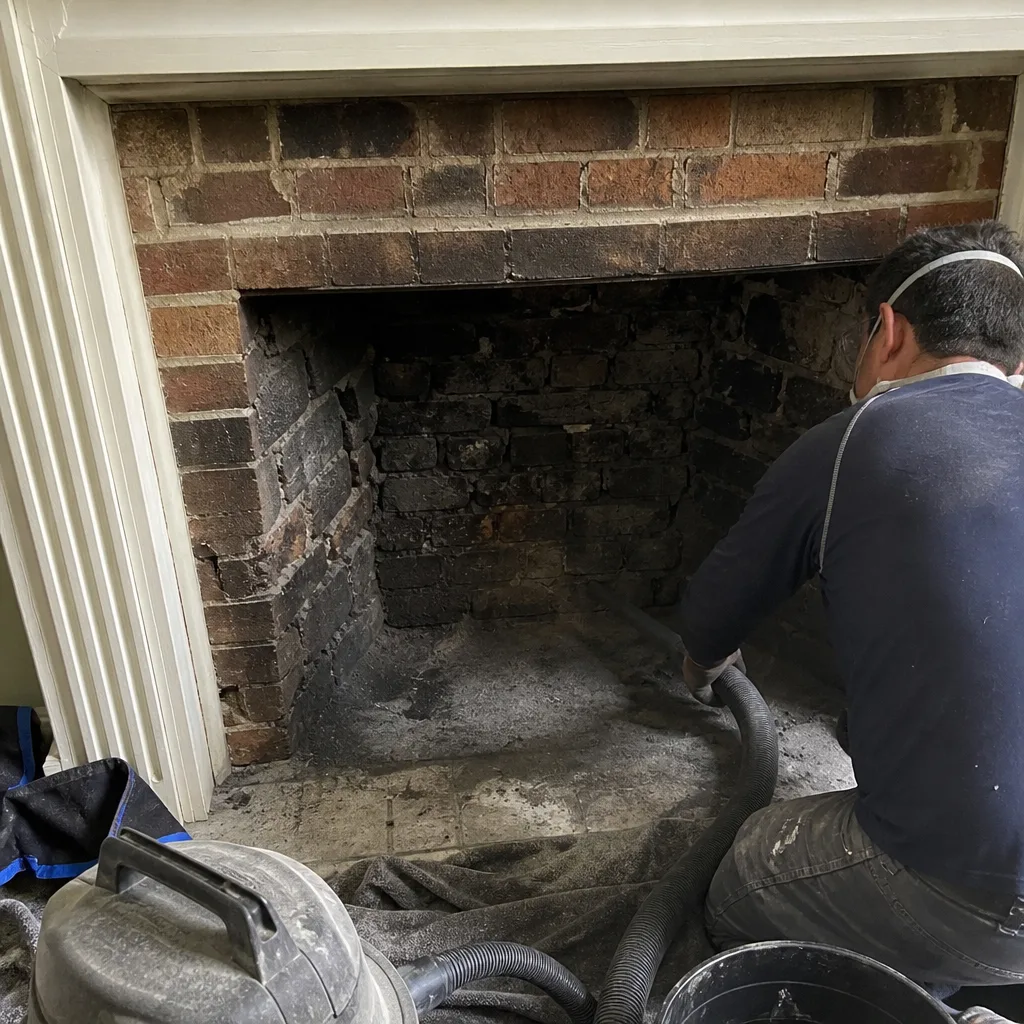 Before
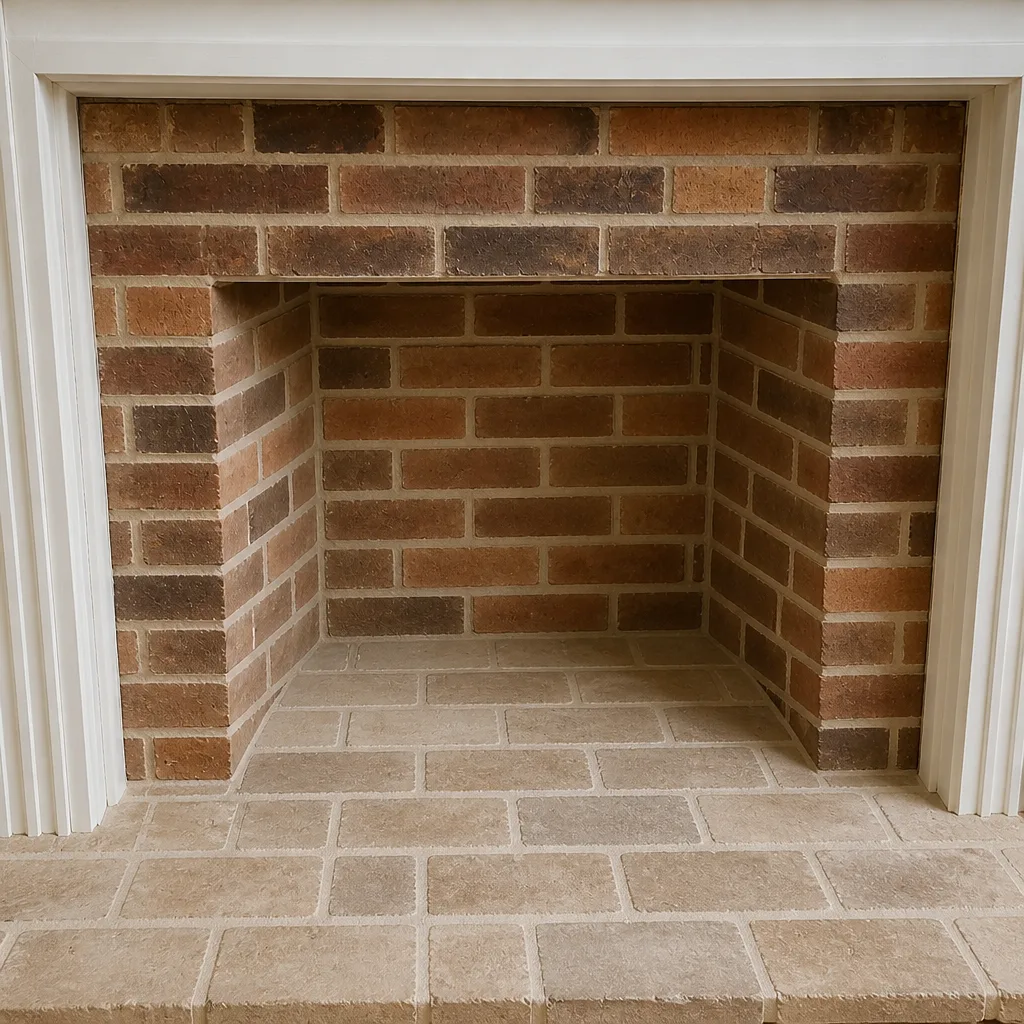 After
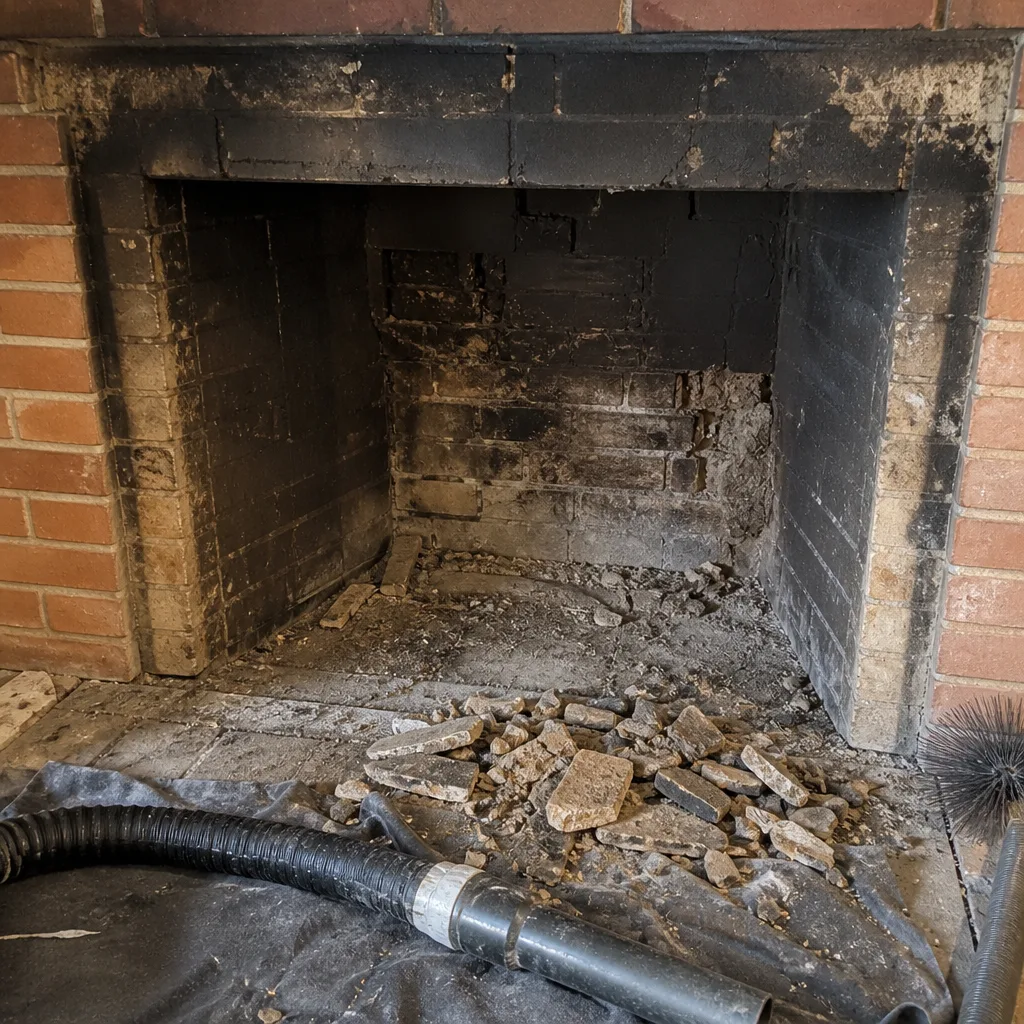 Before
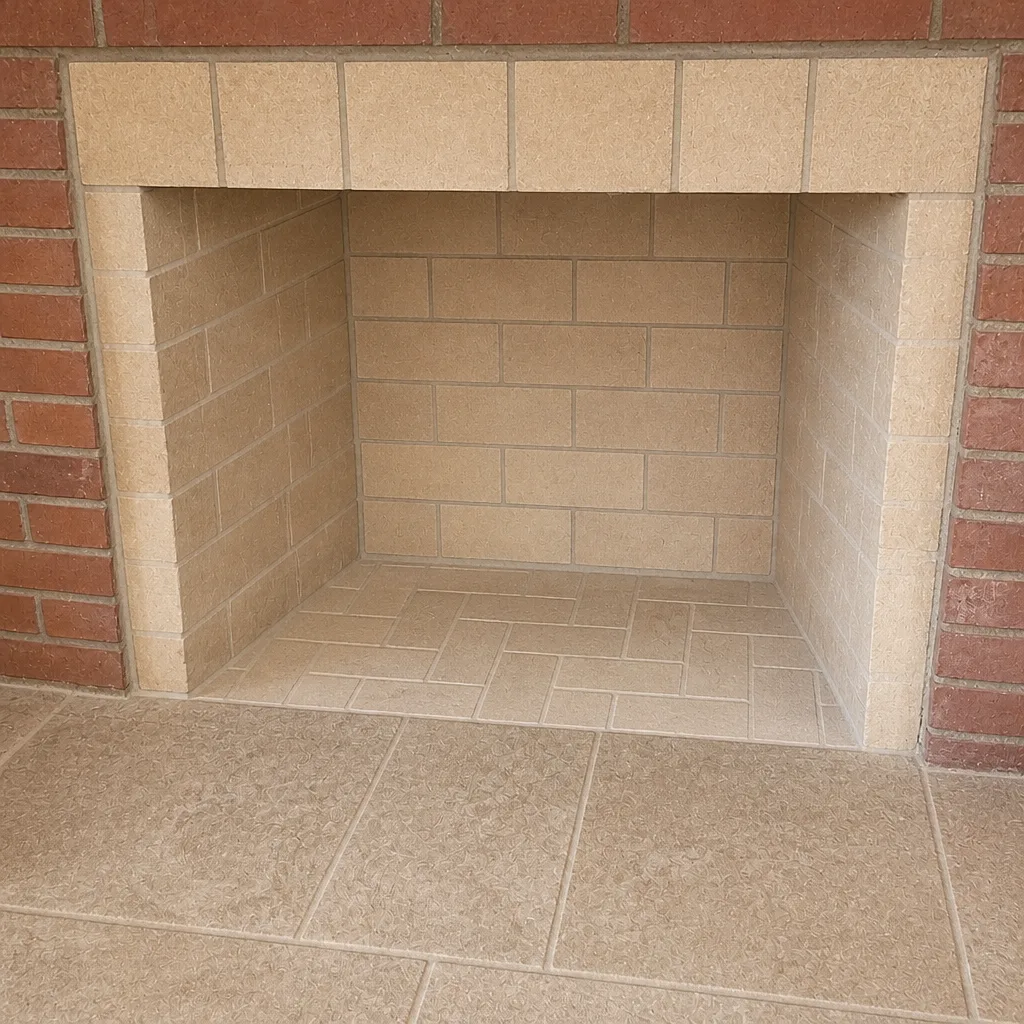 After
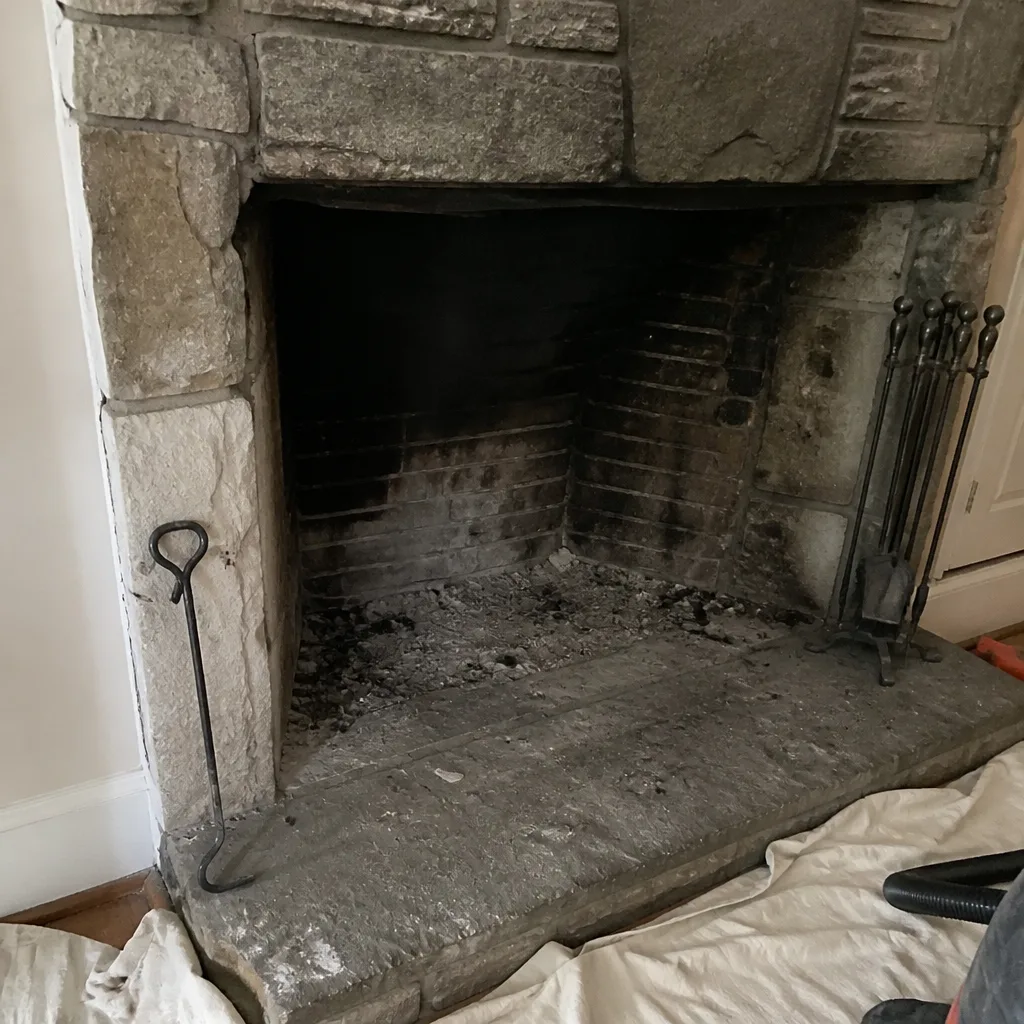 Before
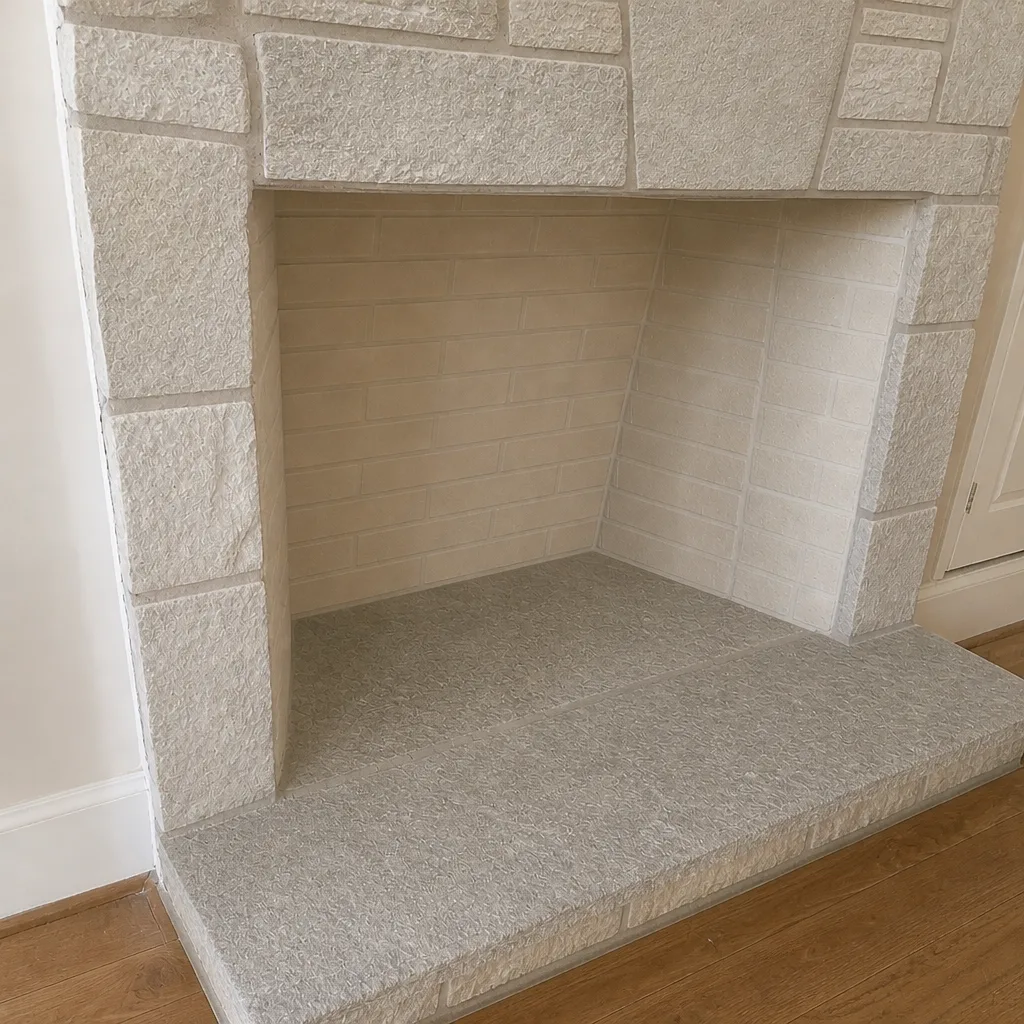 After
When to Call a Professional
Call a professional chimney specialist in any of these situations: a suspected chimney fire at any point in the past, a winter’s worth of heavy fireplace use without a sweep, a CO alarm that has ever triggered, visible cracks in the firebox or masonry, water stains near the chimney, a new appliance added to an existing flue, a move into an Arlington home where the chimney history is unknown, or a flue cap that has come loose or disappeared. Each of these is a specific signal that the free look-and-camera inspection is worth scheduling now rather than later.
Sentry Chimney Sweep offers free estimates in Arlington. Our technicians have up to 11 years of experience, we work with professional-grade materials, and every inspection includes camera findings you can see. Call (833) 309-7302. We answer 24/7. Fast dispatch from 7am to 7pm, Sunday through Friday.
Frequently Asked Questions
Get everyone out of the house first, then call 911. Close the firebox doors and damper only if you can do it safely on the way out. Don’t try to fight the fire yourself, don’t spray water down the flue, and don’t go onto the roof. Once the fire department clears the house, book a Level II inspection before lighting another fire. Call (833) 309-7302 to schedule one – estimates are free.
You often can’t know without an inspection. Subtle signs include a persistent smoky smell, a puffy or “honeycombed” texture on creosote deposits inside the flue, cracked or displaced liner tiles, and warped metal components on the cap or damper. A camera scan reveals all of these. Our technicians use camera inspection to find evidence you can see yourself, so nothing gets recommended on a guess.
Put a CO alarm on every level of the home, outside each sleeping area, and within about 10 feet of the chimney or furnace area. Keep them out of bathrooms, garages, and places with high humidity. Test them monthly and replace them on schedule. If any alarm has ever sounded and you’re not sure why, that’s a strong reason to book a chimney inspection before the next fire.
Yes. The damage from a flue fire happens inside the chimney, out of sight from the living room. A cracked tile liner, softened mortar joints, or a warped metal liner can all look perfectly fine from your fireplace while letting combustion gases reach the home’s framing. A Level II camera inspection is the only way to confirm the flue is sound. Call (833) 309-7302 to book one – estimates are free.
Yes. Gas water heaters and furnaces vent through chimneys too. If the flue is blocked by a nest, a collapsed liner, or soot, those gases have nowhere to go but back into the house. A chimney inspection catches blockages before they cause a CO event, whether or not you ever light a fire.
Sweep annually if you use the fireplace regularly, and inspect at least once a year as well. Book an inspection sooner after a chimney fire, a move into a new home, a change of appliance on the flue, or any visible structural warning sign. Call (833) 309-7302 to schedule a sweep or chimney repair evaluation – estimates are free, and the camera report tells you exactly where things stand.
The Bottom Line
Chimney emergencies are almost never random. A hidden flue fire, a CO event, a masonry failure – each one usually has a precursor that was detectable and overlooked. That’s the entire premise of this guide, and it’s the reason we treat chimney work as a standing protective relationship rather than a seasonal errand. Sweep once a year. Inspect whenever something changes. Verify the flue with a camera instead of trusting what looks fine from the hearth. Place your CO alarms where they’ll actually catch a blocked flue, and know the 90-second sequence if you ever need it. Do those things and the emergency preparedness on this page becomes the routine maintenance that keeps your Arlington home safe. The emergency itself is the version you don’t plan for.
When you’re ready, we’re here. Sentry Chimney Sweep handles sweeping, inspection, and repair as one specialist team, using professional-grade materials from brands like DuraFlex, HeatShield, Famco, and Copperfield on every job that calls for them. Call (833) 309-7302 for a free estimate. We answer 24/7. Fast dispatch from 7am to 7pm, Sunday through Friday.
Written by the team at Sentry Chimney Sweep.