
Last updated November 15, 2026
 Sweep & inspection
 Caps & crowns
 Flue relining
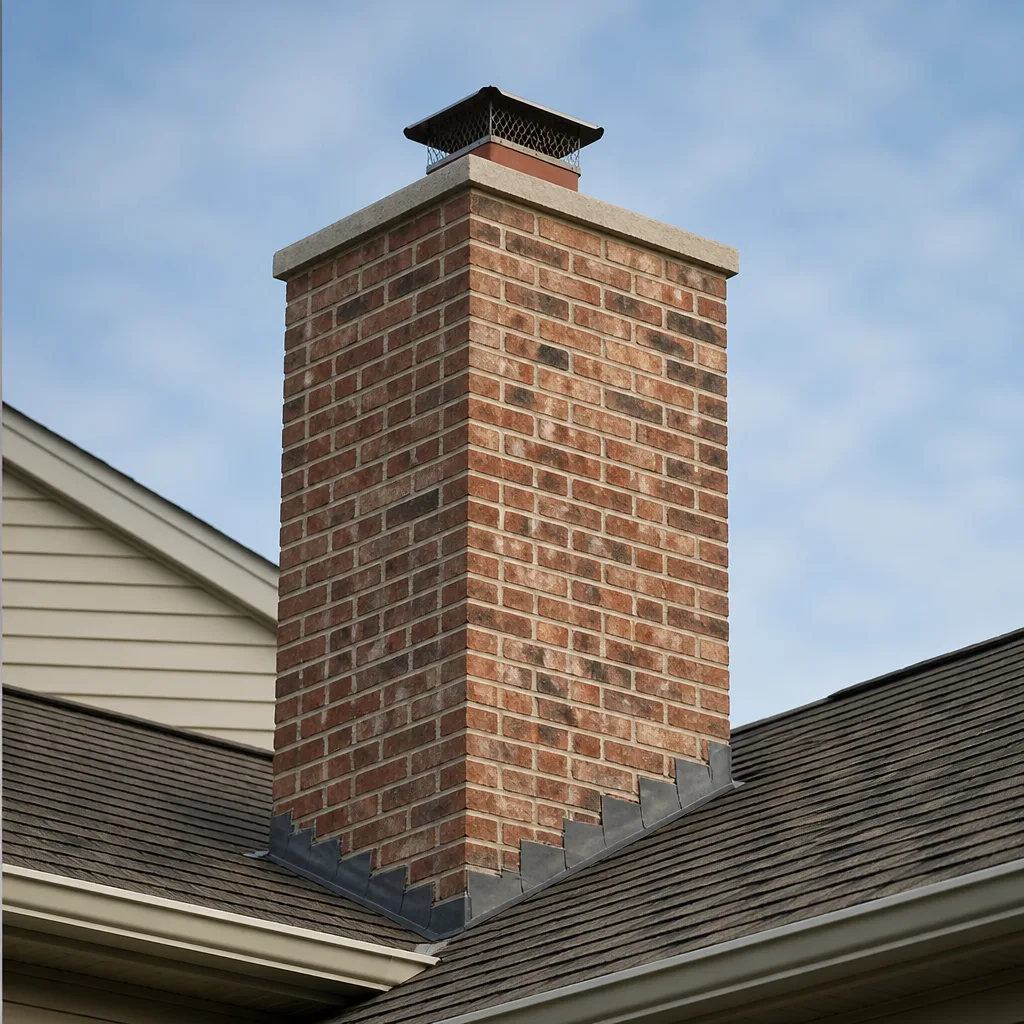 Masonry repair
 Gas fireplace service
Level 1 sweep and inspection to the NFPA 211 annual standard - flue, crown, cap, and flashing checked and photographed
Chimney sweep logs do not sweep chimneys. They loosen some creosote - which then falls where a brush and vacuum still have to collect it.
Chimney Cleaning Warning Signs: An Arlington Homeowner’s Reference Guide
A white stain running down your chimney’s exterior isn’t weathering – it’s efflorescence, and it’s telling you water is moving through your masonry in a direction that will eventually crack your flue. It’s been saying it for probably two seasons before you noticed. Most chimney warning signs aren’t hidden. They’re right there on the outside of the house, in the smell of the living room, in the way smoke behaves on a cold night. The problem isn’t that Arlington homeowners can’t see the signs. It’s that nobody told them which signs mean “keep an eye on it” and which signs mean “stop using this fireplace today.” This guide draws that line, room by room and brick by brick.
Quick Answer
Chimney problems show up as three tiers of warning signs: “monitor it” signals like light efflorescence or a slightly smokey smell, “schedule soon” signals like spalling brick or a cracked crown, and “stop use immediately” signals like smoke rolling back into the room, a sulfur smell, or visible creosote glaze inside the flue. Arlington’s older homes carry a fourth layer – aging clay tile liners that crack with decades of heating and cooling cycles – which newer construction typically doesn’t have to deal with yet. When you can’t tell which tier a sign belongs to, a professional inspection settles it.
Styles & brands we work with
- Sweep & inspection
- Caps & crowns
- Flue relining
- Masonry repair
- Gas fireplace service
Table of Contents
- The Three-Tier Warning Sign Index
- Smell Diagnostics: Campfire, Sulfur, and Animal Odors
- Exterior Warning Signs and What They Signal Inside
- Interior Warning Signs During a Fire
- Why Arlington’s Older Homes Produce Their Own Warning Signs
- How a Sweep Reads the Signs on a Visit
- Common Mistakes to Avoid
- When to Call a Professional
The Three-Tier Warning Sign Index
Some chimney symptoms let you keep using the fireplace while you plan your next step. Others mean the fireplace should go cold until someone qualified looks at it. Sorting the two is the single most useful thing an Arlington homeowner can learn, because it turns a vague sense of worry into a clear decision.
Monitor It
- A light dusting of white powder on the exterior brick after a wet stretch (early efflorescence)
- A faint campfire smell in the room on humid days when no fire is burning
- Slight smoke smell on the first fire of the season, clearing as the flue warms
- Minor rust spots on the firebox doors or damper handle
These are warning signs worth noting and checking again next season. They don’t require you to stop using the fireplace, but they do point to something worth fixing before it grows.
Schedule Soon
- Spalling brick – faces flaking, peeling, or popping off the exterior
- A crown with visible cracks, crumbling mortar, or a gap where it meets the flue
- A missing or damaged chimney cap
- Efflorescence that has moved from powder to a crusted, recurring stain
- Smoke that draws slowly or lazily on cold mornings
- Creosote buildup visible above the damper
These signs call for a booking, not a fire. The trouble is progressing but hasn’t reached a point where the chimney is unsafe to operate for a few more weeks. A camera inspection will confirm what’s actually happening inside the flue.
Stop Use Immediately
- Smoke rolling back into the room during a fire (smoke rollout)
- A sulfur or rotten-egg smell at any time
- Glazed, tar-like creosote visible inside the flue
- Visible damage to the flue liner through the firebox or from above
- A roaring, rumbling, or popping sound inside the chimney during a fire
- Carbon monoxide alarms activating with the fireplace in use
These signals aren’t cosmetic and they aren’t seasonal. Shut the damper, let the fire die, and don’t light another one until a professional inspection has cleared the chimney. The stakes here are a chimney fire or carbon monoxide exposure, and both are serious enough that a cold fireplace for a week is a small price to pay.
Smell Diagnostics: Campfire, Sulfur, and Animal Odors
A chimney smell is never just a smell – it’s a specific reading. Three odors matter most, and each points somewhere different.
Campfire Smell (Smoky, Wood-Burning Odor)
A campfire smell in a room when no fire is lit usually means creosote is sitting in the flue and off-gassing, or that the pressure in the house is pulling air down the chimney. On humid days in Arlington, when the outside air is heavier than the air in the flue, this happens more. A campfire smell on the first fire of the season is often the flue being cold and slow to draw. A campfire smell in July, though, is the flue talking back. Creosote that has built up – especially stage-two or stage-three creosote – carries a distinct outdoor-fire odor even when cold.
Sulfur or Rotten-Egg Smell
A sulfur smell is an urgent signal. It can come from a bird or animal that has gotten into the flue or the firebox and died, from standing water inside the chimney, or from a downdraft pulling exhaust from a gas appliance nearby. Any of these means something inside the system isn’t as sealed or as clear as it should be. Treat sulfur as a stop-use sign and get a professional assessment before lighting another fire.
Animal Odor (Musky, Ammonia-Like, or Urine)
A musky or ammonia smell usually means an animal has taken up residence in the flue or nested in the chimney cap. Birds, squirrels, and raccoons are common inside the DMV area, and they carry nesting material into a place where fire, if lit, might not pass cleanly. A missing cap is often the cause. An animal smell calls for an inspection to clear the flue and confirm the cap situation.
Exterior Warning Signs and What They Signal Inside
The outside of a chimney is a readable surface. What you see from the yard or the roof line tells you something about the masonry and, by extension, the flue inside it. Four signs matter most:
Efflorescence
Efflorescence is the white, powdery, or crusty bloom that appears on brick. It isn’t mold, and it isn’t trapped dirt – it’s salt carried to the surface by water moving through the masonry. The water is coming from somewhere: the crown, a cracked joint, a missing cap, or the brick itself. When water is moving through the chimney, it’s also moving into the flue’s surroundings, and over time that cycle freezes and thaws and can crack a clay tile liner. Early efflorescence is a “monitor.” Crusted, recurring efflorescence is a “schedule soon.”
Spalling Brick
Spalling is brick whose face is peeling, flaking, or popping off in layers. It’s the next stage after efflorescence – the water damage has reached a point where the brick itself is failing. A spalling chimney has water inside the masonry, and by extension, moisture is reaching the flue liner. This is a “schedule soon” sign, because the damage compounds each freeze-thaw cycle.
Damaged Crown
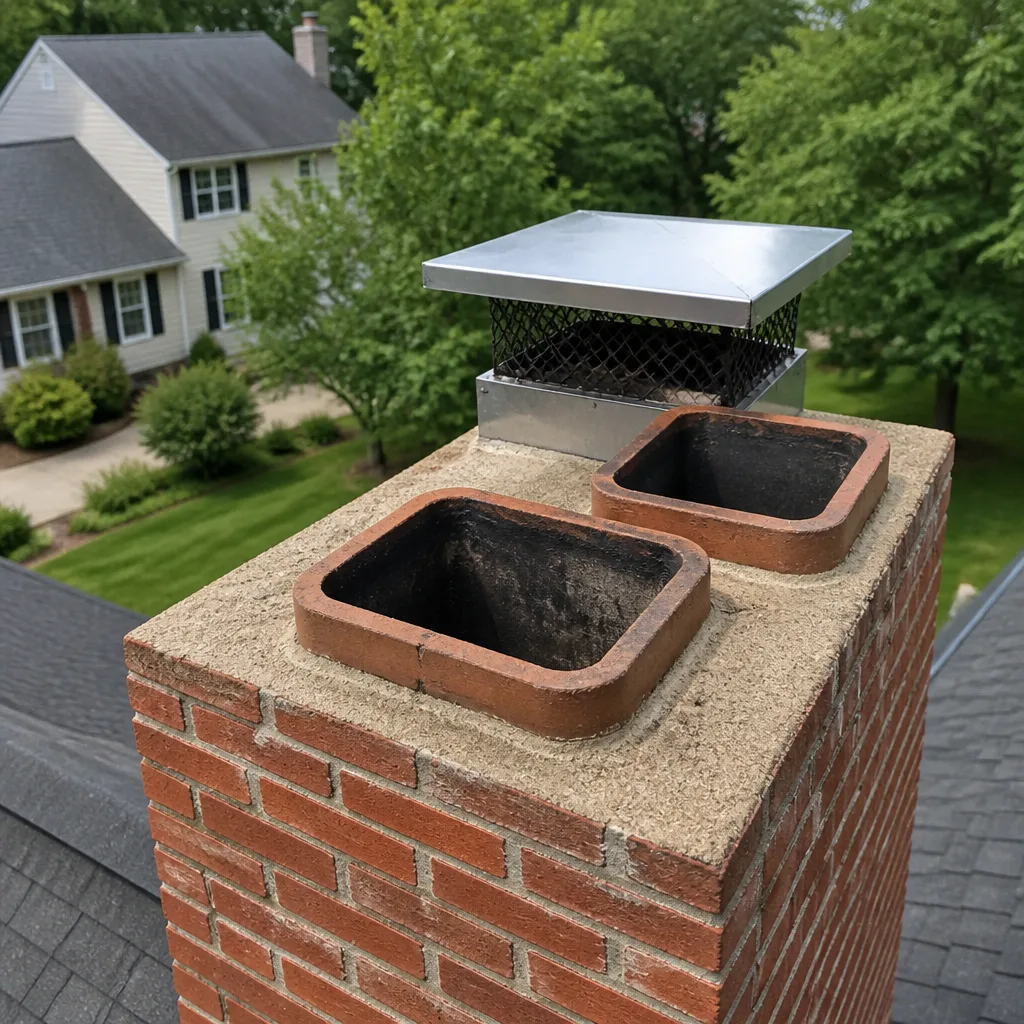
The crown is the concrete cap at the very top of the chimney, sloped to shed water away from the flue. Cracks, crumbling, or a visible gap where the crown meets the flue all point to the same problem: water isn’t being diverted away. A damaged crown is a “schedule soon” sign and one of the most common causes of the two signs above it. A crown in good repair is one of the highest-leverage things on the chimney.
Missing or Damaged Cap
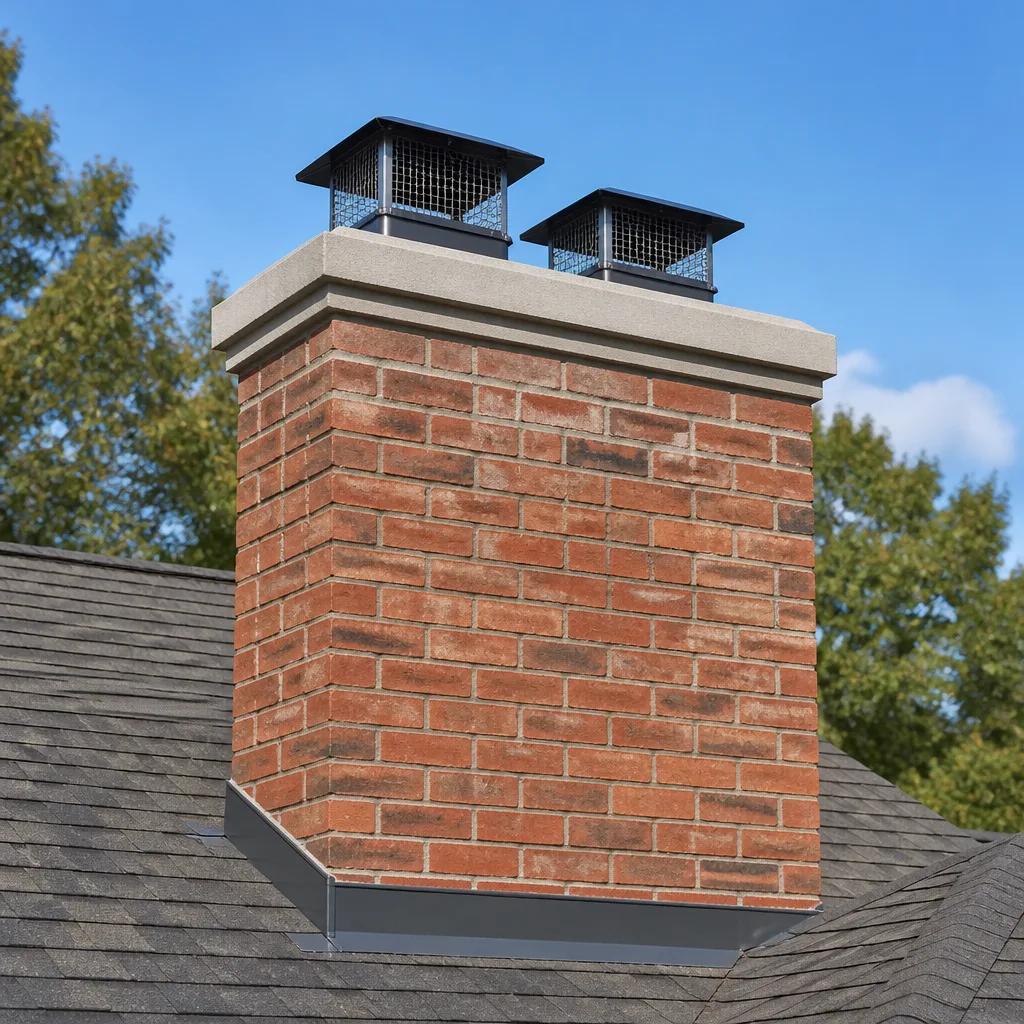
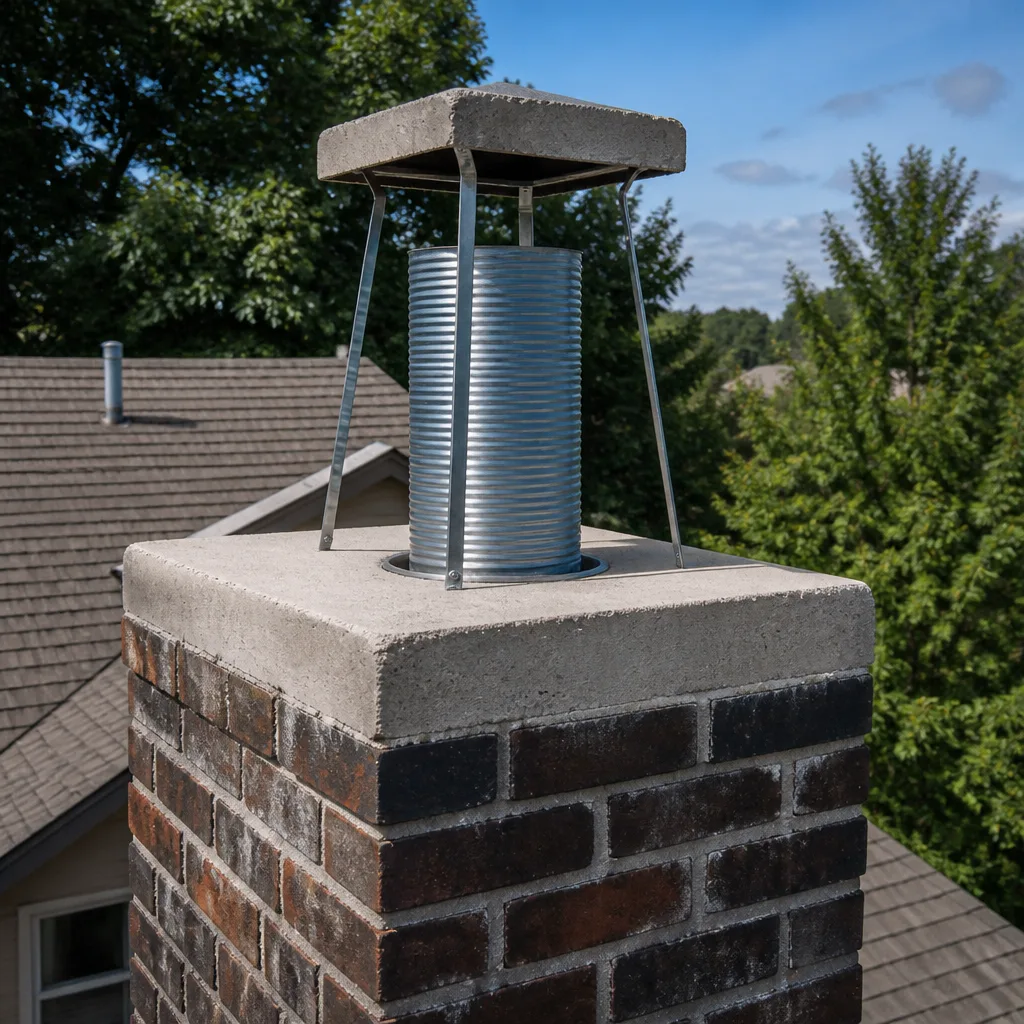
A chimney cap is the sheet-metal or mesh hood over the flue. It keeps rain out, keeps animals out, and keeps sparks in. A missing or rusted-through cap invites everything a chimney is supposed to keep out. It’s the root cause behind many of the efflorescence, spalling, and animal-odor signs above. It’s a “schedule soon” item, and often the simplest fix on the list.
Interior Warning Signs During a Fire
Some signs present themselves only when the fireplace is in use. Watch for these mid-fire behaviors and note what each one is telling you.
- Poor draw on a cold start. The first fire of the season often draws slowly while the flue warms. If the draw stays poor after 10-15 minutes of burning, the flue may be blocked or the pressure balance may have shifted. Schedule an inspection.
- Smoke rollout. Smoke spilling into the room during a fire is a stop-use sign. It can point to a blockage, a flue that’s too small for the firebox opening, or a liner problem. It’s not something to “burn through.”
- Rumbling, roaring, or popping. A sound like a low freight train or a series of pops from inside the chimney can signal a chimney fire. Close the damper, evacuate, and call the fire department. Even a small flue fire can compromise a clay tile liner.
- Flickering or unusual flame shape. A fire that suddenly flattens, pulls sideways, or shifts dramatically can signal a pressure problem or a partial blockage. Note when it happens and mention it to your sweep.
- Smoke smell after the fire is out. A sharp smoke smell lingering hours after the fire is banked usually means creosote is off-gassing or the flue isn’t drafting cleanly. It’s a “schedule soon” sign.
Why Arlington’s Older Homes Produce Their Own Warning Signs
Arlington’s housing stock runs the spectrum from early-twentieth-century bungalows to mid-century colonials and newer infill construction. That range matters for warning signs, because the flue liners in the older homes are typically original clay tile. Clay tile performs well when it’s intact and badly when it isn’t, and the difference is usually years of thermal cycling.
Each heating season, a clay tile liner expands when the chimney is hot and contracts when it cools. Over enough cycles, the mortar joints between tiles can crack, and hairline cracks can develop along the tiles themselves. A single cracked joint is enough to let combustion gases move past the liner and into the masonry, which is exactly the path nobody wants. The older a house is, the more likely its clay tile liner is behaving this way, and none of it is visible from the fireplace or the roof without a camera inspection.
Arlington’s humid summers accelerate the problem. Moisture that finds its way into the masonry through a cracked crown or failing mortar joint expands and contracts with the freeze-thaw cycles of winter, and the flue liner sits right against that same masonry. Homes built in the last 20-30 years typically have factory-built, insulated flue systems with different failure points – they don’t produce the same cracked-clay-tile warning signs. This is why two adjacent houses in the same Arlington neighborhood can have completely different chimney stories, and why a reference guide that treats all chimneys as identical misses the point. If your Arlington home is older and hasn’t had a camera inspection in the last couple of years, the clay tile liner is the first thing a sweep will want to look at.
When the liner does need attention, professional-grade liner systems like DuraFlex and HeatShield resurfacing are the two common approaches – the first for a full reline, the second for restoring a liner that’s still structurally sound but pitted or cracked. Both are the kind of permanent repair that pushes the next failure point years down the road instead of patching it for a season.
For a deeper look at what a chimney sweep in Arlington typically covers on a visit, or what chimney repair in Arlington involves when the inspection turns up liner or crown work, those are the two service pillars this guide keeps pointing back to. If you’re not sure whether your neighborhood’s housing stock leans older or newer, the local overview for Arlington is worth a read before you book.
How a Sweep Reads the Signs on a Visit
A professional chimney sweep doesn’t just clean – a sweep reads the signs and separates what you can safely live with from what needs repair. Here’s what a typical visit looks like, in plain terms:
- Exterior walkaround. The sweep checks the crown, the cap, the mortar joints, and the brick faces for the efflorescence, spalling, and cap issues covered above.
- Firebox and damper inspection. The firebox is where the fire lives, and it’s where the first visible cues of a liner problem often appear – cracks, gaps, or rust.
- Flue cleaning. A proper sweep uses brushes sized to the flue, and works from the top down or bottom up depending on the setup, to clear creosote and soot without damaging the liner.
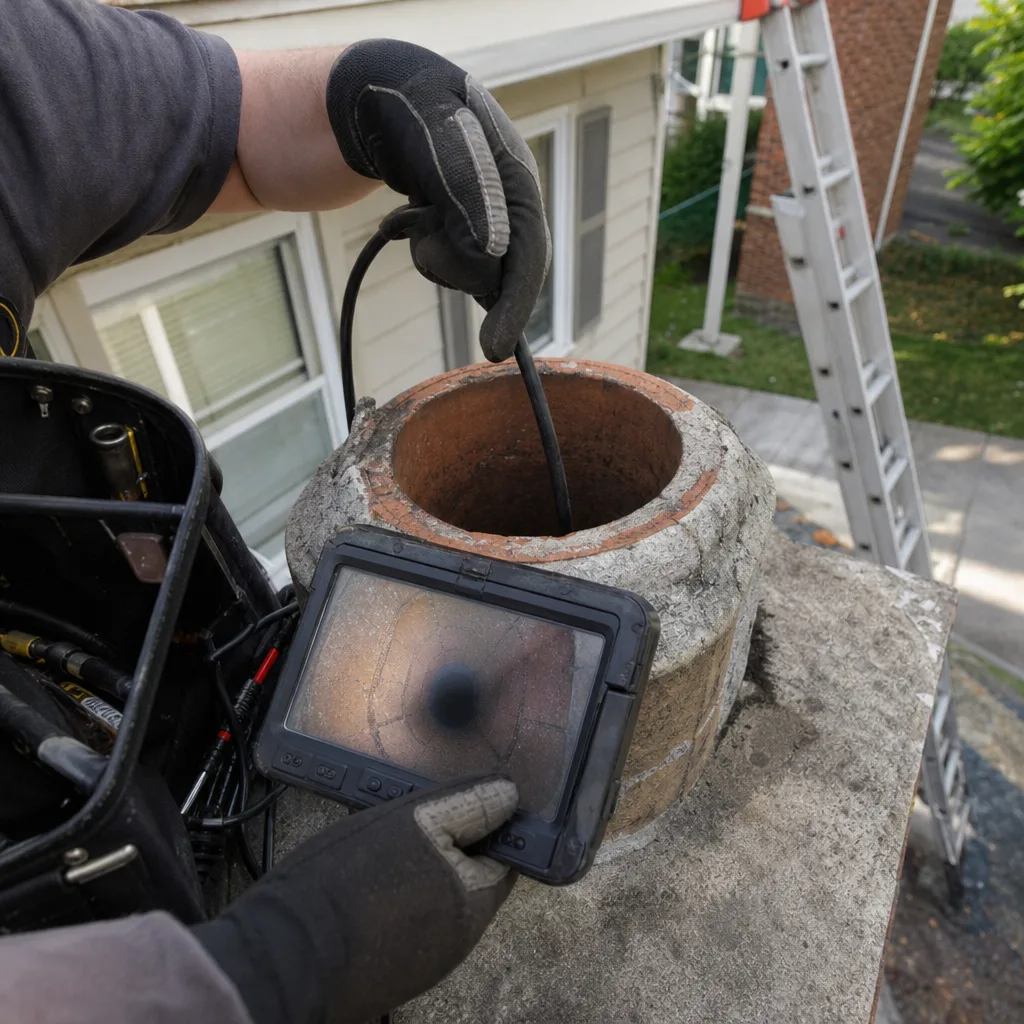
- Camera inspection. A camera on a rod runs the length of the flue, and the footage is what turns a guess into a diagnosis. Cracked tile joints, gaps, and glaze-stage creosote are all visible here. If your sweep can’t show you what the camera sees, ask why.
- Formal assessment. A written summary of what’s fine, what’s on the monitor list, and what needs repair. This is the piece that separates a professional inspection from a quick cleaning.
When repair is needed, the materials matter. A sweep working with professional-grade brands – HeatShield for resurfacing, DuraFlex for liner systems, and products from Olympia Chimney, Famco, and Gelco, among others – is working with the same categories of material specified by certified chimney professionals nationally, not with whatever a generalist picked up at a big-box store. Sentry Chimney Sweep is stocked with and trained on six of those brands, and handles sweeping, inspection, and repair under one roof so you’re not coordinating two or three contractors for one problem.
Common Mistakes to Avoid
- Treating a mid-season smell as “normal.” A campfire smell in July is a signal, not a season. If your Arlington home smells like a firepit on a humid day with no fire burning, that’s creosote off-gassing or a draft problem worth a call.
- Burning through smoke rollout. Smoke spilling into the room is a stop-use sign, not a warm-up. Close the damper and get the chimney inspected.
- Assuming a cap isn’t important. A missing cap is one of the most common cause of both animal intrusions and water damage. It’s a small fix with an outsize effect on the flue’s lifespan.
- Skipping the camera inspection because the sweep “cleaned it.” A clean flue can still have a cracked liner. Ask for the camera footage and a written summary – if the chimney was inspected, the details should be available to you.
- Waiting on clay tile cracks because nothing’s failed yet. The whole point of a liner inspection is catching a cracked joint before it becomes a chimney fire. Missing a joint is not the same as a joint that holds.
- Hiring a generalist for a chimney problem. Chimney liners, crowns, and masonry restoration are their own trade. A specialist is cheaper in the end than a generalist learning on your chimney.
- Burning wet wood to compensate for a weak draw. Green or unseasoned wood raises creosote buildup and makes every warning sign on this list worse. Seasoned wood and an inspected flue are a package.
When to Call a Professional
Call a professional when any “stop use” sign is present – smoke rollout, a sulfur smell, glazed creosote, unusual firebox noise, or a carbon monoxide alarm with the fireplace in use. Call when a “schedule soon” sign is present and you haven’t had an inspection in a couple of years. Call if you see efflorescence or spalling on the exterior of an older Arlington home and can’t recall the last camera inspection. And call if your answer to “when was the last time anyone looked inside the flue?” is a guess. There’s no version of this where waiting until fall is a better plan than booking now.
Sentry Chimney Sweep offers free estimates in Arlington – call (833) 309-7302. Our technicians have up to 11 years of experience and every job is priced per job by a written estimate, with the camera footage to back up what we recommend.
See the difference
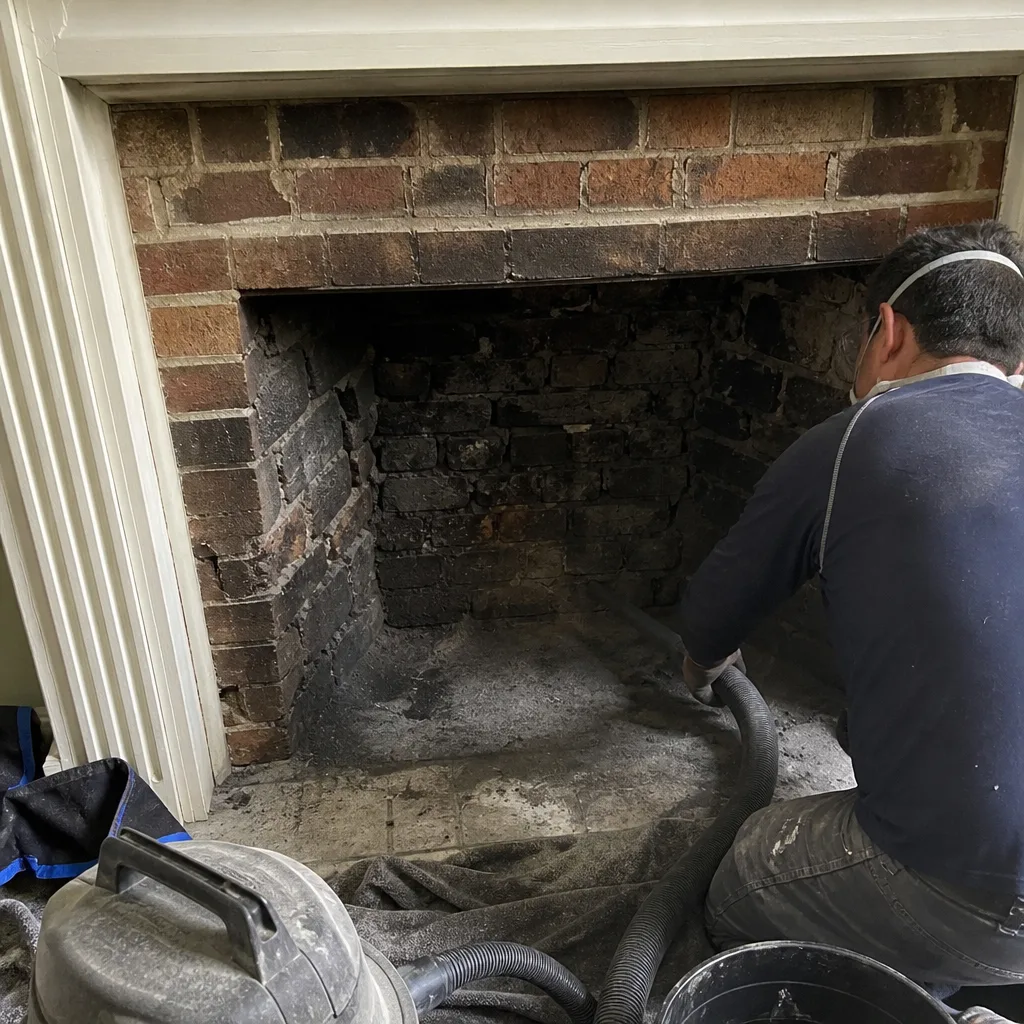 Before
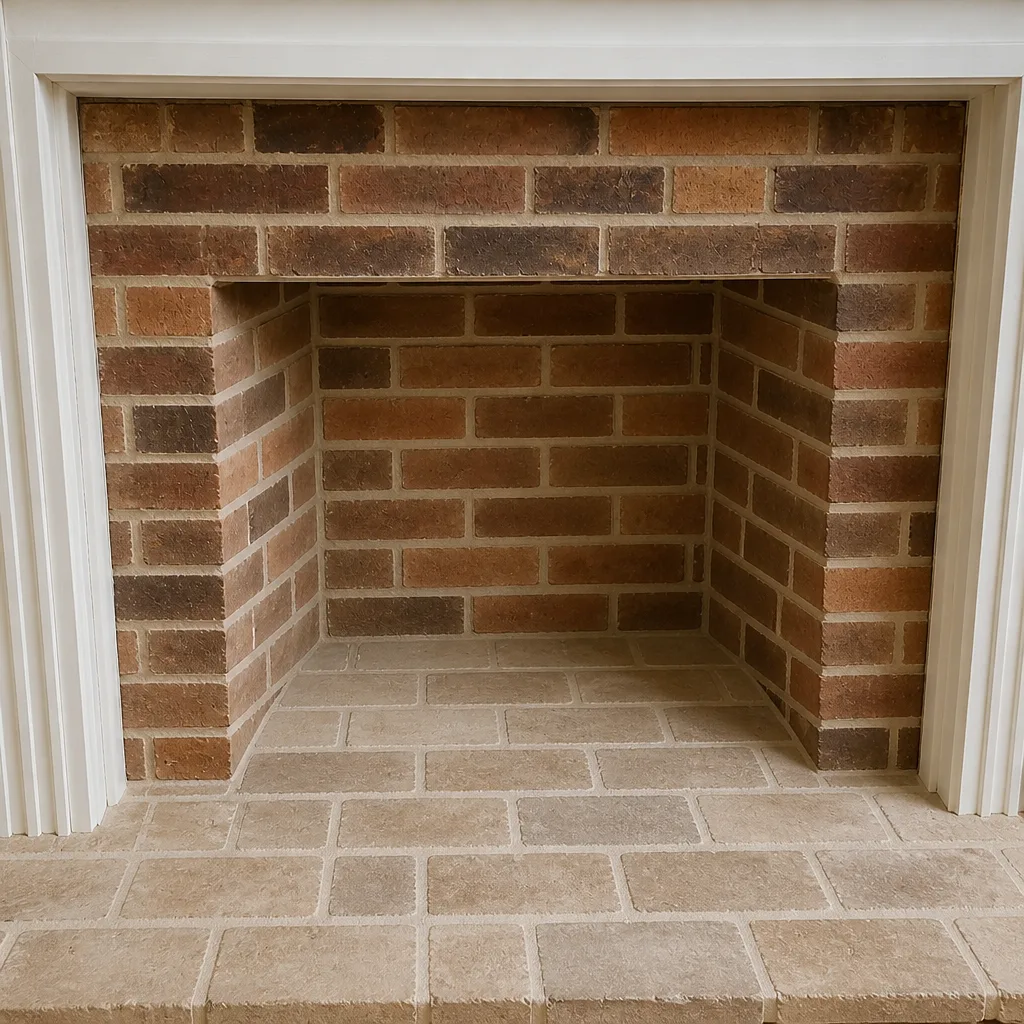 After
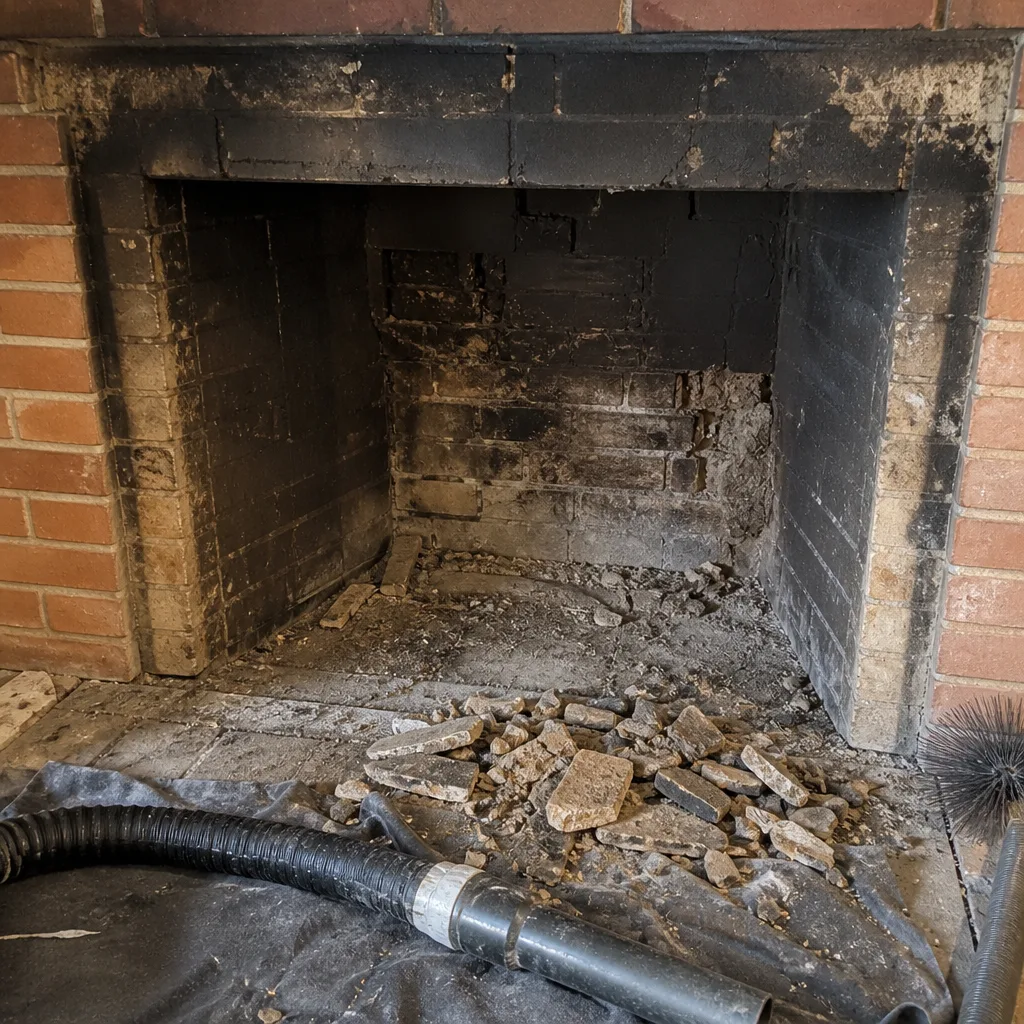 Before
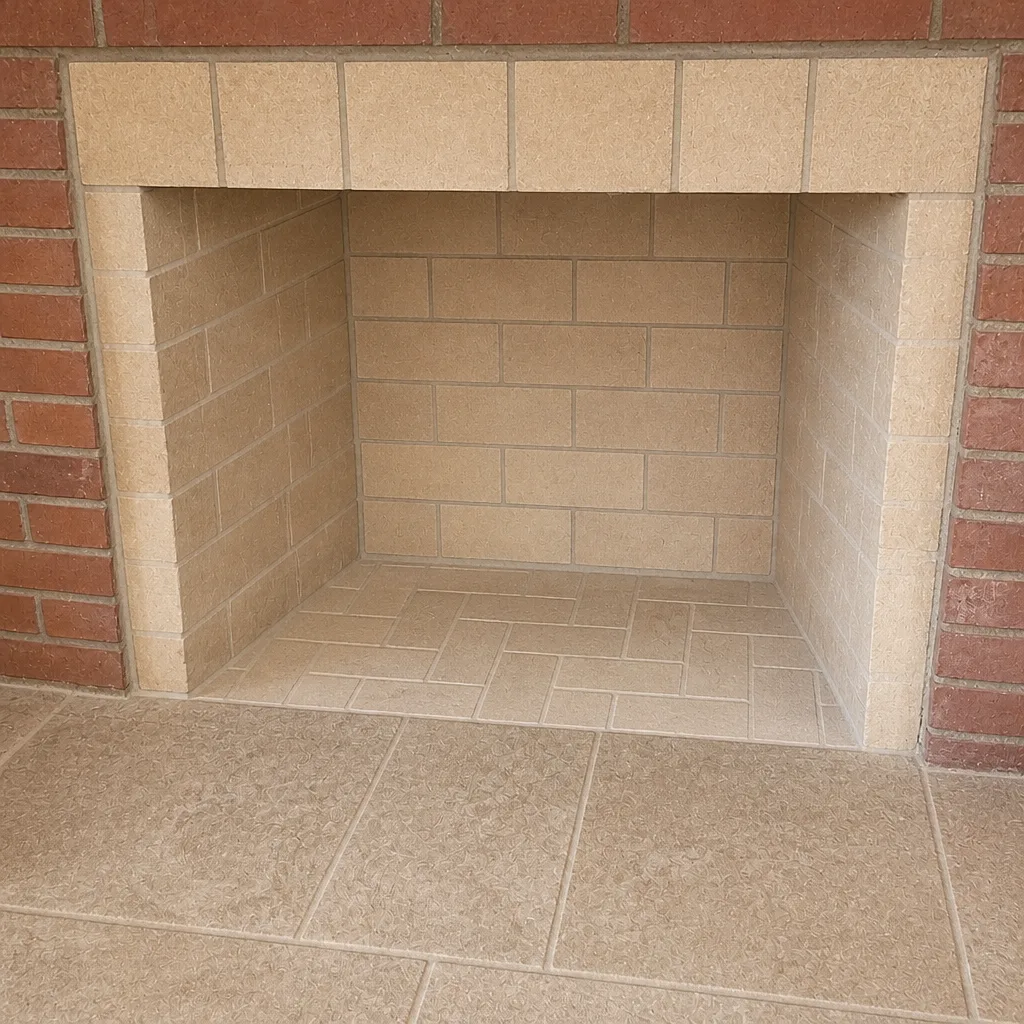 After
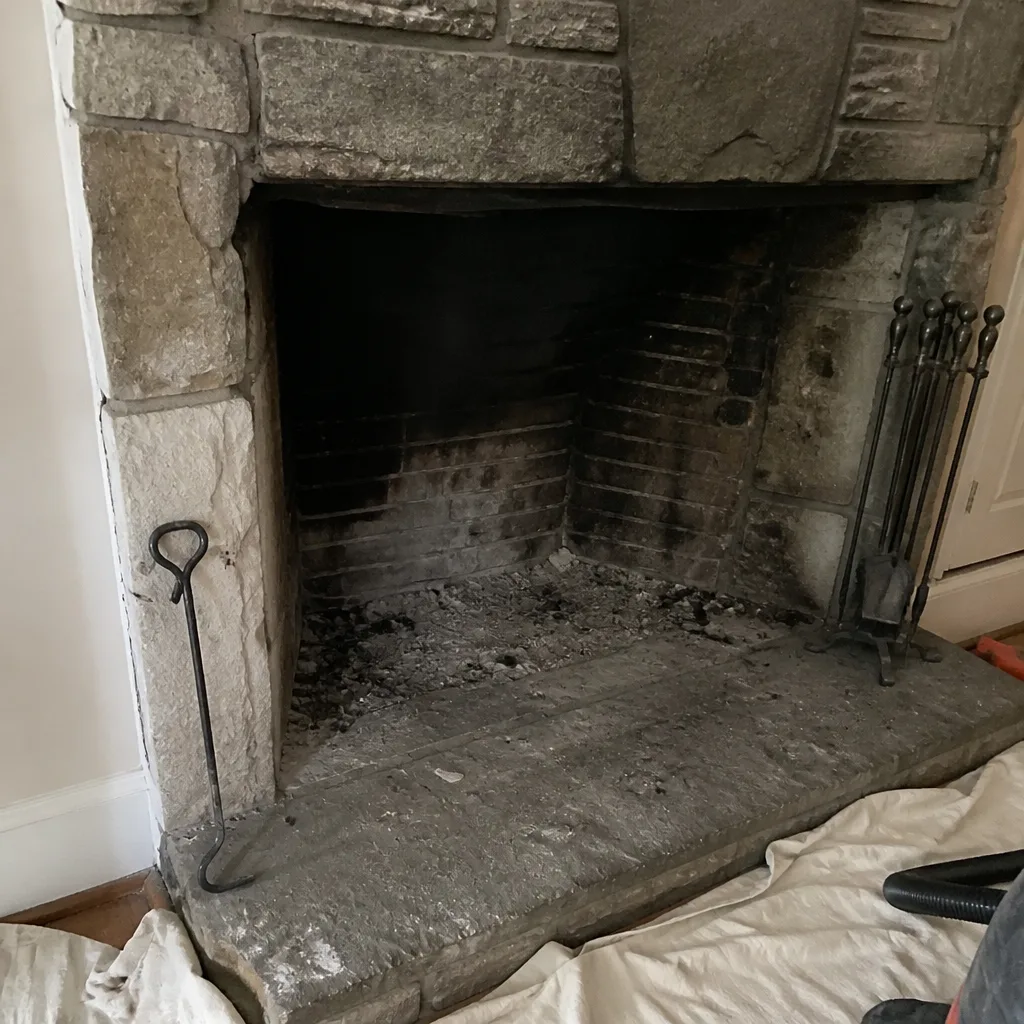 Before
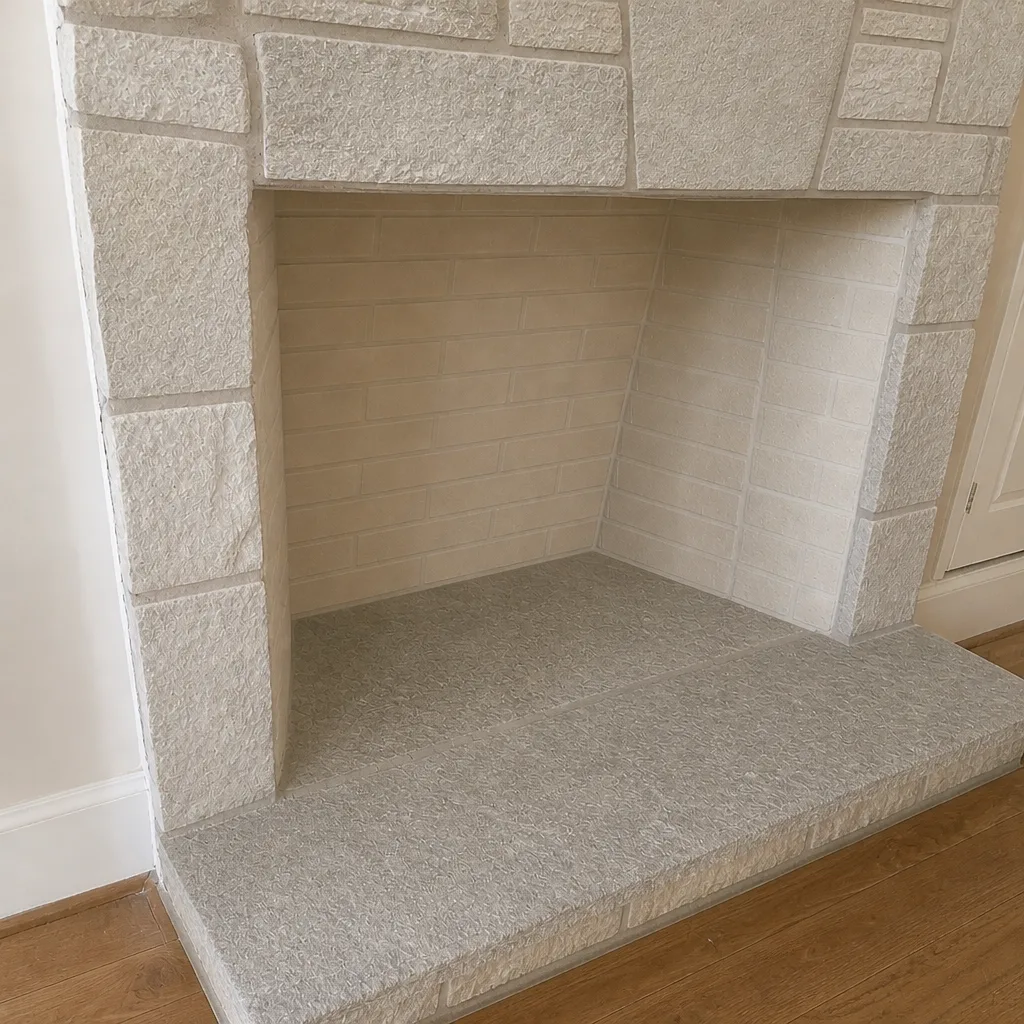 After
Frequently Asked Questions
The earliest signs are usually a light white bloom on the exterior brick (efflorescence), a faint campfire smell in the room on humid days, or a smoke smell that lingers after a fire is banked. They’re all monitor-tier signals – worth noting and scheduling an inspection for, not reasons to stop using the fireplace today. Call (833) 309-7302 to book an inspection and get a written assessment.
A sulfur or rotten-egg smell is the stop-use signal. It usually means an animal is in the flue, standing water is inside the chimney, or a nearby gas appliance is feeding exhaust into the chimney. Shut the damper, let the fire die, and call for an inspection before lighting another fire. We answer 24/7, so a call outside dispatch hours is booked into the next opening, Sunday through Friday, 7am to 7pm.
Yes – it’s efflorescence, and it means water is moving through the masonry. It’s usually caused by a damaged crown, a missing cap, or failing mortar joints, and over time that water cycle can reach and crack the flue liner. It’s a schedule-soon sign, not an emergency, but it shouldn’t be ignored. A free estimate starts with a call to (833) 309-7302.
It’s worth taking seriously. Arlington’s older homes often still have their original clay tile liners, and hairline cracks or separated joints are common after decades of heating and cooling. Those cracks aren’t visible from the fireplace or the roof – they show up on a camera inspection. If your home was built before roughly the 1990s and you don’t know the liner’s condition, that’s the first thing to check.
Smoke rollout means the flue isn’t drafting properly. It can come from a blockage, a flue that’s too small for the firebox opening, a pressure imbalance in the house, or a damaged liner. It’s a stop-use sign. Close the damper, let the fire die, and get the chimney inspected before lighting another fire. Sentry Chimney Sweep offers free estimates in Arlington – call (833) 309-7302.
An inspection is worth doing any time you can’t guess when the last one was done, and every chimney that sees regular use deserves one before the heating season. Without knowing what a camera shows, “it looked fine from the fireplace” is a guess, not a diagnosis. If you’re unsure where to start, a free estimate is a no-risk way to get an actual answer – call (833) 309-7302.
The Bottom Line
Most chimney warning signs are in plain sight – the trick is knowing which tier they belong to. Efflorescence, spalling brick, a cracked crown, and a missing cap are schedule-soon signals backed by water and masonry. Smoke rollout, sulfur smells, and glazed creosote are stop-use signals backed by fire and carbon monoxide risk. Arlington’s older homes add a specific layer of concern around clay tile liners, and a camera inspection is what turns a guess into a diagnosis – you should see the footage, not take someone’s word for it. Nothing we recommend happens without a written estimate. Sweep. Inspect. Repair. One call.
Contact Sentry Chimney Sweep for a free estimate: (833) 309-7302. We answer 24/7. Fast dispatch from 7am to 7pm, Sunday through Friday. Our technicians have up to 11 years of experience, and every job is priced per job by the written estimate, backed by professional-grade materials from DuraFlex, HeatShield, Gelco, Olympia Chimney, Famco, and Copperfield.
Written by the team at Sentry Chimney Sweep.